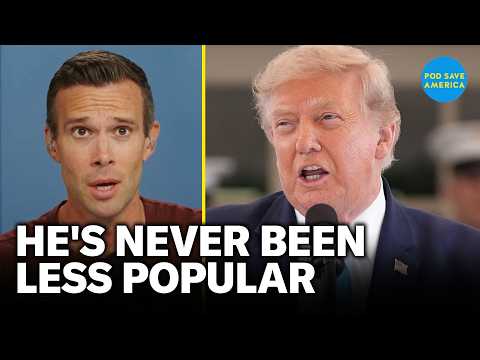
Donald Trump’s unexpectedly complimentary remarks about New York City Mayor Zohran Mamdani provide the moment promised by the headline, but they occupy only a small portion of a much broader Dave Rubin commentary show. During their Gracie Mansion appearance, Trump says he wants Mamdani to be a successful mayor because he wants New York to succeed, even describing him as having “great potential.” Rubin finds the cordiality surprising given their ideological differences and says he would have preferred Trump to challenge Mamdani more directly on socialism. The segment therefore offers a genuine political contrast, although it never really substantiates the headline’s suggestion that Mamdani’s facial reaction is especially revealing.
The more substantial opening topic is Trump’s decision to bar CNN, MS NOW and Politico from the White House. Rubin strongly sympathizes with Trump’s complaints about mainstream media coverage while acknowledging that the move could look politically damaging or petty. That concession adds some useful tension to an otherwise strongly partisan presentation. However, Rubin repeatedly asserts that the dispute is not a First Amendment issue as though that were settled, when the affected organizations were actively challenging the restriction on constitutional grounds and the legal question was contested. Reuters +1
There is some worthwhile primary material amid the commentary. Clips of Trump and Mamdani allow viewers to hear their positions directly, including Mamdani’s defense of broad press access and Trump’s explanation that he believes news organizations have an obligation to report fairly. The official account of the Gracie Mansion press availability confirms that exchange and also shows that the meeting concerned substantive New York issues such as affordability, economic growth and housing. New York City Government Rubin, however, spends much more time interpreting the encounter through his ideological framework than examining what the two officials actually discussed.
From there, the program becomes an expansive argument against mainstream media and the Democratic Party. Rubin uses archival clips involving Trump’s social-media suspensions, the Obama administration’s relationship with Fox News and past news coverage to argue that outrage over Trump’s actions is hypocritical. Historical comparison is potentially valuable, but the presentation frequently jumps from individual examples to sweeping declarations that major news organizations “lie about everything.” Those categorical judgments receive far less careful support than the narrower examples themselves, while insults aimed at politicians and commentators often substitute for substantive examination of their arguments.
The second half expands still further, moving through democratic socialism, Hasan Piker, JB Pritzker, Bill Maher, artificial-intelligence regulation, China, immigration, European border policy and the upcoming midterms. Some clips introduce legitimate policy questions, particularly around AI regulation, competition with China and immigration enforcement. Yet Rubin regularly moves from those questions to highly consequential predictions—such as Democrats destroying the country or immigration producing inevitable social collapse—without establishing those conclusions through the material presented. Anecdotes and selected clips are repeatedly treated as evidence for much broader political claims.
Presentation is simultaneously the show's greatest asset and one of its limitations. Rubin is energetic, conversational and rarely ambiguous about his position, while the rapid alternation between clips and commentary keeps a very long program moving. At the same time, repeated insults, jokes about people's appearance, promotional interruptions and frequent ideological generalizations make the analysis less disciplined than it could be. Even moments when Rubin admits uncertainty—such as whether Trump's media strategy is politically wise—are soon surrounded by much more absolute rhetoric.
Pros
- Trump and Mamdani’s joint appearance provides direct material viewers can assess for themselves.
- Rubin acknowledges uncertainty about the political wisdom of Trump’s media restrictions rather than presenting every aspect of the strategy as unquestionably beneficial.
- Archival clips give viewers useful examples behind several of the media arguments being discussed.
- The energetic delivery and frequent clip changes sustain momentum across a wide range of subjects.
Cons
- The Trump–Mamdani moment advertised by the headline represents only a small fraction of the program, and the claimed significance of Mamdani’s facial reaction is not meaningfully demonstrated.
- The First Amendment implications of excluding news organizations are presented too categorically despite an active constitutional dispute over the policy.
- Sweeping conclusions about Democrats, journalists, immigration and political opponents routinely extend beyond what the selected clips establish.
- Personal insults and ridicule frequently displace substantive engagement with opposing arguments.
- Numerous unrelated political topics and advertising breaks make the program considerably less focused than its headline suggests.
The Trump–Mamdani encounter offers an interesting glimpse of pragmatic cooperation between two sharply different political figures, but it quickly becomes a launching point for a much larger partisan commentary program. Rubin’s energy and extensive use of clips make the discussion engaging, while overstatement, personal attacks and insufficiently qualified political claims substantially weaken its analytical value.