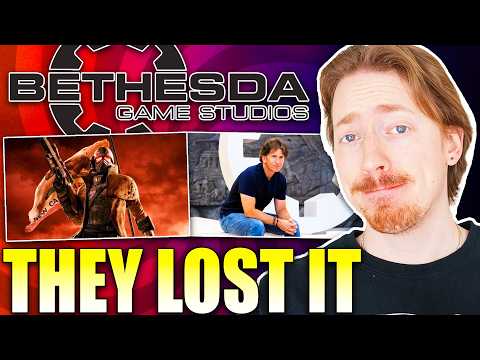
Rather than treating Bethesda's latest announcements as an unqualified victory, this video examines them through the lens of both player excitement and industry uncertainty. The presentation centers on confirmations that The Elder Scrolls VI, Fallout 5, additional Fallout projects, and remasters are in development, while continually returning to a larger question: can Bethesda and Xbox deliver games that live up to the enormous expectations surrounding these franchises?
The discussion is most effective when placing the announcements into historical context. The video highlights the extraordinary commercial success of Skyrim and Fallout 4, arguing that those accomplishments make their successors exceptionally difficult to follow. Rather than simply celebrating sales milestones, the commentary uses them to explain why fans expect meaningful innovation instead of incremental updates. Personal reflections on discovering earlier Bethesda games reinforce that perspective without overwhelming the broader analysis.
Another strength is the balanced treatment of Xbox's recent restructuring. The creator acknowledges layoffs, organizational changes, and shifting corporate priorities while carefully avoiding definitive claims about how those developments will affect future games. Instead, the discussion frames several possibilities: streamlined development could improve production efficiency, while the loss of experienced developers could also remove valuable institutional knowledge. By repeatedly emphasizing uncertainty rather than presenting speculation as fact, the video maintains a measured tone despite discussing an evolving situation.
Coverage of the newly announced Fallout projects also benefits from that restraint. The video expresses enthusiasm about Obsidian developing another Fallout title and explains why the pairing makes sense based on the studio's history, while clearly separating hopes—such as the possibility of Fallout: New Vegas 2—from officially confirmed information. That distinction helps prevent speculation from being mistaken for established fact.
The presentation remains conversational throughout, making the analysis accessible even when discussing corporate strategy. Personal opinions are openly identified as opinions, whether expressing skepticism toward Bethesda's recent releases, optimism about future Fallout games, or preferences for possible locations and gameplay directions. This transparency allows viewers to understand where factual reporting ends and personal interpretation begins.
The main weakness is that the video necessarily has limited new information to analyze. Much of the runtime expands on previously rumored projects or officially confirms development without offering substantial details about gameplay, technology, or release timelines. As a result, the discussion frequently shifts toward hopes, expectations, and industry context rather than concrete revelations. The repeated emphasis on wanting Bethesda to "deliver" eventually becomes somewhat repetitive because there is little additional evidence available to explore.
Pros
- Places Bethesda's announcements within the broader context of the company's recent history and Xbox's restructuring.
- Clearly distinguishes confirmed announcements from personal expectations and industry speculation.
- Explains why Skyrim and Fallout 4 create unusually high expectations for future sequels.
- Offers balanced discussion of potential benefits and risks surrounding organizational changes without overstating conclusions.
- Maintains an engaging, conversational style while remaining focused on the central topic.
- Provides thoughtful consideration of both Bethesda's internal projects and Obsidian's role in expanding the Fallout franchise.
Cons
- Relies heavily on speculation because official announcements provide relatively few concrete details.
- Several themes—particularly the need for Bethesda to meet fan expectations—are reiterated multiple times.
- Discussion of possible future Fallout projects occasionally ventures well beyond what has been officially confirmed.
This is a thoughtful reaction to Bethesda's latest announcements that succeeds by balancing enthusiasm with healthy skepticism. Rather than treating every announcement as guaranteed success or dismissing them because of recent controversies, the presentation encourages viewers to consider both the opportunities and the challenges facing Bethesda and Xbox. While the lack of concrete information limits how deeply the subject can be explored, the commentary remains grounded by consistently separating confirmed developments from personal hopes and informed speculation.