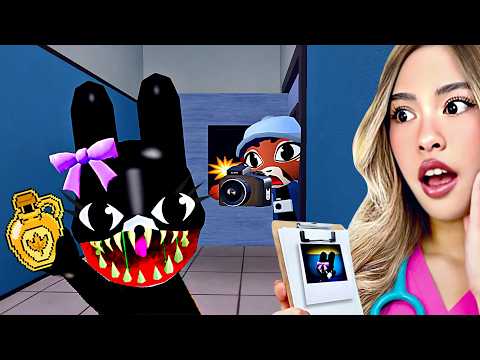
The strongest part of this video is how it transforms a simple simulation game into a comedy built around family reactions. Instead of focusing only on completing hospital tasks, the creators use the game's unusual mechanics and hidden controls to create a series of escalating surprises for their parents. The appeal comes less from the medical setting itself and more from watching the parents attempt to stay organized while the environment becomes increasingly unpredictable.
The video establishes its premise quickly by putting the parents in charge of running the hospital while the creators secretly interfere behind the scenes. The use of admin abilities, including spawning creatures, changing the environment, and altering game elements, gives the creators a wide range of tools for creating chaos. This provides a clear structure for the episode, with each new prank attempting to top the previous one.
The early challenges are effective because they create confusion without immediately overwhelming the players. Ghost appearances, locked doors, and unexpected patient problems allow the parents to react naturally while still trying to complete their objectives. The humor comes from the contrast between the serious responsibility of managing patients and the ridiculous obstacles being placed in their way.
As the video progresses, the escalating pranks become more focused on spectacle than gameplay. Events involving fires, explosions, anomalies, and major changes to the hospital layout deliver bigger reactions, but the repeated pattern of creating a problem and watching the parents panic can become predictable. The entertainment relies heavily on enjoying exaggerated reactions rather than the actual hospital simulation mechanics.
The strongest personality moments come from the parents working together and arguing through the increasingly strange situations. Their attempts to solve problems, blame each other, and continue playing despite the chaos give the video a sense of character beyond the game itself. The final reveal that the creators were responsible for everything provides a satisfying payoff to the ongoing deception.
However, the video gives limited attention to the actual gameplay systems of the hospital simulation. The focus is almost entirely on trolling and reactions, meaning viewers looking for strategy, progression, or a deeper exploration of the game will find less to engage with. The constant escalation also reduces the impact of later surprises because the audience quickly understands the pattern.
Overall, this is a lighthearted family gaming video that succeeds through energetic editing, creative use of game tools, and the natural reactions of the players. It does not aim to be a detailed look at the simulation itself, but it delivers an entertaining prank-driven experience for viewers who enjoy chaotic challenges and exaggerated comedy.
Pros
- Creates entertaining family chemistry by making the parents' reactions the main source of humor.
- Uses the game's customization and admin features creatively to build escalating challenges.
- Maintains a clear progression from small disruptions to larger comedic set pieces.
- Keeps the pacing lively with frequent changes and new obstacles.
Cons
- The repeated prank format becomes predictable as the video continues.
- The actual hospital simulation mechanics receive little attention compared with the trolling.
- Some later challenges rely more on exaggerated chaos than developing new comedic ideas.
This is an energetic family gaming episode that succeeds because of its playful interactions and creative use of the game's tools. While the constant trolling can become repetitive, the parents' reactions and the escalating scenarios make it an enjoyable watch for fans of chaotic comedy content.