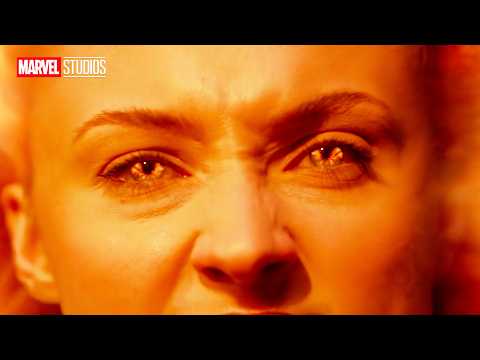
The strongest material here is not the post-credits speculation but the effort to connect Jean Grey’s introduction with Peter Parker’s emotional arc. The video traces Jean from a mysterious telepath infiltrating DODC facilities through the revelation of her identity, her search for Sarah, and the experiments that expand her abilities. More importantly, it recognizes that Peter and Jean are linked by isolation: Peter is struggling with the consequences of his erased relationships while Jean has been exploited and left without the sister who protected her. That makes the return to Peter’s memory of Aunt May more than another continuity callback, and the explanation gives that scene appropriate weight.
The breakdown is also effective at organizing a plot packed with powers, betrayals, institutional experimentation, and returning characters. Peter’s changing spider abilities, Jean’s possession of MJ, Bruce Banner’s transformation, Frank Castle’s involvement, and DODC’s attempt to replicate telepathy could easily become an incoherent recap. Instead, the video generally keeps the cause-and-effect relationships understandable, particularly when explaining why Peter initially suppresses his evolving abilities and later accepts them. His declaration that he can be both Peter Parker and Spider-Man fits the broader story of accepting rather than erasing parts of himself.
Jean’s comic history provides useful context without being treated entirely as a roadmap for what the films must do. Her connection to Sarah, the Marvel Girl colors, Chris Claremont-era material, the Phoenix Force, Cyclops, and the Summers family establish why seemingly minor details could matter to viewers familiar with the character. The suggestion that Marvel may be drawing heavily from the Claremont era is plausible as interpretation based on the parallels identified, but predictions about the Phoenix Force, Xavier Institute, Bill Metzger’s future role, and the origin of MCU mutants remain theories. The video usually signals that uncertainty, although the sheer accumulation of references sometimes makes speculative connections feel more substantial than the movie itself establishes.
The actual post-credits explanation begins from a solid observation: Ned’s tracker identifies a Spider-Man location in Queens before the perspective moves into space, glitches, and produces another location. From that limited information, the video proposes three possibilities involving Peter being transported to Battleworld, a connection with Sony’s animated Spider-Verse, or another Peter Parker approaching through an incursion. Presenting alternatives is preferable to pretending the scene has one obvious answer, and the first two theories are explained clearly enough for viewers to understand what visual or narrative clue prompted them.
The third theory receives considerably more confidence and attention than its evidence warrants. Ned’s previous use of a sling ring and his final handshake with Peter are used to suggest that he may possess sorcerous abilities capable of overcoming Doctor Strange’s memory spell, which then becomes a possible explanation for his technology detecting another Peter Parker. From there, the argument moves toward Tobey Maguire, an alleged plot leak, fan reaction at Comic-Con, and possible multiversal returns. These are entertaining connections, but several inferential steps separate the tracker glitch from the specific conclusion that another familiar Spider-Man has arrived. The video does identify this as a favored theory rather than a confirmed reveal, yet the extended supporting argument risks turning ambiguity into apparent evidence.
Presentation is energetic and densely informed, with enough specific references to reward viewers already invested in Marvel continuity. The humor and conversational delivery prevent the extensive recap from becoming purely mechanical, while chapter guidance lets viewers interested only in the post-credits scene skip ahead. However, the lengthy merchandise promotion near the beginning and especially the substantial sponsored segment immediately before the post-credits discussion interrupt a video whose title makes that scene a central attraction. The closing subscription and promotional material adds another layer of channel business after an already speculation-heavy ending.
Pros
- Clearly reconstructs a complicated plot while connecting Jean Grey’s story to Peter Parker’s emotional development.
- Gives the Aunt May memory meaningful thematic attention rather than treating it merely as a callback.
- Provides relevant Jean Grey and Sarah Grey comic context that helps explain several deliberate-looking character details.
- Separates the ambiguous post-credits scene into three understandable theories instead of presenting one interpretation as confirmed.
- Connects specific visual details, established events, and broader continuity in an accessible way for viewers following the MCU’s multiverse storyline.
Cons
- The favored theory about another Peter Parker depends on several speculative leaps involving Ned’s abilities, the memory spell, the tracker, incursions, and an unverified plot leak.
- Comic parallels and future-franchise predictions sometimes accumulate faster than the available evidence can support them.
- Possibilities involving the Phoenix Force, Xavier Institute, mutant origins, Battleworld, and specific returning Spider-Men remain unresolved theories despite receiving extensive discussion.
- Merchandise, sponsorship, subscription, and channel promotion substantially interrupt the explanation, particularly before the promised post-credits analysis.
- The long main-story recap makes the video less focused for viewers primarily seeking an explanation of the ending tease.
This is an engaging and impressively connected breakdown when it explains character motivations, continuity details, and the thematic relationship between Peter and Jean, but it becomes less persuasive as an ambiguous tracker signal expands into elaborate predictions about Battleworld, Ned’s sorcery, and returning Spider-Men. The multiple-theory format preserves some necessary uncertainty, yet tighter separation between evidence and fan speculation—and fewer promotional interruptions—would make the central explanation considerably sharper.