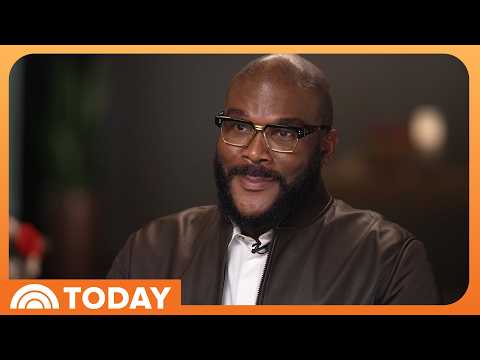
The strongest feature of this debate is also its biggest structural weakness: nearly every participant arrives ready to challenge Brandon Tatum with a specific argument, but the format rarely gives either side enough uninterrupted time to establish the evidence behind it. The discussion moves through Republican and Democratic policies, voting rights, policing, crime, poverty, slavery, redlining, wealth, education and systemic racism, producing an unusually broad survey of disagreements within Black political discourse. Tatum remains willing to engage throughout and occasionally finds genuine common ground with opponents, but much of the program becomes a contest over whose statistics, history or personal experience should be accepted rather than a careful examination of whether those claims are accurate.
The opening political section illustrates the problem immediately. Tatum cites the First Step Act, HBCU funding, urban investment, lower taxes and immigration restrictions as evidence that Republican policies benefit Black Americans, while challengers counter with arguments involving voting rights, federal employment, taxation, housing discrimination and Trump's conduct. These are substantive subjects, but claims routinely arrive without enough sourcing or context to evaluate them. The argument over Trump's 1970s housing case, for example, becomes a dispute about what settlement signifies, while broader historical arguments about Republicans, Democrats, Reconstruction and the civil-rights era become increasingly tangled. Participants frequently demand proof from one another while confidently asserting their own disputed facts without providing it.
The policing section is similarly energetic but evidentially uneven. One participant introduces a large traffic-stop study and describes its "veil of darkness" methodology, giving Tatum something concrete to challenge, while Tatum draws heavily on his own experience as a former police officer. That creates a potentially useful clash between empirical research and professional experience, but neither is explored carefully enough. Arguments about crime rates, sentencing disparities, police origins and racial differences in enforcement repeatedly deteriorate into interruptions and competing statistical claims. The calmer exchange about whether community investment should precede reductions in policing is more productive because both sides actually acknowledge part of the other's position and discuss sequencing rather than simply denying premises.
The claim that Black people harm other Black people more than other groups opens an even larger historical argument. Tatum emphasizes intracommunity violence, family structure, drug dealing, political choices and personal responsibility; opponents emphasize poverty, accumulated wealth disparities, slavery, Jim Crow, redlining, discriminatory criminal-justice policies and other historical constraints. Several exchanges expose genuine philosophical differences about how much present outcomes should be attributed to individual agency versus inherited conditions. Yet the discussion repeatedly treats disputed historical interpretations and precise numerical claims as self-validating. The extended exchanges over African participation in the slave trade, Booker T. Washington, the Tulsa massacre and the history of redlining especially needed firmer factual grounding than argumentative confidence provides.
Tatum is most persuasive as a debater when he narrows his argument rather than making sweeping declarations. In later exchanges he acknowledges racial disparities, historical discrimination, unequal starting positions and circumstances such as parental absence, trauma and poverty, while maintaining that individuals retain meaningful agency. One participant's distinction between an "excuse" and an "explanation" produces one of the video's better conversations because it allows structural disadvantages and personal responsibility to coexist rather than forcing viewers to choose exclusively between them. That nuance contrasts sharply with earlier moments when Tatum dismisses complicated historical or statistical arguments too quickly, sometimes despite acknowledging that he is unfamiliar with the study, quotation or concept being raised.
The systemic-racism segment contains some of the video's most consequential claims and therefore most clearly demonstrates the need for stronger moderation or fact-checking. Participants raise maternal and infant mortality disparities, alleged racial misconceptions in medicine, unequal educational resources, lending, inherited wealth and employment discrimination, while Tatum argues that disparities alone do not prove racial causation. That distinction is important, but the format provides no reliable mechanism for determining when either side has established causation. The final audience testimony is valuable because it moves the discussion from abstractions to personal experiences involving employment, housing, education, healthcare and policing, yet anecdotes likewise cannot by themselves establish the prevalence or systemic character of a phenomenon. The video frequently blurs these different evidentiary categories rather than helping viewers distinguish personal testimony, statistical correlation, historical evidence and demonstrated causation.
As television, the format unquestionably generates energy. The rapid challenger rotation exposes Tatum to arguments from numerous perspectives, and the final uninterrupted conversation offers a welcome opportunity to revisit an opponent he considers to be engaging in good faith. Unfortunately, majority voting often terminates exchanges precisely when clarification is becoming necessary, and constant interruptions make several debates difficult to follow. Two substantial sponsor breaks, including an unusually conspicuous nicotine-product promotion in the middle of a heated political discussion, further fracture the presentation. The closing remarks appropriately encourage viewers to consider perspectives they disagree with, but the program would serve that goal considerably better with fewer claims, longer exchanges and visible sourcing or post-debate fact-checking.
Pros
- Brings together a wide range of substantive disagreements about policing, voting, crime, poverty, wealth, political allegiance and systemic racism.
- Several participants arrive with specific studies, historical examples, policies or statistics rather than relying exclusively on ideological slogans.
- Tatum remains engaged through sustained opposition and occasionally concedes meaningful points about discrimination, poverty, unequal circumstances and racial disparities.
- The strongest exchanges reveal that structural explanations and personal responsibility do not necessarily have to be mutually exclusive positions.
- Personal accounts near the end add an important experiential dimension to arguments that otherwise remain heavily abstract.
- The final extended exchange provides more room for an actual conversation than the rapid elimination rounds.
Cons
- Numerous historical, political and statistical claims are asserted as facts without enough sourcing or context for viewers to determine which competing account is accurate.
- Participants frequently demand rigorous evidence from opponents while treating their own anecdotes, statistics or interpretations as sufficient proof.
- Constant interruptions and cross-talk prevent potentially revealing disagreements from being developed carefully.
- The majority-vote elimination mechanism rewards immediate rhetorical performance and often ends discussions before contested factual premises can be resolved.
- Tatum sometimes dismisses studies, historical arguments or concepts despite acknowledging that he is unfamiliar with the specific material being cited.
- Several sweeping claims about crime, political history, policing, culture, medicine and racial disparities require considerably more qualification than the debate provides.
- Sponsor interruptions disrupt an already crowded discussion, particularly the lengthy nicotine promotion.
This is an energetic and occasionally revealing confrontation that works best when participants stop trying to win individual exchanges and examine how structural conditions and personal agency can interact. Its breadth and diversity of arguments make it engaging, but unsupported statistics, disputed history, interruptions and insufficient fact-checking leave too many important claims unresolved. A slower, evidence-centered version of the same conversation could have been substantially more informative.