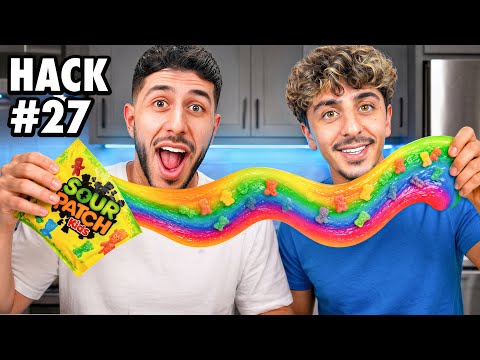
Turning simple ingredients into satisfying desserts is the central challenge behind this collection of viral recipe experiments, and the results reveal that convenience does not always come at the expense of creativity. From ice cream-filled pastries to no-bake treats, the recipes are judged less on whether they are traditional and more on whether they deliver the promised combination of minimal effort and enjoyable flavor.
The strongest moments come when familiar foods are transformed with surprisingly effective twists. The croissant combined with a chocolate ice cream bar works because the contrast between flaky pastry, rich chocolate, and cold ice cream creates a dessert that feels more elaborate than the preparation requires. The creator’s genuine surprise at how well some of these combinations work gives the testing process a sense of discovery rather than just a checklist of recipes.
The crispy glazed donut experiment is another highlight because it takes a recognizable dessert and changes its texture completely. The comparison between a caramelized version and a waffle iron attempt adds a useful element of experimentation, showing that viral food trends can sometimes produce worthwhile ideas even when the original concept seems unusual. The review of each result is balanced, acknowledging both improvements and trade-offs.
The frozen and no-bake recipes demonstrate the video’s strongest theme: finding shortcuts that still produce enjoyable results. The fluffy jello, banana bark, and no-bake brownie experiments focus on texture as much as flavor, with the creator paying attention to whether the shortcuts actually recreate the experience of more traditional desserts. While some recipes rely heavily on personal taste preferences, the reactions make the successes feel earned.
The sponsored cookbook segment interrupts the flow somewhat, as it shifts from testing internet recipes to promoting a separate collection of meal ideas. Although the transition is clearly separated, it slows the momentum of a video that works best when focused on experimentation and reactions. The surrounding dessert tests remain engaging, but the promotional portion feels less connected to the main challenge.
Later recipes show that “lazy” does not always mean effortless. The watermelon sago requires more preparation than some earlier experiments, and the strawberry roll cake involves careful assembly that challenges the idea of a quick shortcut. The creator is honest about these limitations, which helps maintain credibility when a recipe does not fully match the expectations created by its viral presentation.
The final tiramisu experiment reinforces the video’s overall message by showing that a small amount of extra effort can still be worthwhile. The single-serving approach keeps the dessert approachable while allowing for a more traditional flavor experience. Ending with the frozen banana bars as the overall favorite provides a clear conclusion based on the combination of simplicity, taste, and practicality.
Pros
- Genuine reactions and honest evaluations make the recipe testing feel authentic and entertaining.
- Strong variety of desserts keeps the experiments from becoming repetitive.
- The creator effectively compares viral claims with actual results through texture and flavor observations.
- Several recipes demonstrate creative ways to simplify familiar desserts.
Cons
- Some recipes require more preparation or equipment than the “lazy” concept suggests.
- The sponsored section interrupts the otherwise consistent testing format.
- Results are based largely on personal taste, making some conclusions subjective rather than universally applicable.
A playful exploration of internet dessert trends, this review succeeds because it combines curiosity, humor, and practical testing rather than simply recreating viral recipes. While not every shortcut delivers the same level of convenience, the strongest experiments prove that simple ideas can sometimes create genuinely satisfying desserts.