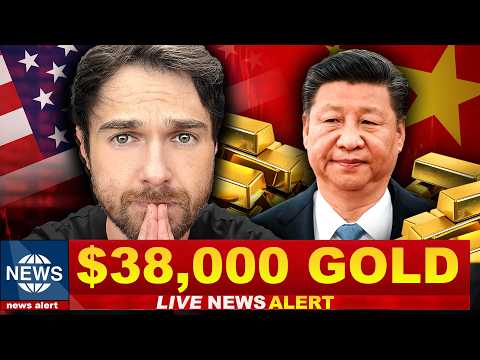
Jim Rickards’ $10,000 gold target immediately gives the discussion a clear focal point, but his forecast becomes noticeably less precise when pressed on timing. He allows that gold could reach the target before the end of 2026, then expands the window into early or even mid-2027 while insisting that the move remains relatively near-term. That qualification is reasonable forecasting practice, yet it weakens the headline certainty surrounding the year-end figure. His underlying case is more substantive: continued central-bank buying, flat mining output, geopolitical instability and gold’s role as an alternative reserve asset for governments concerned about sanctions.
The interview is strongest when Rickards works through identifiable financial mechanisms rather than dramatic predictions. His explanation of the Treasury General Account, the Treasury’s gold holdings and the gold certificates appearing on the Federal Reserve’s balance sheet gives viewers a concrete framework for his argument that revaluing those certificates could produce a large accounting gain. He estimates that marking the certificates closer to contemporary gold prices could translate into roughly $1 trillion for the Treasury. That is presented as a potential policy maneuver rather than something officials have announced, an important distinction given how readily the conversation moves from accounting possibilities to speculation about how such funds could be used.
Rickards’ interpretation of Federal Reserve Chair Kevin Warsh’s Jackson Hole remarks is similarly interesting but heavily inferential. Using the Hemingway-inspired title of Warsh’s speech as a framing device, he argues that what Warsh leaves unsaid matters as much as his explicit language. From Warsh’s emphasis on above-target inflation, relatively stable unemployment and conventional short-term interest rates, Rickards concludes that rate increases are coming, probably after the midterm elections rather than before them. He also interprets Warsh’s skepticism toward unconventional policies as effectively ruling out further quantitative easing outside a genuine crisis. The reasoning is clearly explained, but predictions about the exact timing and political motivations of future Fed decisions remain Rickards’ interpretation rather than established outcomes.
That distinction becomes particularly important when politics enters the discussion. Rickards claims that major indictments and arrests connected with alleged election interference in 2020 and matters extending back to 2016 are likely before the November midterms, naming several cities, a federal court in Florida and Judge Aileen Cannon while describing the developments as long in preparation. The presentation offers little supporting evidence within the conversation for those impending prosecutions or for allegations involving ballot stuffing and mail-in ballot fraud. President Trump sharing Rickards’ earlier presentation on Truth Social is treated as evidence that Trump believes its content, but presidential amplification does not independently validate the underlying claims.
The gold discussion also contains a useful counterweight to the bullish thesis when the host asks about higher interest rates. Rickards acknowledges that a hawkish Fed is ordinarily negative for gold and connects the day’s decline to the market pricing in potential future tightening. He nevertheless interprets gold’s relatively modest drop as evidence of underlying strength. That is a defensible market interpretation, but the interview would be more persuasive if competing explanations and downside scenarios received comparable attention. With Rickards disclosing that he owns at least $1 million in physical gold and the program closing with a direct invitation to contact ITM Trading about owning gold, the financial incentives surrounding the discussion deserve particular attention.
Presentation-wise, the conversation is energetic and accessible, with the host repeatedly pushing Rickards to translate central-bank language and balance-sheet mechanics into plain English. Rickards is engaging when discussing Hemingway, monetary policy and his personal reasoning, although the final detour into an AI-powered spam-blocking company in which he is an investor is largely disconnected from the central economic discussion. The closing sales message also shifts the tone from analysis toward promotion, especially after a conversation built around an exceptionally bullish price forecast.
Pros
- Gives a concrete fundamental case for higher gold prices rather than relying solely on the $10,000 headline.
- Rickards clearly explains the Treasury General Account, gold certificates and his proposed gold-revaluation mechanism in accessible terms.
- The discussion acknowledges that higher interest rates can pressure gold rather than presenting the asset as immune to monetary tightening.
- Warsh’s comments on inflation, employment and unconventional monetary policy provide specific material for Rickards’ interpretation of the Fed outlook.
Cons
- The headline year-end gold forecast becomes substantially less definite once Rickards allows the target could arrive well into 2027.
- Predictions of imminent election-related indictments and claims involving ballot fraud are presented with considerable confidence but little supporting evidence within the discussion.
- Rickards often moves from plausible interpretation to confident prediction, particularly regarding future Fed rate decisions and their political timing.
- Rickards’ substantial personal gold holdings and the closing promotion for ITM Trading create financial interests that are relevant to such an aggressively bullish forecast.
- The promotional segment for an AI spam-blocking company interrupts an otherwise focused discussion of gold, monetary policy and political risk.
Rickards provides an engaging bullish case for gold and is at his best when explaining monetary plumbing and the reasoning behind his market interpretation. The discussion becomes less convincing when speculative political developments, inferred Fed intentions and an elastic timetable are presented alongside the much more concrete financial analysis. The commercial framing surrounding both gold ownership and Rickards’ separate investment venture further warrants caution.