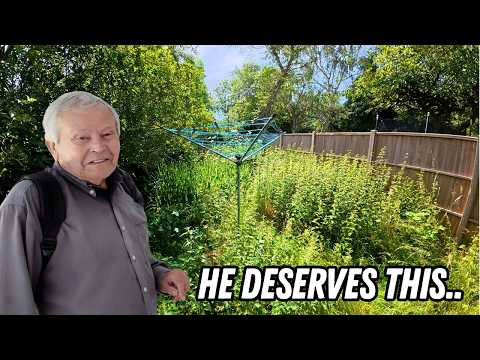
A retaining wall that survived only about seven months provides the starting point for a property cleanup that quickly expands beyond removing fallen blocks. The crew faces a deteriorating landscape featuring decorative ponds that frequently sit empty, scattered retaining wall materials, and ground conditions that complicate the work. Rather than rebuilding the failed structure, the proposed solution involves removing the blocks and reshaping the surrounding dirt into a more natural slope. It's a practical approach that gives the project a clear objective while raising interesting questions about the original landscaping decisions.
The opening establishes the wall's short lifespan with a little humor, including the admission that several people had been betting on when it would collapse. The commentary suggests the structure never looked particularly promising, and later observations indicate that some of the blocks were better suited for bins or similar applications than retaining walls. However, the video does not provide a detailed explanation of the failure. Viewers interested in construction techniques might appreciate more discussion of drainage, soil pressure, installation methods, and whether the materials or design contributed to the collapse.
Much of the appeal comes from watching an experienced crew work through the practical challenges of dismantling and reorganizing an awkward landscape. Discussions about where to place removed blocks demonstrate how seemingly minor logistical decisions can affect efficiency. The workers recognize that positioning materials where they can be collected directly by a truck avoids unnecessary handling. These conversations give the project an authentic working atmosphere, showing the planning and coordination that happen alongside the machinery operation.
An unexpected interruption occurs when a truck refuses to move despite engaging its transmission. The crew initially suspects a stuck parking brake, examining the components and watching for movement before eventually trying a battery reset. After the vehicle has been shut down for several minutes, movement returns, and the truck becomes operational again. The sequence introduces a genuine troubleshooting problem and provides a satisfying resolution, although the precise electronic fault remains uncertain. The narrator credits information obtained from an online assistant, but the successful reset does not establish exactly what caused the malfunction.
The decorative ponds create another interesting dimension because they reveal how landscaping features can become maintenance problems rather than improvements. The crew observes water emerging from the ground and discusses the presence of clay that restricts drainage. Combined with the observation that the existing ponds often remain empty, these conditions help explain why the property needs reconsideration. The suggestion that naturally accumulating water already creates a pond-like area adds some practical perspective, though the video stops short of explaining a comprehensive drainage or landscaping plan.
The presentation maintains a relaxed, conversational style, with equipment work, discussions between crew members, minor setbacks, and occasional humor sharing the attention. Running out of diesel exhaust fluid temporarily interrupts progress, while changes in ground moisture influence how easily the machinery can operate. These details reinforce the unpredictability of outdoor construction work. However, some conversations become fragmented, and repeated exchanges about tools, welding, and equipment are not always accompanied by enough explanation for viewers unfamiliar with the work. The brief promotional announcement near the end also interrupts the project's concluding momentum.
By the closing walkthrough, the property has undergone a noticeable cleanup, with the fallen blocks removed, unwanted material cleared, and several areas looking more orderly. The narrator points out improvements around the former material pile and the pond area while acknowledging that additional work remains. That honesty makes the conclusion more credible than presenting the entire landscaping problem as permanently solved. Still, a clearer comparison of the original conditions and the completed grading, along with an explanation of how the revised slope will perform over time, would make the final result more informative.
Pros
- Establishes a clear and relatable problem through a retaining wall that failed after approximately seven months.
- Shows practical material-handling decisions intended to reduce unnecessary movement and equipment work.
- Includes authentic troubleshooting when a truck becomes immobilized and eventually responds to a battery reset.
- Explores the complications created by poorly performing decorative ponds, clay soil, and naturally emerging groundwater.
- Captures the everyday realities of landscaping work, including equipment interruptions, changing ground conditions, and crew coordination.
- Provides a useful closing walkthrough highlighting the cleared blocks, removed debris, and improved appearance of the property.
Cons
- Offers little technical explanation of why the retaining wall failed or how its original construction contributed to the problem.
- Does not fully explain the proposed grading and drainage changes or establish whether they will prevent future issues.
- Fragmented conversations about equipment and construction details occasionally make the work difficult to follow.
- The truck repair sequence resolves the immediate problem without identifying the underlying mechanical or electronic cause.
- The closing assessment emphasizes visual improvements but provides limited detail about the remaining work or long-term landscaping outcome.
This property cleanup delivers an enjoyable look at the practical decisions, unexpected equipment problems, and physical work involved in correcting unsuccessful landscaping. The natural crew interactions and visible improvements make the project satisfying to follow, even when the presentation becomes somewhat disjointed. While a deeper explanation of the wall failure and drainage strategy would improve its educational value, the video succeeds as an authentic account of a challenging cleanup that is progressing toward a more manageable landscape.