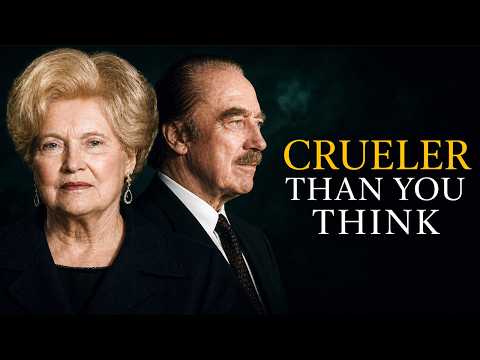
Fred Trump’s role in Donald Trump’s rise is presented not simply as financial support but as the organizing force of a family in which money, status, and usefulness were closely intertwined. The account dismantles the familiar “small loan” narrative by emphasizing the much larger transfers, guarantees, employment arrangements, and emergency rescues that flowed from father to son over decades. Its more ambitious argument is psychological and familial: Donald was not necessarily the most loved child, but the child selected to carry forward Fred’s definition of success. That distinction gives the piece a stronger thesis than a conventional biography of inherited wealth, although it also requires more interpretation than the financial record alone can establish.
The treatment of Fred Trump Jr. provides the clearest support for that interpretation. Freddie is described as the original heir apparent who preferred aviation to the family property business, only to have his career disparaged by both his father and, by Donald’s later admission, his younger brother. His alcoholism, departure from TWA, return to work around the family properties, and death at 42 form the bleakest part of the narrative. The presentation is strongest when it stays with documented behavior and Donald’s own expressions of regret. It becomes more speculative when those events are framed as Fred having effectively “spent” or “broken” his son, language that captures the intended emotional argument but goes beyond what the surviving evidence can prove about causation.
Mary Anne MacLeod Trump is used more symbolically. Her serious medical complications after Robert Trump’s birth, her fascination with ceremony, and the frequently retold story about watching Elizabeth II’s coronation are assembled into a contrast between spectacle and Fred’s hard transactionalism. The observation that Donald later combined showmanship with an intensely transactional approach is an effective thematic connection, but the presentation appropriately admits that the precise coronation exchange cannot be verified. Less convincing is the later assertion that a stranger who intervened during Mary Anne’s 1991 assault did more for her than her household had done “in decades,” which is rhetorically powerful but not demonstrated by the evidence presented.
The historical material surrounding the Trump business is generally handled with useful qualifications. Fred Trump’s 1927 arrest is separated from the unproven claim that he participated in the Ku Klux Klan march associated with the disturbance, while the 1973 federal housing discrimination case is described through allegations, testimony, the Trumps’ counterattack, and the eventual consent decree without turning settlement into an admission of guilt. The discussion of Roy Cohn then makes a persuasive case that Donald inherited more than capital from his father: the strategy of counterattacking accusations rather than conceding ground. That is interpretation rather than an objectively measurable inheritance, but it is tied to concrete events rather than presented as a free-floating personality diagnosis.
The financial sections are the most substantial and persuasive material. Fred’s guarantees, continuing subsidies, the extraordinary casino-chip transaction during Donald’s 1990 financial crisis, and the later All County arrangement all challenge the idea of an independently built fortune. Particularly effective is the distinction between receiving immense financial backing and actually controlling the underlying system supplying it. Yet the narration occasionally pushes that evidence into certainty about private motives, describing assistance as something other than affection or characterizing an elderly father’s rescue of his son strictly as corporate maintenance. Financial dependency is well supported here; precisely what Fred felt while providing it is much harder to establish.
The disputed estate history adds another layer but also exposes the limits of the argument. Mary Trump’s account that Donald attempted to obtain greater control through a proposed 1990 codicil is clearly identified as contested, while the subsequent 1991 will and later estate arrangements provide firmer documentary footing. The treatment of Fred Jr.’s descendants is especially damaging on its own terms: after they contested the will, medical coverage for Fred III’s seriously ill infant son was terminated, and Donald’s reported comments openly connected the action to anger over the lawsuit. That episode needs little embellishment, making it one of the strongest examples of how family conflict and financial leverage could become inseparable.
The final movement successfully connects Mary Trump’s possession of family records to the later New York Times investigation while preserving an important distinction between her motives and the underlying documents. Calling her an interested witness while treating independently examinable financial records differently is exactly the kind of evidentiary separation a story this charged requires. The larger conclusion—that the Trump household operated according to competitive, performance-based principles—is plausible and repeatedly supported, but the presentation overreaches when it converts that framework into definitive judgments about who was loved, hated, abandoned, or psychologically shaped in particular ways. Its own evidence ultimately supports something more complicated than the provocative framing: financial favoritism, dependency, rivalry, and ruthless family behavior, rather than straightforward parental hatred.
Pros
- The financial history is detailed and connects inherited wealth, guarantees, subsidies, estate planning, and the casino rescue into a coherent challenge to the self-made narrative.
- Fred Trump Jr.’s story provides a powerful illustration of the family’s apparent expectations around work, status, and succession, supported in part by Donald Trump’s own later admissions.
- Contested claims involving the 1927 arrest, the proposed codicil, and Mary Trump’s recollections are usually distinguished from firmer documentary evidence.
- The discussion of the 1973 housing case and Roy Cohn effectively shows how aggressive legal and public-relations tactics became part of Donald Trump’s professional approach.
- Mary Trump’s personal stake is acknowledged while her recollections are usefully separated from financial records that can be evaluated independently.
- The estate dispute and termination of medical coverage provide unusually concrete evidence of how financial power could be used during family conflict.
Cons
- The central framing suggests parental hatred even though the evidence more strongly supports conditional approval, favoritism, financial dependency, and severe family dysfunction.
- Several conclusions about Fred Trump’s motives and emotional relationship with his children are stated more confidently than the documentary record can establish.
- Fred Jr.’s decline is sometimes narrated as though family pressure alone explains his alcoholism and death, despite the presentation lacking evidence sufficient to prove such direct causation.
- Mary Anne Trump occasionally functions more as a symbolic source of “pageantry” than as a fully evidenced participant in the family dynamics being analyzed.
- Rhetorical lines about children being “spent,” “broken,” or treated as corporate assets add dramatic force but sometimes blur the boundary between documented history and interpretive storytelling.
The family record presented here is far more persuasive as a story of conditional approval, inherited advantage, rivalry, and financial control than as evidence that Donald Trump’s parents simply hated him. Its strongest sections rely on money trails, legal records, and documented family actions, while its weakest moments turn those records into overly certain claims about private motives. The result is absorbing and frequently illuminating, but the argument would be stronger with less psychological certainty and a title better matched to the complicated evidence it actually assembles.