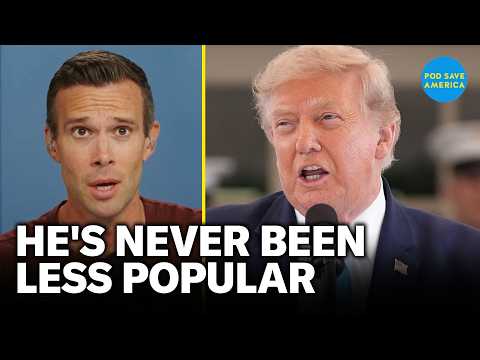
A contentious Fox News interview between Michigan Senate candidate Abdul Al-Saheib and host Jesse Watters becomes a showcase of how political media debates are often shaped as much by framing as by policy. The discussion centers on healthcare, guns, the economy, immigration, and cultural issues, with the video presenting Al-Saheib as a candidate attempting to redirect the conversation toward broader concerns like affordability and access to services.
The interview clips highlight Al-Saheib’s willingness to challenge the questions being presented to him rather than simply answer within the terms set by the host. His responses repeatedly attempt to move the focus toward healthcare costs, inflation, and government spending. Supporters may find this approach effective because he appears confident under pressure, while critics may view some of his answers as avoiding more direct responses to difficult questions.
The segment spends significant time on healthcare debates involving government involvement, parents, doctors, and medical decisions. The discussion reflects a broader political disagreement over the role of government in healthcare, but many of the claims made by both sides are presented as arguments rather than fully examined policy analysis. The video is strongest when showing the dynamics of the exchange rather than attempting to resolve complex issues.
A major theme is the tension between cultural issues and economic concerns. The host repeatedly raises topics such as sports participation and immigration enforcement, while Al-Saheib argues that voters are more focused on prices, healthcare, and daily expenses. The video clearly favors the interpretation that these topics are distractions, but viewers looking for a neutral examination may find that opposing perspectives receive limited exploration.
The discussion around immigration, ICE, and government agencies introduces another complicated policy area. The exchange raises questions about enforcement effectiveness and government power, but it does not provide enough background or evidence to fully evaluate the competing claims. The conversation works better as an example of political messaging than as a comprehensive examination of immigration policy.
The presentation is built around selected moments from a longer interview, emphasizing confrontations and memorable exchanges. That editing style creates an engaging and fast-moving viewing experience, but it also means viewers are seeing a curated version of the discussion rather than the complete context. The analysis is focused more on highlighting successful debate moments than examining where either side may have stronger arguments.
The video succeeds at capturing the energy of a high-pressure political appearance and explaining why certain moments gained attention. However, its strongly supportive perspective leaves little room for evaluating the candidate’s positions critically or considering the strongest arguments from the opposing side. It works best as political commentary about a debate performance rather than as a balanced breakdown of the issues discussed.
Pros
- Highlights the challenges of navigating an adversarial political interview and shows how candidates respond under pressure.
- Identifies important differences between focusing on cultural issues and economic concerns in political messaging.
- Provides an engaging look at how debate moments can shape public perception.
Cons
- Relies heavily on a favorable interpretation of the candidate’s performance without deeply examining opposing arguments.
- Uses selected clips that may not represent the full interview context.
- Offers limited factual analysis of complex policy topics such as healthcare, immigration, and government spending.
This is an energetic piece of political commentary that effectively captures the intensity of a combative interview and the appeal of a candidate who stays composed under pressure. Its value comes from analyzing communication and political strategy, though viewers seeking a complete understanding of the underlying policy debates will need more context.