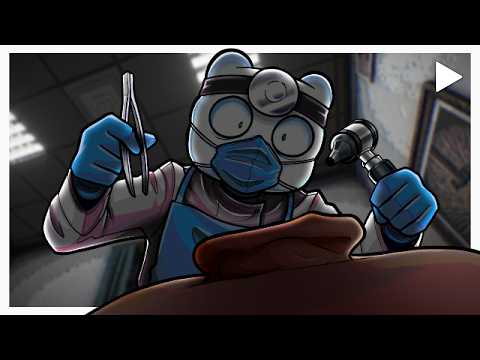
A porch swing and a family photograph are enough to make the host of this six-game challenge nervous about taking another step into the Baker house. The rules give that hesitation a price. Each game gets at least 30 minutes, and quitting early costs $30 for the chat. It’s a simple setup that pays off whenever the host starts bargaining over how much longer they can stand to play.
Resident Evil 7 gives the host an immediate excuse to turn fear into a running joke. Ethan Winters has come to Louisiana to find his missing wife, and the host spends much of the search trying to talk him into giving up on the marriage. The routine is funniest when the game supplies a fresh reason to reconsider, especially when the rescue turns into a fight. It wears thin during the slower stretches of searching the farmhouse, though there’s a nice surprise in hearing the host realize they’ve already played for an hour and admit they’re having fun.
Dead Space and Resident Evil 2 bring out a more curious player. In Dead Space, the host delights in figuring out the plasma cutter and discovers that a corpse lying still can be more unnerving than a monster already on the attack. Resident Evil 2 gives them a similar foothold through Leon’s weapons, even as scarce ammunition and zombies that get back up keep them second-guessing their shots. The host’s fondness for Isaac and Leon is funny in its own right, and it helps explain why these two games leave them wanting to come back.
Outlast and P.T. put that newfound confidence under very different kinds of pressure. In Outlast, the host keeps up an increasingly desperate impression of investigative reporter Miles Upshur, right down to admiring the camcorder shot in a room full of bodies. The countdown turns the last few minutes into a struggle of their own before the host calls it quits. P.T. gets an even quicker surrender, lasting about seven minutes before the host has had enough. Their explanation afterward is unusually precise for a stream built around immediate reactions. A repeating hallway and a few noises give their imagination plenty to work with.
Alien: Isolation takes longer to find its rhythm. The host spends much of the opening getting Ripley dressed, looking for a way to restore power, and wondering when the alien will show up. Naming it Chip is a good comic move, especially once the host realizes a vent offers less protection than they’d hoped. Still, the time spent working out where to go leaves relatively little room for the encounter itself, and the final game feels slight alongside the more developed stretches aboard Isaac’s ship or in Leon’s police station.
The closing tally of ten gifted subscriptions gives the challenge a clear finish, but the more revealing moment comes when the host identifies which games they could imagine finishing. The opening claim about the six scariest games rests on the host’s impression of which titles people tend to bring up, and the sessions range from roughly seven minutes to more than an hour. That makes the comparisons most persuasive at the level of individual scares, where the host can pinpoint exactly when they felt capable, cornered, or ready to close the game.
Pros
- The 30-minute minimum makes the Outlast countdown tense even between scares.
- The host’s affection for Isaac and Leon brings warmth to the combat-heavy stretches.
- The running impression of Miles Upshur turns the camcorder into a source of comedy as well as dread.
- The discussion of P.T. explains how sound and repetition made an ordinary hallway so hard to face.
- The closing conversation gives the challenge a genuine sense of discovery by naming the games the host would willingly finish.
Cons
- The jokes about abandoning Ethan’s marriage run out of variations before the farmhouse sequence ends.
- The Alien sequence spends so much time on navigation and power restoration that Chip barely gets a turn.
- The opening gives little explanation for how the six titles earned their billing.
- The uneven play times limit how much weight the comparisons can carry beyond the opening encounters.
What makes the challenge worth watching is how quickly panic can turn into curiosity once the host finds a way to act. Some of the wandering could have been trimmed, but the closing conversation earns its place by showing how a player who started out dreading every door ended up with two games they wanted to finish.