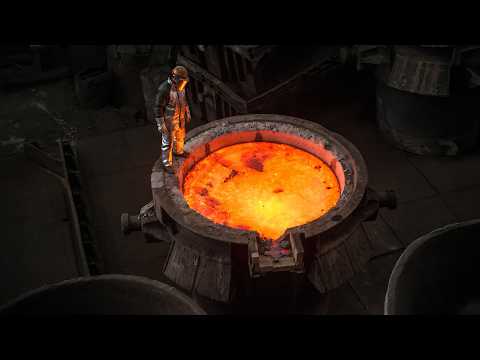
An urn becomes the emotional center of a theological question that many grieving Christians may genuinely wrestle with: if a body has been cremated, can it still participate in the resurrection described by Paul? Rather than treating that fear as foolish, the presentation uses the story of a widow mourning her husband of 41 years to give the subject immediate human weight. The central answer is emphatic: within the Christian interpretation being presented, cremation does not place someone beyond God's ability to raise the dead.
The teaching is organized primarily around 1 Corinthians 15, beginning with Paul's questions about how the dead are raised and what kind of body they will have. Its most effective interpretive move is the sustained attention given to Paul's seed analogy: what is sown is not identical in form to what eventually emerges, and God "giveth it a body." From there, the speaker argues that resurrection does not depend upon preserving the chemistry or physical integrity of a corpse. That provides a coherent scriptural response to the cremation question, although it remains a theological interpretation rather than something that can be demonstrated empirically.
Paul's discussion of different kinds of flesh, celestial and terrestrial bodies, and the differing "glory" of the sun, moon and stars is then incorporated into the argument. The speaker reads this sequence as evidence of God's ability to provide radically different kinds of bodies and connects it directly to Paul's subsequent statement, "So also is the resurrection of the dead." The progression is explained clearly, but claims about stars, bodies and creation function here as theological illustrations rather than scientific evidence for resurrection.
The strongest section comes with the four contrasts in verses 42 through 44: corruption and incorruption, dishonor and glory, weakness and power, and natural and spiritual bodies. Breaking these into pairs makes a difficult passage unusually accessible and keeps the discussion focused on transformation rather than preservation. The explanation of a "spiritual body" as still being a body rather than simply a disembodied spirit is important to the speaker's case, though the treatment of the underlying Greek is brief and presented without enough linguistic or scholarly context for viewers to assess competing interpretations.
The later movement from Adam to Christ broadens the argument beyond cremation. Christ's resurrection becomes the model through which the speaker understands Paul's promise that believers will "bear the image of the heavenly," followed by verses 50 through 54 and the declaration that "we shall all be changed." Within the video's theological framework, this is a useful shift because it makes the condition of someone's remains secondary to divine transformation. References to Christ's resurrection and Gospel accounts are appropriately recognizable as Christian scriptural claims, but the presentation occasionally describes theological conclusions with the certainty of demonstrated proof rather than distinguishing faith commitments from independently established evidence.
The delivery is passionate, repetitive and deliberately sermon-like. Recurring phrases such as "the record," "the next turn," and "here is how to sit with this" give the teaching structure, while repeatedly returning to the widow and her urn keeps an abstract doctrinal discussion connected to grief. At the same time, the insistence that these verses have largely "gone quiet" in preaching is supported mainly by the speaker's experience rather than evidence about Christian preaching broadly, and the brief historical references to early canonical lists and church councils do little to establish that larger claim. The correction distinguishing 1 Corinthians 15 from chapter 16 is commendably explicit, but the surrounding presentation could be considerably tighter without losing its pastoral force.
Pros
- Grounds its central argument in an extended reading of 1 Corinthians 15 rather than relying only on reassurance.
- The seed analogy and four resurrection contrasts are explained in an accessible, memorable sequence.
- Keeps the theological discussion connected to the practical fear of grieving people considering the implications of cremation.
- Clearly argues that resurrection, within the interpretation presented, depends on God's transformative action rather than the preservation of a corpse.
- Explicitly corrects the chapter-number confusion instead of allowing an inaccurate reference to stand.
Cons
- Repeated claims that these passages have broadly disappeared from Christian preaching are not adequately substantiated.
- Historical references to the biblical canon are introduced quickly without enough context to show their relevance to the cremation argument.
- Greek terminology and several contested theological interpretations are presented with limited discussion of alternative readings.
- The sermon repeatedly revisits the same conclusion, making the presentation longer and more emphatic than the underlying argument requires.
- The distinction between scriptural reasoning within Christian belief and independently demonstrable evidence is not always maintained clearly.
The teaching succeeds as a compassionate, scripture-centered response to a specific fear about cremation, with Paul's language of death, transformation and resurrection providing a clear framework for its conclusion. Its pastoral storytelling and close attention to several key verses are effective, though broader historical claims, linguistic interpretations and assertions about neglected preaching would benefit from stronger support and greater nuance. A tighter presentation could preserve the reassurance while making the biblical argument even more focused.