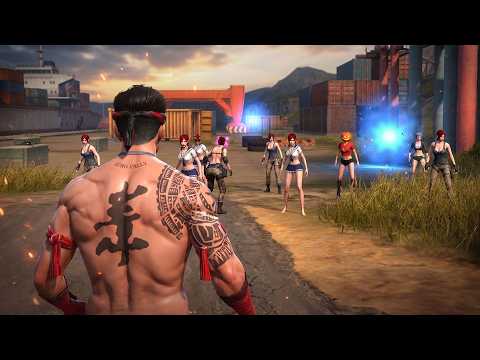
The presentation revisits an open-world action RPG only a few months after release to assess whether its rapid succession of updates has meaningfully improved the experience. Rather than delivering a second full review, it functions as a progress report that compares the launch version with the current state of the game. The structure is straightforward, combining firsthand impressions from a returning player with observations from someone starting fresh, allowing the discussion to cover both early-game onboarding and the experience of resuming an existing save.
A recurring strength of the discussion is its willingness to separate broad improvements from unrealistic expectations. The presenter argues that the game has become smoother and less frustrating through numerous quality-of-life changes, but consistently stops short of claiming it has been fundamentally reinvented. Areas such as the opening hours, tutorial flow, and narrative are described as remaining weak, while the focus stays on practical enhancements rather than exaggerated praise.
The review provides clear examples of those improvements, highlighting revised difficulty options, better-balanced boss encounters, expanded inventory management, additional storage, more fast travel points, interface refinements, and numerous control adjustments. Instead of treating each change as a major breakthrough, the presentation explains how many small conveniences collectively improve the overall experience. This cumulative approach makes the assessment feel grounded and helps viewers understand why returning players might notice meaningful differences even if the core game remains familiar.
Another notable aspect is the attention given to ongoing post-launch support. The presenter points to the pace of updates, frequent bug fixes, and the addition of entirely new systems such as expanded trading mechanics, cross-save functionality, mounts, equipment options, and customization features. These are presented as observable additions to the game rather than guarantees of future quality, while expectations about upcoming content remain appropriately speculative. When discussing possible future story revisions, the video clearly frames those ideas as expectations based on developer comments rather than established outcomes.
The presentation also benefits from acknowledging broader industry questions without allowing them to dominate the review. It recognizes the criticism that many of these improvements arguably should have been available at launch, while still evaluating the game's current state on its own merits. This balanced treatment avoids dismissing legitimate complaints from early adopters and instead places the rapid post-release support within a wider context of modern game development.
The overall conclusion is measured and consistent with the evidence presented throughout. The creator maintains that the game's unusual design and storytelling limitations remain intact, meaning players who strongly disliked the original release are unlikely to change their minds. At the same time, the documented quality-of-life improvements, stability fixes, and continued developer responsiveness provide a persuasive case that the experience has become noticeably more polished for both newcomers and returning players.
Pros
- Clearly distinguishes between incremental quality-of-life improvements and a complete transformation of the game.
- Uses both a returning save and a fresh playthrough to evaluate how updates affect different types of players.
- Explains numerous gameplay, interface, inventory, combat, and traversal changes in practical terms rather than simply listing patch notes.
- Maintains balanced expectations by acknowledging ongoing weaknesses alongside meaningful post-launch improvements.
- Provides useful context about the pace of updates while avoiding certainty about future features that have only been discussed by the developer.
Cons
- Much of the evaluation relies on personal impressions over a relatively short revisit rather than extensive long-term testing of every new system.
- The discussion moves quickly through many additions, leaving some larger features, such as the expanded trading mechanics, only briefly examined.
- Viewers seeking a comprehensive reassessment of every aspect of the game may find the intentionally limited update format less detailed than a full review.
This revisit succeeds as a focused progress report that explains how steady refinement has improved the overall experience without overstating the changes. It remains most convincing when documenting concrete gameplay and usability updates while recognizing that the game's fundamental strengths and weaknesses are largely unchanged.