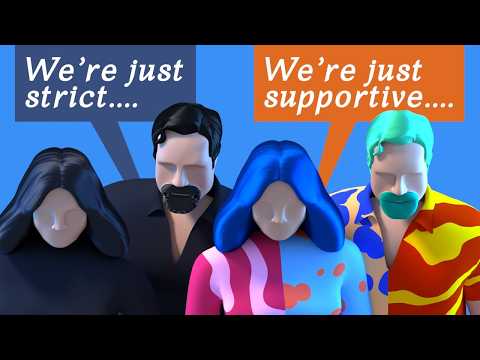
What begins as a straightforward railroad trespassing stop becomes far more revealing once the detained man calls his mother. Officers say they found him walking in an active track area at New Rochelle while using his phone, surrounded by live tracks and third rails, and they repeatedly explain that their immediate concern is preventing someone from being struck by a train. He says an open gate made him believe he could walk there and apologizes for the mistake. The encounter could have remained a routine safety enforcement interaction, but the repeated invocation of his mother's legal background, his Harvard education, his research work, and his teaching turns it into an uncomfortable discussion about whether personal credentials should influence consequences for conduct that officers say would ordinarily constitute criminal trespassing.
The bodycam interaction itself is considerably calmer than the provocative framing surrounding it might suggest. The man cooperates, provides identification, acknowledges that he did not realize the area was prohibited, and does not appear to challenge the officers aggressively. The officers likewise explain why he is being detained, allow him to communicate with his mother, and repeatedly reassure both of them that he is fine. Handcuffing is described as a safety procedure during the detention rather than evidence that a final charging decision has already been made. Whatever viewers think about the necessity of that restraint, the footage presented here shows a controlled encounter rather than a confrontation spiraling through hostility or resistance.
The strongest part of the officers' explanation is that they do not rely solely on the technical fact of trespassing. They describe the station as extremely busy, say four active tracks and four live third rails are present, and explain that trains can approach at substantial speed without being able to stop quickly. They also note that a person on the tracks can force train crews to respond to an uncertain emergency, potentially affecting passengers as well as the trespasser. Those statements provide the rationale the officers give for treating track access seriously. The broader frequency claims about people being struck are not independently established within the video, but the officers consistently frame their enforcement decision around railroad safety rather than suggesting the man's conduct was malicious.
The open gate is therefore an important detail without automatically resolving the issue. The man repeatedly says the area appeared open and that he was simply walking or running through it, which supports his explanation that this was an innocent mistake rather than deliberate defiance. The officers do not accuse him of intending harm and appear to accept that he misunderstood where he could go. Their position is instead that an open gate does not turn Metro-North track property into a permissible pedestrian route. That distinction matters because the footage supports two propositions at once: he may genuinely have believed he was allowed to walk there, and the officers may still have regarded his presence there as an enforceable safety violation.
The conversation with his mother creates the episode's most contentious material. She identifies herself as a former federal prosecutor and emphasizes that her son is a Harvard graduate, has no criminal history, conducts research, teaches geometry to children, and is not a criminal. He also tells the officer early in the encounter that his mother is a lawyer, while another voice urges him to mention her prosecutorial background. Those credentials may be intended to reassure officers that he is responsible and unlikely to present a problem, but they have little obvious relationship to whether he entered a restricted railroad area. Repeating them while asking officers not to issue a ticket inevitably creates the appearance of arguing that his background should earn leniency, even though the footage alone cannot establish anyone's motives beyond what is actually said.
The officers' eventual response adds useful nuance because the outcome is already lenient relative to what they describe as the usual charge. Officer Gomez says criminal trespassing would normally be handled as a misdemeanor but that, because the man has no record and has been cooperative, they are reducing the matter to a violation and issuing an appearance ticket. His mother nevertheless continues asking whether any citation is necessary and worries about the effect on his record and driver's license. The officers repeatedly say the reduced violation is not the more serious criminal charge she fears and explain that some enforcement is necessary as a deterrent. Based solely on this interaction, the notable point is not that the officers ignore his circumstances; they explicitly say his cooperation and clean history are reasons for reducing the severity of the response.
That makes the status-focused framing both understandable and somewhat sensationalized. The "lawyer mom" angle is genuinely present in the encounter, and the repeated references to prestigious education and professional accomplishments are unusual enough to deserve attention. Yet reducing the entire event to someone trying to escape consequences through family influence risks overlooking how mundane much of the footage is: a person enters a dangerous restricted area, says he misunderstood an open gate, cooperates with police, receives a reduced citation, and leaves with instructions to appear in court. There is no evidence here that the officers are intimidated into dropping enforcement, nor does the footage establish that the man's credentials ultimately change the outcome beyond the officers' stated consideration of his clean record and cooperation.
As bodycam material, the encounter is useful precisely because it leaves viewers with something more complicated than a simple hero-and-villain narrative. The officers communicate the safety rationale repeatedly and remain composed while facing sustained requests for a warning, while the man himself is cooperative and apologetic rather than entitled or combative. His mother's repeated credential-based appeals are the most awkward element, particularly after officers have already explained that the charge is being reduced, but concern about a child's legal consequences is also plainly part of the conversation. The footage would benefit from clearer contextual information about the precise location, signage, gate configuration, applicable trespassing rules, and eventual court outcome; without those details, it documents the stop effectively but cannot settle every legal or fairness question suggested by the presentation.
Pros
- The bodycam interaction provides direct access to the officers' stated reasons for the detention and citation rather than relying entirely on retrospective characterization.
- Officers repeatedly explain the railroad-safety concern, including active tracks, third rails, train speeds, and the risks created by pedestrians entering track areas.
- The man's explanation that an open gate made the route appear accessible is preserved, allowing viewers to understand why he says the trespass was accidental.
- The footage shows that his cooperation and lack of prior trouble are explicitly considered when officers reduce what they describe as a normally more serious charge to a violation.
- Repeated references to legal, educational, and professional credentials provide legitimate material for examining whether social status is being invoked in an attempt to obtain leniency.
- The calm behavior of both the detained man and officers keeps the encounter focused on enforcement and consequences rather than manufacturing conflict that the footage does not show.
Cons
- The provocative framing risks making a relatively controlled safety stop appear more confrontational or scandalous than the interaction itself.
- The significance of the open gate cannot be fully evaluated because the presentation provides little context about signage, barriers, pedestrian access, or the exact location where the man entered the restricted area.
- Officers' broader statements about how frequently people are struck and the normal charging practice are presented without outside documentation.
- Repeated emphasis on Harvard, research, teaching, and prosecutorial credentials can dominate attention even though those facts do not determine whether the underlying trespass occurred.
- The absence of the eventual court outcome leaves unresolved what happened to the violation after the appearance ticket was issued.
The footage is most interesting as an example of how a routine safety violation can become socially charged once education, professional status, family connections, and fears about a criminal record enter the conversation. The officers consistently explain why track trespassing matters and ultimately issue a reduced violation, while the man's cooperative behavior and claim of an honest mistake make the encounter less inflammatory than its framing implies. The credential-based appeals are undeniably awkward, but fuller legal context and the eventual court outcome would be necessary before turning this controlled stop into a broader conclusion about privilege or policing.