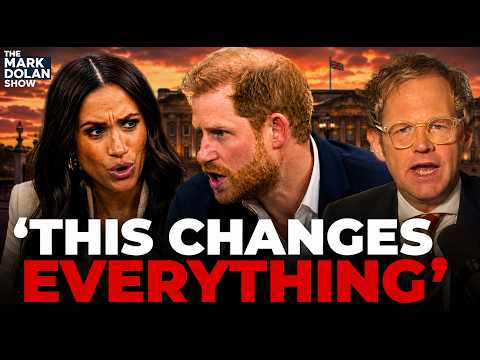
Harry’s reported plan to base himself and his children in Britain while Meghan spends substantial periods in California gives the discussion a concrete foundation for questioning how the couple intends to structure family life. The hosts focus on reported details including British schooling, a possible Cotswolds home, Harry’s supposed 12-to-15-year commitment to the UK, and Meghan’s anticipated travel between countries. Those details create a legitimate subject for analysis, but the presentation quickly moves from examining an unusual arrangement to declaring that it constitutes a separation, even though the reporting quoted within the program explicitly includes a source denying that the marriage is in bad shape.
The most useful material comes from working through Alison Boshoff’s reporting rather than simply repeating a sensational headline. Specific claims about school terms, holidays in California, house hunting, Harry becoming the primary at-home parent, and Meghan scheduling periods in Britain and the United States help viewers understand what the alleged arrangement could actually look like. The hosts also notice an important tension in the reporting: sources apparently describe significant geographical separation while simultaneously insisting that the plan was mutually agreed upon and does not indicate marital trouble. That contradiction is worth exploring, but it does not by itself establish which interpretation is correct.
Much of the commentary nevertheless treats inference as confirmation. The hosts repeatedly call the arrangement a physical, career, and parenting separation, describe it as the “beginning of the end,” and characterize explanations about Meghan’s work commitments as lies. They also speculate about why she would spend time away from the children, whether she might benefit commercially from remaining married, whether Harry could become interested in another woman, and whether the couple will eventually turn against each other through competing media briefings. These possibilities may fit the hosts’ broader theory, but the material presented here does not establish them as facts.
The program is particularly weak when it tries to infer Meghan’s motives and character from the proposed living arrangement. Tash calls her a narcissist while explicitly framing that as an opinion, and both speakers repeatedly interpret her anticipated travel as evidence that she does not prioritize motherhood. The claim that mothers rarely become the parent living farther from their children is presented conversationally rather than with evidence, and the discussion does not seriously consider alternative family arrangements or professional reasons that might explain the schedule. That makes the analysis feel designed to prosecute an existing case against Meghan rather than test competing explanations.
A broader argument about media manipulation is similarly intriguing but insufficiently demonstrated. The hosts suggest that conflicting reports are deliberately planted by Sussex sources so Harry and Meghan can later accuse journalists of misinformation, and they criticize mainstream royal correspondents for accepting those briefings. Conflicting sourcing can certainly be worth scrutinizing, especially when anonymous friends are supplying detailed accounts of private family decisions. However, attributing those discrepancies to a coordinated strategy requires stronger evidence than the program provides, and calling contrary explanations “lies” effectively settles questions that remain unresolved within the material being discussed.
Presentation choices further weaken what could have been a focused examination of a potentially significant change in the Sussexes’ lives. A lengthy tribute to Dolly Parton becomes an opportunity to contrast her character with Harry and Meghan, including sweeping accusations that the couple used fame to create division and “stoke race war.” The Medicare advertisement then interrupts the discussion again, while later subscription promotion emphasizes the host’s independence from supposedly compromised mainstream royal coverage. The conversational chemistry between the hosts keeps the program moving, but repeated insults, declarations of certainty, and personal judgments make it harder to distinguish sourced reporting from interpretation.
There is ultimately a worthwhile question underneath the rhetoric: if the reported schooling and residency plans are accurate, how will a marriage and parenting partnership operate when one spouse expects to spend considerably more time in another country? The program assembles enough reported detail to show why that question has attracted attention and why geographical separation could fuel speculation. Yet it never produces evidence sufficient to justify its central certainty that an actual marital separation has been confirmed, especially when it quotes sourcing that directly disputes that conclusion.
Pros
- The discussion identifies specific reported details about schooling, residency, travel, parenting responsibilities, and the possible duration of Harry’s UK plans rather than relying entirely on vague rumors.
- The hosts recognize the genuine tension between reports of extensive geographical separation and simultaneous assurances from sources that the marriage remains intact.
- Examining conflicting media briefings raises a reasonable question about how much confidence should be placed in anonymously sourced accounts of private family decisions.
Cons
- The central separation claim is presented as confirmed even though the material cited establishes a proposed geographical arrangement, not a confirmed marital breakup, and includes a source explicitly denying serious marital trouble.
- Speculation about Meghan’s motives, parenting priorities, commercial calculations, personality, and Harry’s possible future relationships repeatedly extends well beyond the evidence presented.
- Assertions about deliberate Sussex media manipulation and explanations being “lies” are delivered with considerably more certainty than the available sourcing supports.
- Personal attacks, the extended Dolly Parton comparison, promotional interruptions, and strongly adversarial language reduce the analytical discipline of an otherwise potentially interesting media discussion.
The reported possibility of Harry establishing a long-term British base while Meghan divides her time internationally provides legitimate grounds for questions about the couple’s future, and the program usefully gathers several details that explain why speculation has intensified. Its central weakness is turning those questions into certainty: geographical separation and contradictory anonymous briefings are suggestive circumstances, not proof of a marital separation. A more careful distinction between reporting, inference, and personal opinion would have produced a substantially stronger analysis.