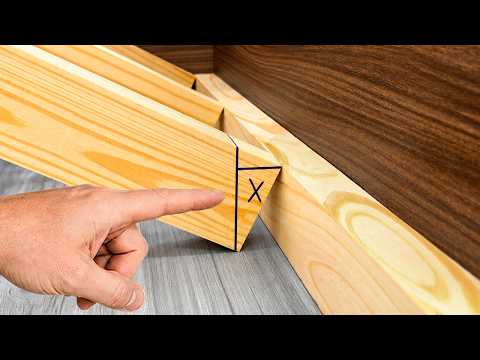
Traditional woodworking often attracts attention because of the precision, patience, and practical knowledge required to transform ordinary lumber into something remarkable. A demonstration centered on a 65-year-old carpenter promises an opportunity to appreciate those qualities, particularly when the featured technique is presented as impressive enough to surprise experienced professionals. However, the presentation relies entirely on music, leaving viewers without a verbal explanation of the craftsmanship being showcased.
The music-only approach suggests an emphasis on visual observation rather than conventional instruction. That can be an effective format for woodworking content, where watching a skilled craftsperson manipulate tools and materials may communicate more than lengthy explanations. Unfortunately, without accompanying descriptions or identifiable details about the demonstrated process, it is difficult to determine exactly what makes this particular technique distinctive.
The carpenter's age is another prominent part of the presentation's appeal. Featuring an older craftsperson can highlight the value of accumulated experience and traditional skills that are often developed over decades. Yet age alone does not establish professional mastery, and the presentation provides no biographical information, career history, or explanation of how the carpenter developed the technique.
The suggestion that even master carpenters are amazed creates expectations of an especially innovative or unusually difficult woodworking method. Such a claim would be more persuasive with reactions from experienced professionals, comparisons to conventional approaches, or explanations of the specific challenges involved. None of those supporting elements are established, making the assertion more promotional than demonstrable.
From an educational standpoint, the absence of narration significantly limits the presentation's usefulness. Viewers interested in learning woodworking techniques benefit from explanations of measurements, tool selection, material preparation, and the reasoning behind particular methods. Without that guidance, even an impressive demonstration can leave important questions unanswered, especially for beginners hoping to understand whether a technique could be reproduced safely and accurately.
The minimalist format also creates an accessibility barrier for audiences seeking more than visual entertainment. Music can provide atmosphere without distracting from hands-on work, but it cannot communicate technical decisions, clarify unusual procedures, or explain potential limitations. A stronger presentation would preserve the quiet appeal of craftsmanship while providing enough instructional context to make the featured work more informative.
Ultimately, the central weakness is the distance between the ambitious promise and the information provided to substantiate it. The subject has obvious potential for an engaging woodworking showcase, but the lack of explanatory content prevents a meaningful assessment of the carpenter's methods, their originality, or their practical advantages. What could have been a compelling examination of traditional expertise remains an insufficiently documented presentation.
Pros
- Focuses on traditional woodworking craftsmanship, a subject with considerable potential to interest both experienced carpenters and hobbyists.
- Uses a music-centered format that avoids excessive commentary and could allow viewers to concentrate on the hands-on demonstration.
- Highlights the potential value of experience and accumulated practical knowledge in skilled trades.
Cons
- Provides no verbal explanation of the woodworking technique, its intended purpose, or the methods involved.
- Does not substantiate the claim that experienced master carpenters are amazed by the featured craftsmanship.
- Offers no information about the carpenter's background, professional experience, or development of the technique.
- Lacks the technical guidance necessary to make the presentation particularly useful as an instructional resource.
- Relies on an attention-grabbing premise without sufficient supporting context to establish what makes the technique exceptional.
A promising celebration of traditional woodworking is undermined by the lack of explanation and supporting information. Although a music-only format can suit demonstrations of skilled craftsmanship, the presentation provides too little context to establish the significance of the featured technique or deliver meaningful educational value. The subject may appeal to woodworking enthusiasts, but the ambitious claims deserve a more informative and carefully documented presentation.