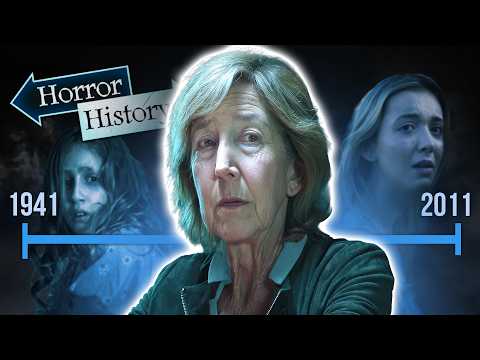
A child-killing figure associated with pregnancy, illness, and corrupted motherhood provides a remarkably fitting foundation for Undertone. The discussion begins by tracing the entity through Lamashtu in ancient Mesopotamia, Lamia in Greek mythology, and eventually Abyzou in traditions connected with the Testament of Solomon. That long historical route establishes recurring motifs—threatened infants, sleeplessness, disease, protective rituals, and distorted maternal imagery—before showing how the film repurposes them. The result is more substantial than a straightforward plot explanation because the mythology becomes a framework for interpreting Evie’s fears rather than merely trivia about the monster.
The historical sections are strongest when they acknowledge uncertainty and change across traditions. Different versions of Lamia’s story are identified rather than collapsed into a single definitive account, and the proposed linguistic connection between Abyzou and the Mesopotamian Abzu is attributed to a scholarly theory rather than presented as settled fact. Likewise, when the film invents or alters folklore—particularly its account of the St. Rita statue—the distinction is explicitly made. Some broader claims about mythology’s evolution and cultural transmission still move quickly, but the presentation generally understands that thousands of years of folklore cannot be treated as one continuous, perfectly documented biography.
Connecting that history to writer-director Ian Teweson’s conception of Undertone gives the analysis its emotional center. His caregiving experience, grief, drinking, Catholic upbringing, interest in spatial audio, and description of Evie as an expression of his own fears about nurturing all help explain why Abyzou works thematically. Pregnancy and motherhood are therefore not incidental reasons to select a frightening demon; they connect Evie’s unwanted pregnancy, care for her dying mother, guilt, and religious background. The discussion of Mary as an idealized maternal figure opposite Abyzou’s destructive motherhood is particularly effective because it gives the religious imagery a clear dramatic purpose.
The examination of sound is equally productive. Nursery rhymes, reversed recordings, podcasts, whispered phrases, the death rattle, and Evie’s constant listening are brought together around the idea that folklore survives through participation. Treating podcasts and internet horror as contemporary equivalents of oral storytelling is a persuasive interpretation of a film originally conceived as an audio drama. The breakdown also appropriately separates established explanations from invented horror lore when discussing supposed nursery-rhyme origins, noting uncertainty around claims about “London Bridge Is Falling Down” rather than treating the grisliest explanation as historical fact.
Once the focus shifts heavily into the film’s chronology, however, the analysis becomes considerably more exhaustive than it needs to be. Nearly every recording, disturbance, phone call, repeated phrase, and escalating supernatural event receives attention. That thoroughness does uncover worthwhile connections—the recurrence of water, fever, sleep disturbance, infant imagery, and the number seven—but it can bury the larger argument beneath plot reconstruction. Frequent jokes about podcast productivity, religious horror clichés, pop culture, roller coasters, and other tangents give the presentation a recognizable personality, yet several interrupt genuinely interesting historical or thematic passages rather than sharpening them. The lengthy sponsor break is an especially noticeable disruption after the opening mythology establishes strong momentum.
The most interesting interpretive work arrives with Evie’s mother and the possibility that she died earlier than Evie accepts. The argument draws together the apparently empty bedroom, urn, voicemail, unusual verb tense, unseen nurse, untouched drink, and manifestations of the mother without pretending that the film explicitly resolves every detail. Similar care is applied to the ending, where Evie’s nightmares, the staircase imagery, unexplained thuds, and voices within the recordings are interpreted as possible echoes across time. These readings remain theories rather than facts, which is important because the film appears deliberately structured to leave supernatural manifestations, grief, and perception partially entangled.
By the conclusion, Abyzou has become more than the answer to a monster-identification question. The recurring idea that victims keep listening despite repeated opportunities to stop ties the film’s audio design to its larger concern with how stories perpetuate themselves, while Evie’s guilt creates a personal vulnerability that the ancient mythology can exploit. The final anecdote about Teweson becoming more open to supernatural possibilities after making the film is presented as his stated experience rather than evidence that such entities exist. That distinction helps an otherwise playful and enthusiastic horror-history presentation finish without confusing its subject’s beliefs with proof.
Pros
- Traces Lamashtu, Lamia, and Abyzou across different traditions while generally preserving uncertainty around disputed connections and changing versions.
- Clearly distinguishes several pieces of the film’s invented or altered mythology from historical folklore.
- Ian Teweson’s caregiving experiences and comments about Evie provide meaningful context for the film’s themes of guilt, motherhood, grief, and responsibility.
- The analysis of listening, audio recordings, nursery rhymes, and podcasts develops a strong thematic link between ancient folklore and modern storytelling.
- Detailed attention to Evie’s mother, recurring sounds, water imagery, and the ending produces several persuasive interpretations without presenting them as definitive answers.
Cons
- The latter half spends too much time reconstructing the film scene by scene when the strongest thematic connections could be made more efficiently.
- Frequent jokes and pop-culture detours sometimes interrupt otherwise compelling historical and analytical passages.
- Some broad claims about the transmission and evolution of ancient mythology receive less qualification than the more carefully handled disputed details.
- The extended sponsor segment substantially interrupts the transition from the opening mythology into the film’s creative background.
Ancient folklore and modern audio horror complement each other unusually well here, with Abyzou’s evolving mythology providing a meaningful lens for Undertone rather than merely an elaborate monster biography. The historical distinctions, creator context, and close thematic reading make the analysis rewarding, although tighter plotting summaries and fewer comedic diversions would give its best ideas more room to resonate.