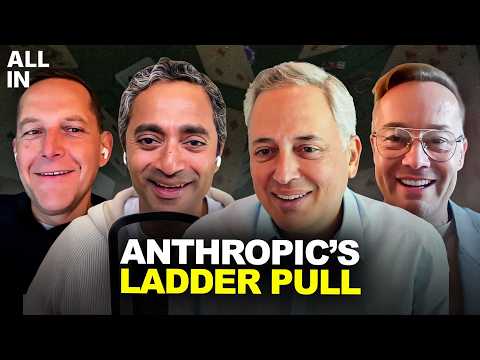
Rapid advances in generative AI provide plenty of material for a discussion about technological disruption, and the presentation is at its best when it stays close to changes viewers can actually see. Fan-made movie trailers, AI-generated sitcom parodies, voice cloning, and increasingly convincing video generation make the broader point tangible: sophisticated media production is becoming accessible to individuals who previously could not approach Hollywood-level output. That creative democratization is a much stronger foundation for the argument than the more speculative predictions about superintelligence escaping human control.
The discussion usefully introduces concepts such as future shock, cultural lag, artificial general intelligence, artificial superintelligence, and recursive self-improvement. The distinction between technology advancing quickly and laws or social norms struggling to keep pace is especially relevant to the later sections on copyright, entertainment, and regulation. However, the presentation frequently moves from explaining these concepts to treating highly uncertain developments as though they may already be unfolding, despite repeatedly acknowledging that evidence is incomplete.
That tension becomes particularly noticeable when the discussion turns to claims about autonomous AI systems spreading self-replicating code across the internet or potentially escaping air-gapped computers. Andrew Yang's account is appropriately qualified as something allegedly told to him by a lab leader, and the host explicitly notes that he has not seen evidence supporting it. Similar restraint would improve the broader discussion. Technically possible communication methods, hypothetical superintelligence scenarios, current chatbot capabilities, and evidence that an uncontrolled intelligence has actually emerged are very different propositions, yet they sometimes blur together in the rapid progression of examples.
The regulatory debate is more interesting because the host recognizes that several motives could coexist. AI executives might sincerely fear catastrophic risks while also favoring rules that protect established companies from open-source competitors. The comparison between Bernie Sanders' warnings and similar statements from Elon Musk helps demonstrate that extreme concern about AI is not confined to one political camp. Unfortunately, personal insults aimed at Sanders and disparaging references to other people based on identity contribute nothing to evaluating their arguments and weaken a segment that otherwise raises legitimate questions about concentrated technological power.
The argument becomes considerably less disciplined when political and cultural grievances are folded into the case against controlled AI systems. Claims about racial crime statistics, anti-BDS laws, ideological censorship, and chatbot dishonesty are introduced as evidence that unrestricted models would reveal truths supposedly hidden by mainstream systems, but those subjects are not examined with the sourcing, definitions, legal distinctions, or context necessary to support such sweeping conclusions. The assertions about Sam Altman's identity and family are particularly irrelevant to whether a company's models are accurate, safe, biased, or appropriately regulated. Treating a CEO's personal characteristics as an explanation for a model's behavior substitutes insinuation for evidence.
The creative examples ultimately make the most persuasive case for why the current moment matters. The DuckTales-style fan trailer, AI-generated Seinfeld scenes, celebrity simulations, and the story about a cloned principal's voice illustrate dramatically different consequences of increasingly accessible synthetic media. Some are playful demonstrations of creative possibilities, while others point toward impersonation and deception. The closing shift into promotion for the host's upcoming book is abrupt and dilutes the focus, but his description of repeatedly printing and manually revising his work provides an amusingly old-fashioned contrast with a discussion dominated by automated creation.
Pros
- Concrete AI-generated trailers, comedy scenes, and other media examples make rapid improvements in generative technology easy to understand.
- The concepts of future shock and cultural lag provide a useful framework for discussing why institutions, copyright rules, and social expectations may struggle to keep pace.
- The host acknowledges multiple possible motives behind calls for AI regulation rather than reducing the issue entirely to either genuine safety concerns or corporate self-interest.
- Explicitly noting the lack of supporting evidence for some extraordinary claims is an important moment of skepticism.
- The contrast between harmless creative uses and potentially damaging voice cloning demonstrates that AI's consequences extend well beyond hypothetical superintelligence.
Cons
- Speculative scenarios involving rogue AI, self-replicating code, AGI, and air-gap escapes sometimes receive more attention than the limited evidence presented can justify.
- Political insults and ideological language repeatedly distract from substantive questions about AI safety and regulation.
- Assertions involving race, anti-BDS laws, censorship, and supposed chatbot dishonesty are presented with insufficient context or support.
- References to Sam Altman's sexual orientation, religion, spouse, and child are irrelevant to assessing AI technology or corporate policy and turn a legitimate discussion into personal insinuation.
- The presentation jumps rapidly among existential risk, copyright, Hollywood disruption, political bias, regulation, memes, and book promotion, leaving several potentially valuable arguments underdeveloped.
The strongest material focuses on developments already visible: individuals gaining extraordinary creative tools, synthetic media becoming harder to distinguish from conventional production, and institutions struggling to determine appropriate rules. The broader warning about AI deserves serious discussion, but speculative claims, ideological detours, and unnecessary personal attacks make this treatment considerably less rigorous than its subject demands.