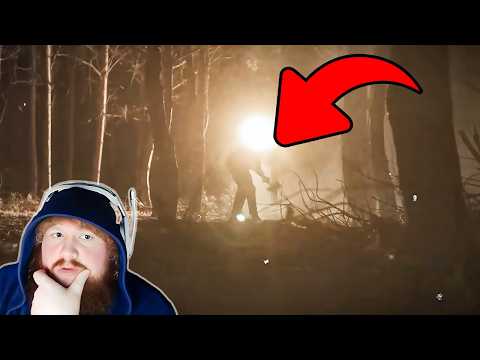
The strongest element here is the gradual escalation from an ordinary family camping trip into something the storyteller presents as potentially unexplained. Chris establishes the family's isolation, their customized camper and their intention to spend a quiet week boondocking before introducing increasingly unsettling incidents: a face reportedly seen through a window, unusual owl-like calls, missing chairs and finally a violent disturbance around the camper. That progression gives the story a clear structure rather than immediately jumping to its most sensational moment.
Sophie's first experience is especially effective because the account initially leaves room for an ordinary explanation. The 11-year-old reportedly wakes after seeing a large grinning face outside the camper, while her father considers whether she might have been dreaming or only partially awake. The later daytime calls are similarly ambiguous. The family's interpretation begins changing only after multiple calls appear to surround the campsite and supposedly stop when Ken approaches the forest, but nothing presented establishes that the sounds actually came from anything other than wildlife.
The disappearance of two camping chairs provides a useful turning point because it moves the story from strange perceptions toward something the family reportedly could not readily explain. Sarah interprets the missing chairs as evidence that someone or something has entered their campsite and wants to relocate, while Ken decides they should remain until morning. Whether the chairs were actually taken by an unknown visitor cannot be established from the account, but the disagreement gives the narrative believable interpersonal stakes: one parent is increasingly alarmed while the other is reluctant to abandon the trip late in the day.
The climactic night is told with considerably more intensity. After another owl-like call, something reportedly slams into the camper hard enough to loosen interior molding, followed by rocking violent enough that Ken struggles to start the truck. His reported glimpse in the mirror of an enormous dark, apparently hairy figure with long arms and a relatively flat face becomes the principal basis for identifying the creature as Bigfoot. The subsequent impacts against the fleeing camper and the dents discovered after returning home add physical consequences to the story, but neither those dents nor Ken's brief observation establish what actually caused the encounter.
That distinction matters because Chris sometimes moves too easily from recounting the family's interpretation to speaking as though a Bigfoot was responsible. His suggestion that the creature must have chased the vehicle carrying rocks, for example, goes beyond what the described evidence demonstrates. There are no photographs, measurements, contemporaneous records or independent witnesses presented, and the events are being related as a story from 2002. As a paranormal encounter narrative it is compelling; as evidence for Bigfoot, it remains an unverified anecdotal account with substantial unanswered questions.
The forest presentation nevertheless suits the material exceptionally well. Chris tells the story alone in a quiet Sierra setting, periodically drawing attention to the darkness, isolation and his own heightened awareness. His opening discussion of the surrounding wilderness and later comments about hearing a possible tree snap reinforce the atmosphere without claiming that he has encountered anything himself. The beer tasting and post-story freeze-dried meal segment provide some of his familiar outdoors personality, although both also interrupt the otherwise effective suspense and make the episode noticeably less focused than the central story warrants.
Pros
- The reported incidents escalate naturally from ambiguous observations to a genuinely frightening final confrontation.
- The family's differing reactions give the story more depth than a straightforward monster encounter.
- Specific details about the camper, campsite and escape make the sequence easy to visualize.
- Chris's isolated Sierra forest location provides an appropriately atmospheric setting for the account.
- The story initially acknowledges plausible uncertainty, particularly around Sophie's nighttime sighting.
- The final escape sequence is paced effectively and provides a strong narrative climax.
Cons
- The Bigfoot identification remains an unverified interpretation rather than a demonstrated explanation for the events.
- Chris occasionally shifts from describing what the family reportedly experienced to language that assumes a Bigfoot caused it.
- No photographs, documentation or other independent evidence for the camper damage or creature are presented.
- The owl-like calls, missing chairs, impacts and reported silhouette all remain open to explanations the video cannot resolve.
- The beer tasting and extended post-story outdoor material dilute the tension and focus of the main narrative.
This is an effective wilderness encounter story because its escalating incidents, isolated setting and frightened family's reactions create suspense without requiring an elaborate premise. The episode is much less persuasive as evidence for Bigfoot, however, because the creature's identity ultimately rests on a brief reported sighting and the family's interpretation of otherwise unexplained events. Chris's atmospheric presentation makes the account memorable, but stronger separation between reported experience and paranormal conclusion would make it more credible.