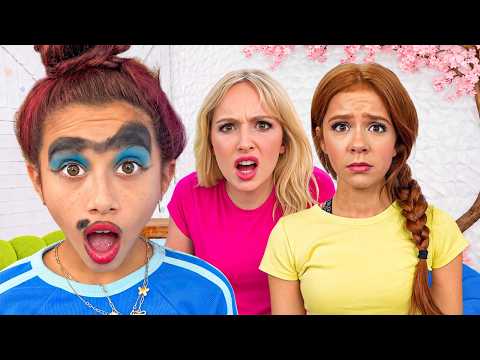
Greg being deliberately cropped out of family photos establishes the central conflict immediately: his popular siblings, Cruise and Ruby, are embarrassed by him and want to keep their less conventionally cool brother out of sight. The reaction quickly embraces Greg as the sympathetic figure, joking about his appearance and awkward behavior while consistently recognizing how cruelly the character is being treated. That combination of teasing and support gives the commentary an energetic tone without losing sight of the story’s emotional stakes.
Much of the entertainment comes from the host reacting to small visual details rather than simply following the plot. Greg’s food, Cruise’s walk, Ruby’s expressions, campaign videos, Skittles, a honey bun, and even the characters’ positioning on a couch become opportunities for rapid-fire jokes. Some observations are genuinely funny, particularly when the host notices the siblings awkwardly trying to manufacture authenticity after Greg’s sincere campaign begins gaining attention. At other times, the constant interruptions stretch simple moments and make an already exaggerated story feel even more chaotic.
The student-ambassador competition gives the underlying story a straightforward but effective structure. Cruise and Ruby initially see themselves as obvious choices because of their popularity, while Greg gradually builds support by speaking directly to students who feel ignored. His campaign message—that people should not have to transform themselves before believing they deserve to be included—wins the host over, and the reaction becomes noticeably more sincere whenever Greg talks about being left out or inspires other students to take chances themselves.
That sincerity is strongest when the host temporarily drops the running jokes and addresses viewers who may identify with Greg. He repeatedly praises the idea of being yourself, recognizes the emotional impact of Greg’s campaign speech, and responds enthusiastically when other students explain how Greg encouraged them to audition for a play, eat with other people, or pursue a sports opportunity. These moments show genuine engagement with the story rather than detached mockery, and they help balance the otherwise relentlessly comedic presentation.
Cruise and Ruby’s attempt to sabotage Greg provides the story’s most dramatic turn, although the moral mechanics are hardly subtle. They secretly record their brother explaining his motivations and edit his words to make him appear selfish, only for the unedited recording to eventually expose what happened. The host correctly anticipates several of these developments well before they occur, which reflects how predictable the storytelling can be. Still, his investment in seeing Greg vindicated gives the climax enough momentum to remain entertaining.
The biggest weakness is how often the reaction competes with the material it is supposedly highlighting. Requests to subscribe appear almost immediately, viewers are repeatedly encouraged to comment, and an extended plush-toy promotion arrives in the middle of the campaign storyline. The host even jokes about the awkwardness of combining emotional vulnerability with product promotion, but that self-awareness does not eliminate the disruption. The frequent pauses for jokes about appearances, food, acting, and unrelated observations similarly make the presentation much more meandering than necessary.
Pros
- The host becomes genuinely invested in Greg’s outsider storyline and clearly communicates why its message about inclusion resonates.
- Close attention to small visual details produces several spontaneous comedic observations.
- Reactions to Cruise and Ruby’s manufactured campaign personas effectively highlight the story’s satire of performative authenticity.
- The commentary becomes appropriately sincere during the scenes about isolated students finding confidence through Greg’s example.
- Evaluating the performances and recognizing Ruby’s intimidating expressions adds another dimension beyond merely recapping the plot.
Cons
- Frequent pauses and tangents substantially slow the progression of a simple, predictable story.
- Repeated subscription requests, merchandise promotion, and calls for comments interrupt the reaction’s emotional momentum.
- Several jokes about Greg’s body, baldness, eating, and appearance become repetitive given that the story itself revolves around accepting someone who is mocked and excluded.
- Plot developments are frequently predicted aloud before they happen, reducing some of the dramatic payoff.
- The commentary occasionally repeats the same praise of the message rather than developing its observations further.
The reaction succeeds because the host ultimately engages with the story’s central idea of making excluded people feel visible, while bringing enough spontaneous humor to give the familiar moral narrative additional personality. Its enthusiasm is infectious, but excessive interruptions, promotional detours, and repetitive jokes keep a warm and entertaining reaction from being as focused as it could be.