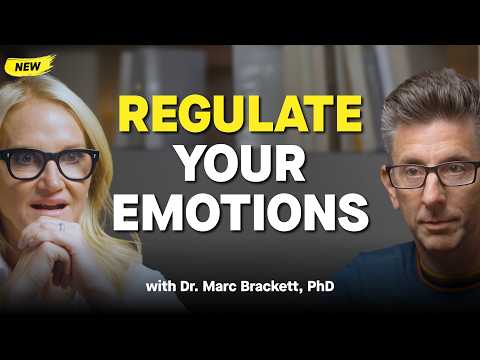
Fear of an uncomfortable emotion can become almost as disruptive as the emotion itself, and that feedback loop provides the central idea here. Anxiety, sadness, anger and grief are presented not simply as unpleasant experiences but as feelings people may begin organizing their lives around avoiding. The explanation is accessible, especially when it connects avoidance with suppression, distraction, blame, intellectualization and substance use, while also noting how fear of disappointment or hurt can eventually discourage positive experiences such as excitement and love.
The dark-street analogy gives this avoidance cycle an especially clear illustration: running from a perceived threat can intensify fear rather than establish that the situation was safe. From there, the lesson proposes a similar relationship between emotional avoidance and increasing fear of internal sensations. That is an intuitively understandable framework, although statements about what the brain or nervous system “learns” are delivered confidently without research, qualifications or discussion of situations in which emotional distress may require a different approach.
Rather than remaining an abstract explanation, the presentation quickly becomes a guided exercise. Viewers are asked to choose a moderate recent emotion, slow their breathing, notice physical support from the chair or floor and scan the body for tension, heaviness or other sensations. Importantly, the instruction starts with something manageable rather than inviting viewers to immediately confront their most distressing experience, which makes the exercise feel more measured and approachable.
Curiosity is then used as an alternative to judgment. Asking whether a sensation seems to have a temperature, color, shape or location provides concrete prompts for observing experience without immediately labeling it good or bad. The snorkeling metaphor reinforces the same idea effectively: sensations can be noticed as something present without requiring an immediate attempt to change them. The repeated distinction between observing discomfort and trying to eliminate it is one of the lesson’s clearest and most useful features.
Thoughts receive similar treatment. Catastrophizing, hoping an emotion disappears and worrying about the future are framed as mental events that can be noticed before attention is redirected toward present bodily sensations. Phrases such as “Thanks, brain” keep this process informal and memorable rather than turning it into an argument with one’s own thoughts. The repetition occasionally becomes excessive, however, as variations of the claim that feelings and sensations are safe recur throughout the exercise without much additional nuance.
The broad framing is the main limitation. The opening says the exercise can help not only with several emotions but also ADHD and chronic pain, yet those latter applications receive little specific explanation or evidentiary support. Likewise, assurances that sensations are not dangerous are presented too universally for a short general-purpose exercise; bodily sensations and severe psychological distress can have contexts that warrant professional or medical evaluation. Within its narrower purpose as a practice for tolerating moderate emotional discomfort, however, the lesson remains focused, compassionate and unusually practical.
Pros
- Turns the concept of emotional acceptance into a concrete exercise viewers can immediately practice.
- Beginning with a moderate emotion makes the exercise more approachable than immediately confronting intense distress.
- Sensory prompts about tension, temperature, shape and location give viewers specific ways to practice nonjudgmental observation.
- Clearly emphasizes changing one’s relationship with discomfort rather than promising that the exercise will instantly eliminate unwanted feelings.
- The dark-street and snorkeling analogies make abstract ideas about avoidance and observation easy to understand.
Cons
- Claims about helping ADHD and chronic pain are introduced without enough specific explanation or supporting evidence.
- Statements that emotions and bodily sensations are safe are sometimes expressed too broadly to account for situations requiring medical or professional attention.
- Repeated explanations of the same safety-and-avoidance principle make portions of the exercise more repetitive than necessary.
A gentle guided exercise and clear sensory instructions make this an accessible introduction to observing moderate emotional discomfort without immediately fighting or escaping it. Its practical core is stronger than some of its broader claims, particularly where ADHD, chronic pain and universal assurances about bodily sensations receive little qualification.