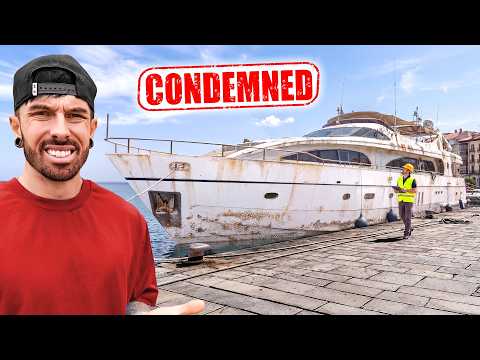
By the time Capri’s crew returns to Brest, the yacht’s fenders are gone, its boarding stairs are missing, and a mooring line has pulled through the wood at the bow. James’s earlier visit gives the return some suspense because the crew can see that the damage has worsened since his first check. The presenter also acknowledges the rot and other problems that were already there, a distinction the headline blurs by putting the yacht’s condition down to the storm.
The electrical check provides a small, satisfying turnaround when a call to someone familiar with the boat helps the crew restore power and start the engines. The generator is a different story. The presenter explains why the crew wants a working backup for charging the batteries, so there’s a reason to follow the search for a steady flow of cooling water. The sequence begins to drag as successive checks produce the same dry result, though the crew is candid about leaving with a workaround and no firm diagnosis.
Once Capri is underway, a suspected stuck trim tab gives the rough passage to Guernsey a clear problem for viewers to follow. The explanation of how the tabs affect the yacht’s attitude makes the persistent lean easy to understand, and the crew’s account of water coming aboard takes on new significance when they discover a soaked socket and an electrical short after docking. The video captures the urgency of that discovery, but it gives less attention to how the crew weighed the unresolved faults before deciding to leave Brest.
A detour to see a tree-damaged Ferrari said to have belonged to Elton John briefly broadens the story of what the storm left behind. There’s genuine curiosity in the discussion of what it would take to replace the damaged panels, but the repeated car-history promotion stretches the visit. Cutting back and forth between the Ferrari and a technician still struggling with Capri’s trim tabs takes some urgency out of the preparations for the final crossing.
The calmer run into Southampton gives the crew a chance to enjoy an arrival they had spent much of the journey doubting. The next morning’s lift provides a second payoff by finally exposing the part of the yacht that could determine whether the refit goes ahead. James points to the condition of the propellers and rudders and explains what signs of wear he would expect to find. His favorable first impression gives the crew grounds for relief while leaving room for a closer inspection.
The financial reckoning gives that relief a short shelf life. The presenter puts the delivery trip at just under £22,000 against an $80,000 transport quote, though the savings are left as a rough comparison across two currencies. James’s £900,000 to £1 million estimate for a professionally handled refit is easier to assess because he breaks out major items, including the interior and replacement engines. The discussion gets looser when it turns to depreciation on a new yacht, especially while the scope of Capri’s restoration and the amount the crew can do themselves are still undecided.
Pros
- James’s early check establishes how the damage progressed while Capri was left in Brest.
- The onboard explanations give viewers enough context to understand what the generator and trim tabs mean for the voyage.
- The discovery of the wet socket gives the rough crossing a consequence that carries into the dockside scenes.
- The Southampton lift pays off a question the crew has been asking since before departure.
- The itemized refit estimate makes the scale of the proposed work tangible.
Cons
- The headline implies a total loss that the voyage and preliminary hull inspection do little to support.
- The generator sequence spends too long on successive checks that yield little new information.
- The decision to depart with an unresolved generator problem receives less scrutiny than the troubleshooting itself.
- The Ferrari promotion interrupts the preparations for the final crossing.
- The comparison with new-yacht depreciation is too speculative to establish the financial case for the refit.
Capri’s arrival earns its celebration, and the lift and estimate give the restoration series a credible starting point. The account is most persuasive when the crew shows what it found and admits what it still has to learn. That candor carries the story through some uneven pacing and a headline that oversells the damage.