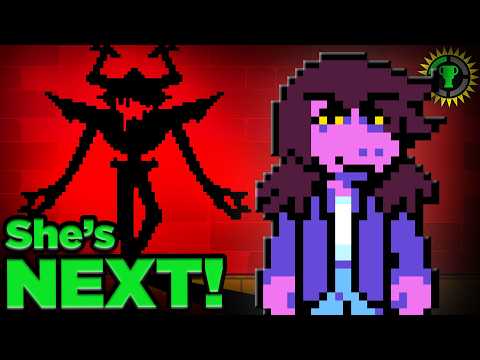
An enthusiastic fan encounter immediately establishes the governing style: exaggerated reactions, crude jokes, abrupt threats and intentionally ridiculous dialogue take precedence over a straightforward horror narrative. That gives the animation a manic comedic identity, but it also makes the underlying Chapter 5 storyline difficult to identify from the spoken material alone. The opening moves so quickly between admiration, an elaborate description of fan art and sudden violence that disorientation becomes part of the experience.
That unpredictability continues as scenes jump between apparent danger and mundane absurdity. References to someone being “dead,” the prototype hiding something and an urgent need to escape suggest a larger conflict, yet these potentially important developments receive little explanation before the dialogue veers into drinks, whipped cream and other jokes. The contrast can be funny precisely because serious horror language keeps colliding with trivial conversation, but it leaves the plot without a stable dramatic center.
Several individual comedy bits have more definition than the narrative surrounding them. A diary entry interprets an ordinary question as romantic interest before another voice mocks the writer, while an extended popsicle exchange turns repetition and insults into the joke. Elsewhere, crumpets and exaggerated compliments create another deliberately incongruous detour. These moments show a commitment to sketch-like absurdity, although their loose connection to one another makes the presentation feel more like a succession of gags than a coherent retelling.
The dialogue also depends heavily on repetition and fragmentation. Phrases are restarted several times, questions arrive without clear answers, and some lines appear to cut off before the thought is completed. The closing stretch pushes this especially far, with repeated “and” interjections interrupting a statement about having built a room and kept everyone safe. Whatever dramatic information that confrontation is meant to convey becomes obscured by the delivery.
There are nevertheless recognizable hints of a horror scenario underneath the comedy. The prototype is presented as something that apparently does not want to be found, characters express fear or urgency, and one speaker claims responsibility for constructing a safe room before accusing the others of bringing something inside. Those details provide fragments of mystery and conflict, but the presentation does not develop them enough to establish who is pursuing whom, what has happened, or how the scenes fit together.
As a parody-style performance, the relentless tonal whiplash is clearly more successful than the storytelling. Profanity, overreaction, insults and deliberately awkward exchanges create an energetic voice that rarely settles into conventional exposition. Viewers already familiar with the source material may be better positioned to recognize what is being distorted for comedy, while anyone expecting the retelling itself to communicate a clear Chapter 5 narrative receives very little orientation.
Pros
- Commits fully to an energetic, absurd comedic tone rather than delivering a conventional recap.
- Several standalone bits, including the diary misunderstanding and mundane food conversations amid apparent danger, make effective use of tonal contrast.
- References to the prototype, escape and the supposedly safe room preserve some underlying sense of horror and conflict.
Cons
- Rapid scene changes and disconnected dialogue make the central storyline extremely difficult to follow.
- Potentially important plot information about the prototype and the characters’ predicament is introduced without enough context or development.
- Repetition, unfinished statements and abrupt conversational shifts frequently obscure rather than enhance the jokes.
- The emphasis on isolated gags leaves the promised retelling much less coherent than the comedy surrounding it.
Frenetic absurdity gives the animation a distinctive comedic personality, but the humor repeatedly overwhelms the story it is supposedly retelling. There are amusing contrasts and flashes of underlying horror, yet the fragmented dialogue provides too little narrative structure for the presentation to work equally well as comedy and recap.