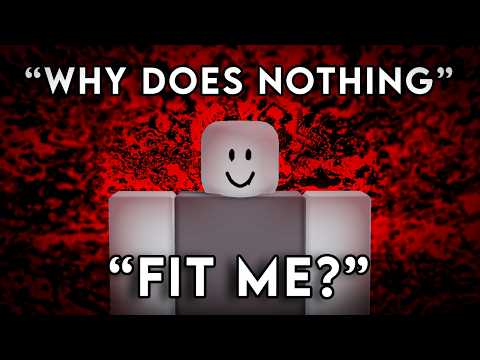
The strongest element of this Roblox investigation is the way an apparently ordinary tower gradually reveals increasingly strange details. A missing poster for a 16-year-old character named Max, an invisible passage, a cage, a floating hammer and the command that changes the environment into a black-and-white version give the group tangible discoveries to pursue rather than relying entirely on exaggerated reactions. The progression from playful exploration into hidden areas creates a reasonably effective sense that something has been deliberately concealed within the game.
The investigation works best when the players actually test what they have seen. After watching another player's discovery, they reproduce the hidden-wall trick, experiment with typing “door” into chat and eventually realize that the seemingly lethal dark room contains parkour that became difficult to see after the world's visual transformation. Rejoining to restore visibility and then successfully navigating that section is a satisfying piece of problem-solving. Later, using a magic carpet to reach a concealed area near the top similarly turns a vague online clue into something they can verify themselves.
The game's environmental details provide plenty of material for speculation. Max's posters repeatedly appear throughout the hidden course, while another secret area contains a cage and messages suggesting someone escaped and was part of a “failed project.” The word “Crystals,” the recurring numerical displays and the 404 marking add further unexplained elements. These discoveries support the idea that the developer intentionally placed some kind of cryptic narrative in the tower, but the video frequently jumps from evidence of hidden content to much stronger language about the game being cursed, evil or sinister without establishing those conclusions.
That distinction becomes especially important around the supposed coded message. After an unfamiliar sequence appears onscreen, one participant says an AI tool interpreted it as “help me awake,” and the group immediately begins building theories around that phrase. No method of decoding is shown, however, and the interpretation is never independently checked. Likewise, the claim that 6666 is an “evil devil number” is presented as though its significance were self-evident, even though the video offers no evidence connecting that specific number to Max, the failed project or any coherent explanation of the game's story.
The group's chemistry keeps the exploration energetic, with Riley and Jacks contributing jokes, theories and occasional discoveries rather than merely following the lead player. Their nervousness also suits a game built around darkness and jump scares. At the same time, the constant screaming, mock fear, requests for likes and subscriptions, repeated declarations that the tower is cursed and frequent audience prompts substantially inflate moments that are already capable of being creepy on their own. The presentation would be more effective if it occasionally allowed the game's strange imagery to create tension without immediately explaining how frightening it is supposed to be.
There is ultimately a substantial gap between the mystery promised and the mystery solved. The players uncover several genuine hidden areas and intriguing pieces of environmental storytelling, but they never establish who Max is within the game's fiction, what happened to him, what “Crystals” means, what the failed project was or how the various numbers and messages connect. The closing admission that they discovered the available clues without figuring out the lore is refreshingly candid, but it also exposes the central limitation of the episode: this is an entertaining search for a dark secret rather than a successful explanation of one.
Pros
- Hidden walls, chat commands, secret rooms and concealed parkour give the investigation concrete discoveries and a satisfying sense of progression.
- Reproducing clues found elsewhere rather than simply repeating them adds a useful element of verification.
- Max's recurring posters, cages and failed-project message create legitimately intriguing environmental storytelling.
- Riley and Jacks add lively group chemistry and contribute theories and discoveries throughout the exploration.
- The ending appropriately acknowledges that the group has not actually solved the game's lore.
Cons
- Claims that the tower is cursed, demonic or genuinely sinister go considerably beyond what the discovered game content establishes.
- The alleged “help me awake” decoding is accepted from an unspecified AI interpretation without showing or verifying how the message was decoded.
- The significance assigned to 6666 is asserted rather than connected convincingly to the game's other clues.
- Repeated screaming, fear declarations, engagement prompts and jokes sometimes overwhelm the atmosphere the game is already creating.
- The central mystery remains unresolved, leaving Max, “Crystals,” the failed project and several numerical clues without a coherent explanation.
The episode turns a collection of Roblox secrets into an energetic mystery hunt, and its best moments come from actually finding hidden spaces and testing unusual game mechanics. Those discoveries are intriguing enough without the unsupported claims of curses and demonic significance, while the lack of a final explanation makes the promised mystery feel unfinished. As entertainment it maintains momentum, but as an investigation it uncovers far more questions than answers.