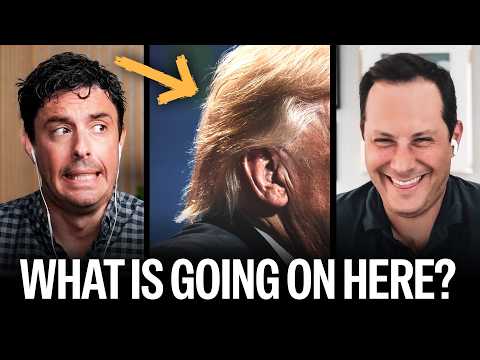
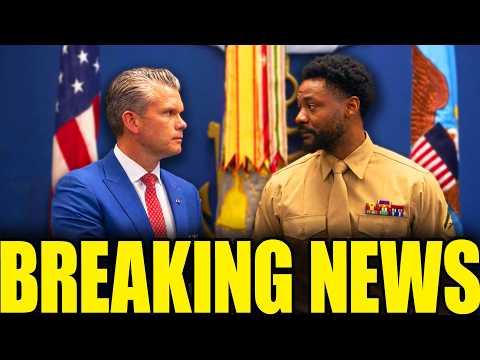
Pete Hegseth’s fixation on physical standards, grooming and an explicitly anti-“woke” military gives the discussion a concrete starting point for a much larger argument about leadership at the Pentagon. The program uses his own inflammatory language before moving into concerns about reductions in senior officer positions, departures among military leadership and the consequences of making major institutional changes during an ongoing conflict. That combination makes the segment forceful, although its framing establishes an overwhelmingly hostile position toward Hegseth almost immediately.
The most substantive concern involves the reported plan to cut 20% of senior positions reserved for generals and admirals, following an earlier 10% reduction. The panel argues that removing experienced senior officers risks weakening institutional knowledge, creating fear within the ranks and reducing the willingness of military leaders to challenge questionable decisions. Those are consequential arguments, particularly alongside the opening comments from the relative of a deployed service member, but predictions about long-term damage remain the panelists’ assessments rather than outcomes demonstrated here.
Hegseth’s emphasis on appearance provides another effective line of criticism. The program cites reporting that service members attending his event were expected to satisfy fitness, body-composition, grooming and uniform requirements, then contrasts that focus with questions the panel believes deserve greater attention during wartime. Retired Brigadier General Steve Anderson specifically argues that Hegseth should be concentrating on Iran’s nuclear, missile and drone capabilities and strengthening alliances. Whether the appearance standards themselves are inappropriate receives less careful examination than the broader question of Hegseth’s priorities.
The three veteran guests give the discussion useful military experience, and Amy McGrath makes one particularly important qualification: many of the changes Hegseth advocates cannot necessarily be implemented for the long term without Congress. That observation introduces some institutional restraint into a conversation otherwise dominated by predictions of severe damage. Her argument that reductions among general officers could have a generational effect is still an assessment, but the discussion at least connects personnel decisions to specific concerns about command culture and retention rather than treating the speech solely as offensive rhetoric.
Where the segment becomes less persuasive is in its increasingly personal language. Hegseth is called a radical, incompetent, insecure and the opposite of masculinity, while his appearance and alleged past conduct are invoked alongside criticism of Pentagon policy. Allegations are identified as allegations, which is important, but several attacks contribute more heat than analytical value. The panel's near-total agreement also means there is little examination of possible arguments for reducing senior ranks, tightening standards or changing Pentagon culture, even if the guests ultimately would have rejected those arguments.
The discussion is more compelling when it returns to institutional consequences: experienced officers leaving, congressional oversight, military recruitment and retention, relations with allies and Hegseth’s characterization of critical press coverage as treasonous. Those subjects raise legitimate questions about civil-military leadership and accountability that extend beyond partisan disagreement. Unfortunately, the closing promotional pitch for a network membership arrives abruptly after a grave national-security discussion and weakens the ending.
Pros
- Hegseth’s own remarks provide a concrete basis for evaluating his priorities and leadership style.
- The discussion connects senior-officer reductions to specific concerns about experience, institutional knowledge and military culture.
- Multiple guests bring substantial military backgrounds to their assessments.
- McGrath’s explanation of congressional constraints adds useful institutional context.
- The panel raises substantive questions about wartime priorities, alliances and treatment of the Pentagon press.
Cons
- The overwhelmingly one-sided panel leaves competing arguments about personnel reductions and military standards largely unexplored.
- Personal attacks on Hegseth’s appearance, masculinity and character sometimes displace more useful policy analysis.
- Predictions of generational damage, weakened retention and benefits to American adversaries are asserted more strongly than they are demonstrated.
- The membership promotion creates an awkward ending after a serious national-security discussion.
Serious questions about senior military leadership, wartime priorities and Pentagon culture give this segment substantial material to examine, and its veteran guests provide valuable perspective on the possible consequences. Its analysis would be considerably stronger with less personal invective, more scrutiny of competing explanations and clearer separation between documented developments and predictions about their effects.