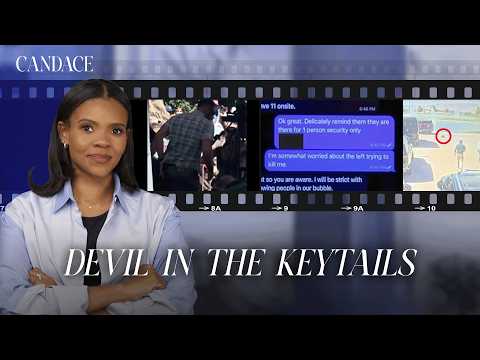
Charlie Kirk’s relationship with Israel becomes the interview’s most contentious subject when Dennis Prager addresses claims that Kirk had been distancing himself from Israel before his death. Prager acknowledges that Kirk apparently sent private messages expressing anger toward Israel supporters and disillusionment with Israeli policy, but argues that private emotional reactions should not automatically be treated as definitive statements of a person’s public beliefs. His comparison between pro-Israel donors threatening to withdraw support and donors abandoning a gun-rights organization after a hypothetical shift toward gun control gives his argument a clear logic, though it does not independently establish what Kirk ultimately believed or how significant those private messages were.
Dave Rubin largely avoids turning the conversation into a prolonged dispute over the competing theories surrounding Kirk’s death, instead steering it toward Prager’s personal memories of him. That choice keeps the discussion focused and prevents speculation from consuming the interview, but it also means the provocative opening receives less scrutiny than its prominence suggests. Prager rejects the darker insinuations being circulated and expresses concern about accusations directed at Kirk’s widow, yet the discussion offers little direct evidence with which viewers could independently assess those narratives.
The interview becomes considerably stronger when it moves from controversy to the relationship between Prager and Kirk. Prager recalls Kirk’s extensive engagement with his Bible commentary, including frequent phone calls to discuss what he had been studying, while Rubin reads the dedication Kirk wrote for Prager in his final book. These details provide a specific picture of an intellectual and religious friendship rather than simply relying on generalized praise. Their discussion of Kirk’s embrace of Sabbath observance also illustrates how ideas crossed the boundaries between Prager’s Judaism and Kirk’s evangelical Christianity without requiring either man to erase their theological differences.
Prager’s assessment of Kirk as an unusually effective political organizer is affectionate enough that it should be understood as a friend and mentor’s judgment rather than a detached historical evaluation. He describes Kirk as knowledgeable, self-educated, relentlessly positive and uniquely capable of unifying factions on the political right, while Rubin adds memories of hostile campus appearances that Kirk apparently approached with humor. Those anecdotes communicate why both men considered him important, although the conversation makes virtually no attempt to examine criticisms of Kirk’s politics, rhetoric or organization. As remembrance, that imbalance is understandable; as political analysis, it limits the discussion.
The wider conversation about the conservative movement after Kirk is similarly personal and partisan. Prager argues that Kirk’s absence has left a major gap, particularly in campus outreach, and urges conservatives to support his widow and Turning Point USA. Rubin frames his own work partly in terms of carrying forward what figures such as Kirk, Prager and Jordan Peterson contributed. Viewers sympathetic to that political community will likely find the exchange emotionally resonant, while anyone looking for a broader examination of Kirk’s public legacy will encounter a discussion conducted almost entirely from within the movement that admired him.
Prager’s reflections on his own severe spinal-cord injury and gradual return to public activity give the interview an additional dimension. He describes being unable to move his arms or legs while emphasizing improvements in breathing and speaking, and he connects his planned public appearance to a willingness to accept measured risks. The closing theological exchange is equally revealing: when Rubin asks why God takes good people away, Prager rejects the premise that God directly took Kirk and instead argues that human beings commit evil while God permits human evil to occur. It is a thoughtful ending because it moves beyond political tribute into Prager’s broader philosophy of moral responsibility, even though his religious conclusions are presented as convictions rather than propositions the interview attempts to prove.
Pros
- Prager directly addresses the disputed meaning of Kirk’s private messages instead of pretending the controversy does not exist.
- Specific memories about Kirk’s religious study, Sabbath observance and conversations with Prager give the tribute substantial personal detail.
- Rubin generally keeps speculative claims about Kirk’s death from overtaking the remembrance.
- Prager’s discussion of his injury, recovery and return to public life adds genuine personal perspective.
- The closing discussion about God, evil and human responsibility provides a substantive philosophical conclusion.
Cons
- The opening controversy is discussed without enough underlying evidence for viewers to independently judge the competing interpretations of Kirk’s private messages.
- Prager’s donor analogy is clear but cannot by itself establish Kirk’s actual position on Israel near the end of his life.
- The interview is overwhelmingly commemorative and sympathetic, leaving little room for critical examination of Kirk’s political record or broader legacy.
- Several sweeping claims about social media, the political left and Kirk’s indispensability are asserted rather than explored or supported.
Prager’s personal history with Kirk gives this remembrance considerably more substance than a conventional political tribute, particularly when the conversation turns to religion, mentorship and moral responsibility. Its treatment of the disputed messages offers a coherent counterargument but not enough evidence to settle the controversy, making the interview more persuasive as a portrait of friendship and grief than as an investigation of competing claims.