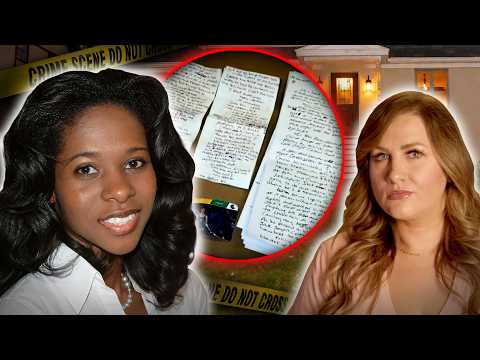
Four teenage girls murdered during a closing shift at an Austin yogurt shop in December 1991 became the center of an investigation that would consume more than three decades, produce wrongful convictions, and eventually lead authorities to a serial killer who had been dead for years. This detailed true crime account examines the murders of Amy Ayers, Jennifer and Sarah Harbison, and Eliza Thomas while tracing the investigative failures and forensic breakthroughs that shaped the case. Rather than treating the eventual identification of Robert Eugene Brashers as a simple triumph, the presentation explores how the pursuit of justice devastated additional lives along the way.
The opening spends considerable time establishing who the four victims were before describing their final evening. Amy's passion for horses, Jennifer's leadership in school activities, Sarah's close relationship with her sister, and Eliza's enthusiasm for mechanics and her Volkswagen give each girl a distinct identity. These personal histories are supported by recollections from relatives, teachers, and friends, making the tragedy more meaningful than a conventional reconstruction of a crime scene. Although the extensive biographical introduction delays the central investigation, it serves an important purpose by emphasizing the futures these teenagers never experienced.
The reconstruction of December 6, 1991, is particularly effective at establishing the circumstances surrounding the murders. Witness sightings, the final register transactions, the shop's closing procedures, and the discovery of the fire create a detailed sequence of events without pretending that every movement is known. The account also explains the physical evidence, including two firearm calibers, the damaged crime scene, and the fingernail clippings that would eventually become crucial. The descriptions of the victims' injuries are disturbing but relevant to understanding the investigation, although the presentation occasionally moves through graphic details with a casual delivery that feels inconsistent with their seriousness.
The investigation's most troubling developments involve Maurice Pierce, Forrest Welborn, Michael Scott, and Robert Springsteen. The account carefully traces how early suspicions resurfaced years later, eventually producing confessions under deeply questionable circumstances. Scott's prolonged questioning, investigators' false claims about statements from other suspects, and the incident involving a revolver held against his head provide substantial reasons to question the reliability of his admissions. Springsteen's interrogation raises similar concerns, particularly because both men's accounts contained contradictions and details potentially supplied by investigators. The explanation of their convictions, appeals, and the legal significance of Crawford v. Washington is accessible and demonstrates why confessions cannot automatically be treated as reliable evidence.
The eventual breakthrough provides the narrative's strongest investigative payoff. Detective Dan Jackson's renewed examination of the .380 cartridge casing, the connection to a Kentucky murder, and subsequent Y-STR DNA comparisons gradually narrow the investigation toward Brashers. The later testing of evidence preserved from Amy's autopsy adds a particularly powerful dimension to the resolution. Importantly, the account acknowledges that the evidence identifies Brashers without answering every question, including why he was in Austin and whether anyone accompanied him. The forensic connections are persuasive as presented, but the absence of a trial means the reconstructed sequence of his actions remains an investigative conclusion rather than a judicially tested account.
The final sections successfully broaden the story beyond identifying a suspect. The judicial declarations of actual innocence for the four previously accused men, the reported $35 million settlement, and changes to juvenile interrogation procedures demonstrate the lasting consequences of the original investigation. Equally important are the families' responses, particularly their emphasis on truth rather than vengeance and their determination to preserve the victims' identities. The account's major presentation weakness is its length and interruptions: three substantial sponsorship segments disrupt the narrative, while the dense chronology occasionally becomes repetitive. Some colloquial jokes and promotional transitions also sit awkwardly beside material involving sexual violence, wrongful imprisonment, and prolonged grief.
Pros
- Establishes meaningful individual portraits of all four victims through specific personal details, family memories, and their ambitions for the future.
- Reconstructs the night of the murders with a clear sequence of witness observations, closing procedures, emergency responses, and forensic findings.
- Provides a detailed examination of the questionable interrogations, contradictory confessions, and legal decisions that contributed to wrongful convictions.
- Explains the significance of advances in ballistics comparisons and DNA testing, making the eventual identification of Brashers understandable and compelling.
- Connects the investigation's outcome to judicial exonerations, financial compensation, and changes intended to protect young suspects during questioning.
- Gives considerable attention to the victims' families and the emotional consequences of decades spent without answers.
Cons
- Three lengthy sponsorship segments interrupt the investigative narrative and undermine its momentum.
- The extensive chronology sometimes becomes repetitive, particularly when revisiting earlier suspects, investigative setbacks, and procedural developments.
- Casual humor and conversational promotional transitions occasionally clash with the gravity of the crimes and their consequences.
- Some conclusions about Brashers' methods and his possible involvement as a lone offender rely on investigative interpretation rather than a fully established reconstruction of the murders.
A comprehensive and emotionally affecting true crime account that succeeds by treating the murders, the wrongful accusations, and the eventual forensic breakthrough as equally important parts of the story. Its strongest qualities are the attention given to the victims, the scrutiny of investigative misconduct, and the careful explanation of how preserved evidence ultimately changed the case. Despite excessive sponsorship interruptions, occasional tonal misjudgments, and some unnecessary repetition, the presentation delivers a compelling examination of both the possibilities and the failures of criminal justice.