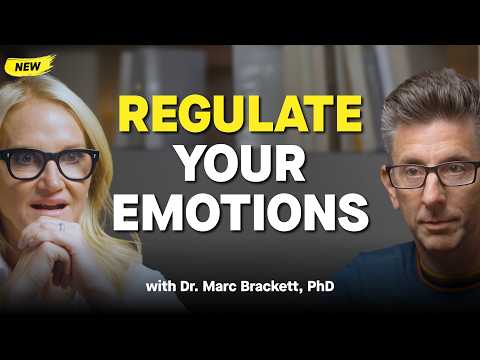
Lynn Toler is most compelling when she connects decades of courtroom experience to a simple recurring idea: people often understand what they want far better than they understand the emotions driving their behavior. Her stories from Divorce Court, municipal court, marriage, and childhood all circle back to that premise without feeling entirely repetitive because she keeps grounding it in specific situations. Couples reading from different inherited “scripts,” defendants acting from fear or anger they cannot identify, and spouses listening only for the argument they expect to hear give the discussion concrete examples rather than leaving it at the level of generic relationship advice.
Her own family history gives that philosophy considerable personal weight. Toler describes growing up with a father she says had bipolar disorder and periods of volatile behavior, while portraying her mother as the stabilizing emotional force in the household. She is careful not to reduce her father to his illness, emphasizing his accomplishments, loyalty, regret, and care for his family alongside the instability she experienced. Those reflections are among the conversation's strongest material because they show where her emphasis on emotional regulation came from while also acknowledging the lasting anxiety and habits she associates with that upbringing.
The marriage discussion is similarly strongest when Toler moves beyond slogans. Her description of communication as an exchange of information rather than an exchange of frustration is particularly useful, as is her insistence that listening requires actually reconsidering what a partner means rather than merely waiting to respond. She also gives marriage advice some necessary complexity by acknowledging changing circumstances, resentment, compromise, personal responsibility, and the need to examine one's own emotional state before confronting a spouse. Her account of recognizing her late husband's loss of direction after their move to Phoenix illustrates those ideas more effectively than abstract declarations about love requiring work.
Toler's courtroom stories add another layer by showing the limitations and responsibilities involved in giving advice under serious circumstances. She recalls recognizing possible coercive behavior in one relationship and deliberately avoiding publicly humiliating the man because she feared the consequences might fall on his partner afterward. She also describes offering separate travel arrangements and outside assistance when necessary. These accounts present her television role as more complicated than simply delivering memorable verdicts, although they remain her recollections and should not be treated as independent verification of the cases or their outcomes.
The conversation becomes less rigorous when psychological explanations are applied too confidently to broad categories of behavior. Toler repeatedly suggests that childhood experiences, fear, inherited emotional patterns, or unrecognized needs explain adult conflict, unhealthy relationships, addiction, resistance to change, and even some extreme beliefs. These can be plausible interpretations, and she occasionally qualifies them, but the discussion does not provide evidence establishing such explanations as universal or even predominant causes. The host's example connecting a flat-Earth believer's conspiratorial worldview to childhood abuse is especially speculative; Toler agrees that the connection makes emotional sense, but the interview cannot demonstrate that the experience caused the later beliefs.
Similar caution is warranted around broader social claims. Toler argues that technology, algorithms, social media, tribalism, changing gender roles, and online incentives are making relationships harder and people emotionally weaker. Some of these observations are framed as personal impressions developed through her work and internet use, while other statements—such as claims about marriage and divorce patterns among educated people—are presented without supporting data. Her comments about addiction also emphasize emotional pain and coping in a way that may describe many experiences but does not capture the full complexity of substance-use disorders.
As an interview, the episode benefits greatly from Toler's willingness to disagree, qualify herself, admit uncertainty, and even embrace an idea from the host that she had not previously considered. Her grief over her husband's death also gives the closing portions unusual vulnerability without becoming exploitative, particularly when she recognizes how much his optimism shaped her own outlook. The main weakness is length and thematic repetition: emotional self-awareness, childhood conditioning, fear, communication, technology, and accountability recur many times after their essential points have already been established. A tighter interviewer could have challenged unsupported generalizations more consistently and reduced duplication while preserving the warmth and specificity that make Toler engaging.
Pros
- Toler consistently grounds relationship advice in specific experiences from marriage, family life, municipal court, and Divorce Court.
- Her distinction between communicating frustration and exchanging useful information offers a clear, practical framework for conflict.
- The discussion of inherited family “scripts” effectively explains why partners can approach the same household with incompatible expectations.
- Personal reflections about her father's reported bipolar disorder avoid defining him solely by his illness and give her emphasis on emotional regulation meaningful context.
- Courtroom stories illustrate how empathy, safety considerations, and careful communication can matter alongside legal authority.
- Toler openly acknowledges uncertainty and occasionally revises or expands her thinking during the conversation rather than presenting every opinion as settled expertise.
- Her discussion of her late husband adds genuine emotional depth to the broader examination of partnership, stability, and companionship.
Cons
- Psychological explanations involving childhood trauma, fear, and unmet emotional needs are sometimes generalized beyond what the conversation can establish.
- The suggested connection between a flat-Earth believer's childhood abuse and his later conspiratorial beliefs is plausible speculation rather than demonstrated causation.
- Claims about technology, algorithms, societal emotional weakness, marriage trends, and gender conflict are largely unsupported by evidence within the discussion.
- Addiction is framed primarily through pain avoidance and self-soothing, which is insightful but considerably narrower than the subject's full medical and psychological complexity.
- Several core ideas about self-awareness, childhood conditioning, communication, and emotional regulation are repeated enough to make the lengthy conversation feel less focused.
- The host frequently reinforces Toler's conclusions instead of probing their limits, leaving some sweeping claims insufficiently challenged.
Toler brings unusual credibility as a storyteller because her relationship philosophy is tied closely to experiences she describes from both her public career and private life. The conversation is strongest as reflective advice about communication, accountability, empathy, and emotional awareness, and weaker whenever those observations expand into broad psychological or societal explanations without corresponding evidence. Its repetition could be reduced substantially, but Toler's specificity, humility, and personal candor make the central discussion worthwhile.