Turning a wooded section of property into productive hay ground requires more than clearing trees and pushing dirt around. This practical land-improvement project follows the final stages of a hay field expansion, with leftover soil from an earlier pond excavation providing much of the material needed to reshape the ground. The work combines heavy equipment, salvaged topsoil, and careful grading to create a larger, smoother field that should be easier to mow and bale.
One of the project's most satisfying elements is the reuse of material from the pond construction. Rather than allowing the excavated dirt and stockpiled topsoil to go to waste, the operator puts both to work filling and finishing the expanded field. He explains how the remaining dirt will be spread, how previously stripped topsoil will be pushed back into place, and why removing roots is important before establishing grass. These details give viewers a useful understanding of the preparation involved in converting disturbed ground into agricultural land.
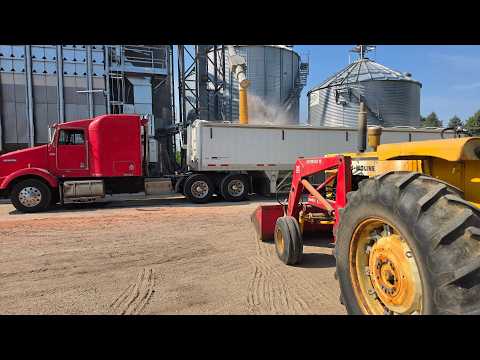
The equipment operations provide much of the entertainment, particularly the use of the large 983 loader to move substantial amounts of dirt. The operator clearly appreciates its capabilities but also acknowledges the expense of running such a powerful machine. His remarks about diesel costing approximately $6 per gallon and loading the truck costing around $40 illustrate the financial considerations behind equipment selection. Although these figures reflect his stated operating circumstances rather than a detailed cost calculation, they add a practical dimension that equipment enthusiasts will appreciate.
The grading process also demonstrates how different machines contribute to the finished result. The loader handles bulk material movement, while the dozer spreads and levels the soil. A skid steer equipped with a rake is brought in for finer surface preparation, helping remove remaining debris and improve the final appearance. The explanation is conversational rather than instructional, but viewers can follow the general progression from rough earthmoving to surface finishing without needing extensive technical knowledge.
The presentation maintains a relaxed, worksite atmosphere, with the operator explaining what has been completed, what remains, and how weather affects the schedule. The arrival of cooler fall temperatures provides a natural seasonal transition, although it also introduces an extended Brunt Workwear sponsorship. The discussion of hoodies, boots, pants, discount codes, and clothing bundles is relevant to outdoor work, but the promotional segment interrupts the project's momentum before the equipment operations resume.
Another limitation is the relatively modest amount of technical explanation surrounding the final grading and soil preparation. Viewers see the general approach and hear about root removal, topsoil placement, and power raking, but there is little discussion of drainage, soil depth, grading tolerances, or the specific steps needed to establish a healthy hay crop. The operator's confidence that the finished surface will grow good grass is understandable, yet the actual agricultural results remain untested at this stage. Anyone seeking a comprehensive field-establishment tutorial will need additional information.
The closing walkthrough provides a rewarding conclusion by showing how much the property has changed. The operator identifies where the original tree line stood and explains that the cleared area has approximately doubled the size of the hay field. The newly graded ground also follows the property line more closely, which he expects will simplify future mowing and baling. Although the field still needs grass growth before its agricultural performance can be evaluated, the completed earthwork offers a clear and convincing demonstration of the project's immediate progress.
Pros
- Reusing excavated soil and salvaged topsoil from the earlier pond project demonstrates practical resource management and reduces the need for additional material.
- The 983 loader, dozer, and skid steer operations provide engaging heavy-equipment content while illustrating the different stages of grading and surface preparation.
- Discussion of diesel consumption and equipment operating expenses adds useful financial context to the earthmoving work.
- Explanations of root removal, topsoil spreading, and power raking help viewers understand the preparation required before establishing grass.
- The final walkthrough clearly communicates the scale of the expansion and its intended benefits for future hay production.
Cons
- The extended Brunt Workwear sponsorship interrupts the progression of the field improvement project.
- Limited technical detail about drainage, soil depth, and grading specifications reduces the video's usefulness as a comprehensive agricultural land-preparation guide.
- The finished field's ability to support healthy grass growth and improve hay production remains unverified, leaving the project's long-term success for a future update.
This is an enjoyable and practical look at a substantial land-improvement project, combining impressive machinery, resourceful soil reuse, and the satisfaction of transforming previously wooded ground into a larger hay field. The casual explanations and clear final results make the work accessible, even though the sponsorship and limited technical depth prevent it from becoming a more complete instructional presentation. For viewers interested in excavation, heavy equipment, and rural property improvements, it delivers a rewarding account of productive work with a tangible outcome.