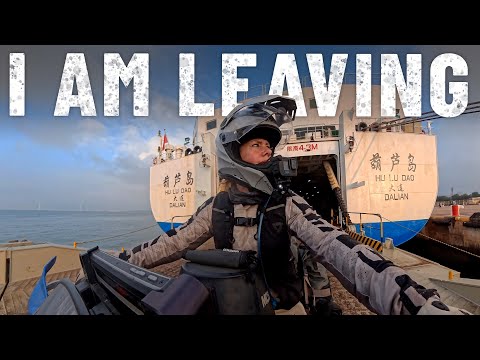
Arriving in South Korea for the first time brings an infectious sense of excitement to this installment of a long-running motorcycle adventure. After traveling through countries including China and Mongolia, the rider finds herself in Seoul with an unexpected opportunity to explore while waiting for her motorcycle, Frankie, to arrive. What begins as an introduction to Korean culture eventually becomes another logistical challenge involving airport customs, an empty fuel tank, and the complications of international motorcycle travel. The combination of sightseeing and practical problem-solving gives the journey a welcome balance between discovery and adventure.
The exploration begins at Changdeokgung Palace, where the creator introduces viewers to the royal architecture and historical significance of the Joseon dynasty. She discusses the palace's original construction in 1405, its destruction during the Japanese invasion of 1592, and its subsequent rebuilding. Rather than delivering an overly formal history lesson, she focuses on details that catch her attention, including elaborate ceilings, wooden construction, and the distinctive smell of aged timber. Her enthusiasm makes the visit approachable, although the historical explanations are relatively brief and offer limited context beyond the principal dates and events.
The neighboring traditional Hanok district provides an especially appealing continuation of the cultural exploration. The creator explains how these houses use natural materials, elevated entrances, and traditional underfloor heating systems to accommodate Korea's contrasting seasonal temperatures. Walking among buildings that she describes as dating back to the Joseon period, she highlights their curved tiled roofs, wooden construction, and continued residential use. A visit to a public library housed inside a traditional building adds another interesting dimension. These observations offer an accessible introduction to Korean architecture, even if the explanations occasionally simplify a more complex architectural tradition.
A visit to a local market introduces a livelier atmosphere through encounters with unfamiliar foods, seafood displays, and traditional snacks. The creator samples dumplings, warm rice cakes, an egg-based dish, and what she identifies as a Korean seafood cake, reacting with genuine curiosity and enthusiasm. Her spontaneous comments about the enormous octopus and crabs provide some entertaining personality, while the food discoveries offer a glimpse of everyday market culture. However, the sequence moves quickly between different stalls, leaving relatively little time to explain the dishes, their preparation, or their cultural significance. The market succeeds more as an enjoyable personal experience than as a detailed culinary exploration.
The narrative becomes more distinctive when attention shifts toward retrieving Frankie from the airport. Having transported the motorcycle separately, the creator must complete temporary import paperwork, locate the cargo terminal, and figure out how to start a machine whose fuel tank was completely drained for shipping. The situation becomes complicated by Frankie's fuel system, which requires approximately three liters before the motorcycle can operate properly. When a petrol station refuses to fill a plastic container, a helpful customs officer assists with an inventive solution: removing the motorcycle's metal fuel tank, transporting it to the station, filling it, and reinstalling it. This practical sequence provides one of the installment's strongest moments because it demonstrates the less glamorous realities of international motorcycle travel without manufacturing unnecessary drama.
The appreciative portrayal of Korean customs officers also gives the airport experience a positive human dimension. The creator describes receiving assistance with paperwork, transportation between terminals, and the fuel problem, repeatedly emphasizing how helpful the officials were during her particular experience. Once Frankie is running again, the journey continues toward central Seoul, with observations about expensive cars, traffic signals, and the challenges of navigating a large city. The riding portion is relatively short, and the anticipated Gangnam festival and possible Psy performance remain teasers rather than developed attractions. Consequently, viewers expecting extensive motorcycle exploration may find that this installment functions primarily as a transitional chapter.
The closing tour of the creator's traditional Hanok accommodation provides a satisfying return to the architectural themes introduced earlier. A small courtyard, wooden beams, floor-level seating, a tea ceremony area, and a combination of traditional design with modern conveniences illustrate how these buildings can function as contemporary living spaces. Her appreciation for the peaceful atmosphere feels genuine, particularly after the airport complications. The relaxed presentation makes the accommodation feel inviting, though the episode could benefit from slightly tighter editing and more substantial cultural explanations. Overall, its greatest strength is the creator's approachable personality and willingness to share both the rewarding discoveries and everyday frustrations of traveling independently.
Pros
- The creator's genuine enthusiasm for visiting South Korea for the first time establishes an engaging and welcoming atmosphere.
- Visits to Changdeokgung Palace and the traditional Hanok neighborhood provide an accessible introduction to Korean royal history, architecture, and residential traditions.
- The market exploration offers entertaining food discoveries and spontaneous reactions that bring energy and variety to the sightseeing.
- Frankie's airport retrieval presents an interesting look at temporary motorcycle import procedures, fuel restrictions, and practical international travel challenges.
- The customs officers' assistance adds a memorable human element and demonstrates how unexpected cooperation can resolve complicated travel situations.
- The traditional Hanok accommodation tour effectively connects the earlier architectural discussion with a personal experience of staying in a historic-style home.
- The combination of cultural exploration and motorcycle logistics creates a varied travel narrative without relying on exaggerated conflict.
Cons
- Historical and architectural explanations remain introductory, leaving several interesting cultural details without deeper examination.
- The market sequence moves quickly between foods and stalls, providing limited information about the dishes and their preparation.
- The motorcycle riding portion is relatively brief, which may disappoint viewers primarily interested in the overland adventure.
- Some airport procedures and travel logistics are described retrospectively rather than demonstrated in detail, reducing their potential instructional value.
- The Gangnam festival and parade are introduced without becoming substantial parts of the installment, creating a few narrative threads that remain undeveloped.
An enthusiastic introduction to South Korea combines beautiful traditional architecture, lively market discoveries, and the satisfying resolution of another international motorcycle transport challenge. Although the cultural explanations could go deeper and the riding adventure is only beginning, the creator's curiosity, practical resourcefulness, and appreciation for the people helping her make the journey consistently enjoyable. The result is a charming transitional installment that successfully establishes Seoul as the starting point for the next stage of her travels.