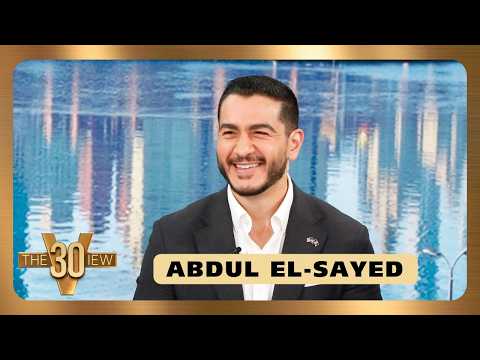
Abdul El-Sayed’s election as the first Muslim U.S. senator provides the historic backdrop for a warm, personal interview with two people who helped shape his life: his grandparents, Jan and Judy Johnson. Rather than concentrating on election statistics, legislative priorities, or political strategy, the segment explores the family relationships and experiences behind his public identity. Their appearance in his campaign advertisements gives the conversation an entertaining starting point, while their recollections offer a more intimate perspective on a political figure whose name and religious identity became prominent campaign issues.
The opening campaign advertisement establishes the grandparents' appeal through affectionate humor and straightforward descriptions of their grandson. They highlight his medical background, community service, familiarity with everyday expenses, and association with Bernie Sanders, presenting him as someone motivated by helping others. The playful exchanges between the grandparents make the advertisement more memorable than a conventional political endorsement. However, its references to eliminating medical debt, providing glasses to children, and other accomplishments remain campaign claims rather than independently established achievements within the segment.
The interview becomes particularly engaging when Jan recalls meeting Abdul as a young child after his daughter Jackie married Abdul's father, Mohammed. His description of immediately accepting the boy into his heart establishes the emotional foundation of their relationship. One especially memorable recollection involves four-year-old Abdul attempting to translate conversations between his Egyptian grandfather and Jan, apparently with questionable accuracy. Judy adds that Abdul was energetic, intelligent, outspoken, and sometimes challenging, providing a balanced family portrait that avoids portraying him as a flawless child destined for political success.
Religious differences provide one of the conversation's most meaningful subjects. Jan and Judy are Presbyterian deacons, while Abdul and other members of their family are Muslim, creating an opportunity to discuss how affection and mutual respect can bridge different religious traditions. Jan's explanation that he became Abdul's grandfather through love and presence is particularly touching. The family's shared Thanksgiving celebrations further illustrate how their relationships developed around common experiences rather than religious uniformity. Still, the host's questions about interfaith challenges and childhood bullying receive relatively limited exploration, leaving an important opportunity for deeper discussion largely unrealized.
The conversation also addresses the hostility Abdul reportedly experienced during his campaign, including attacks involving his name and Muslim faith. Judy explains that the family attempted to avoid negative coverage, maintain a positive outlook, and support him through frequent conversations. These responses communicate their loyalty without turning the interview into an extended political argument. However, the allegations about campaign attacks are introduced without specific examples, broader context, or examination of how such rhetoric affected the election. For viewers interested in the political significance of the historic victory, this portion offers emotional perspective rather than substantive reporting.
Some of the most entertaining moments involve Abdul's college years, when he lived with his grandparents while attending the University of Michigan. Judy recalls reviewing his academic papers and encouraging him to eliminate overly elaborate language, suggesting that her influence extended beyond household discipline. Jan's story about Judy correcting Abdul's bathroom habits adds welcome comedy, as does the amusing discussion about how frequently he washed his sheets. These anecdotes humanize the senator-elect by showing him as an ordinary young adult learning responsibility, while the grandparents' natural chemistry keeps the conversation lively and approachable.
The host maintains an enthusiastic, affectionate tone throughout, allowing the grandparents' personalities to carry much of the interview. Their warmth, occasional interruptions, and spontaneous recollections create a relaxed atmosphere that suits the family-centered subject. Nevertheless, the questioning sometimes becomes overly complimentary, particularly when the host attributes Abdul's character and accomplishments directly to his grandparents without much critical distance. The segment also moves quickly past potentially revealing subjects, including his political development, the family's experience with religious prejudice, and the responsibilities awaiting him in office. As a result, it succeeds more convincingly as a celebratory human-interest feature than as a comprehensive examination of a historic political achievement.
Pros
- Provides a warm, personal perspective on Abdul El-Sayed through the grandparents who helped raise him.
- Uses humorous campaign advertisements to establish the family's personality and explain their memorable role in his election campaign.
- Offers touching recollections of childhood acceptance, family relationships, and the importance of love across religious differences.
- Highlights the family's shared Thanksgiving traditions as a relatable example of interfaith unity.
- Includes entertaining anecdotes about college life, academic writing, household responsibilities, and Abdul's childhood personality.
- Allows Jan and Judy's natural warmth, humor, and affection to create an engaging conversational atmosphere.
Cons
- Provides limited political context about the election, the significance of the Senate victory, or Abdul's proposed legislative priorities.
- Campaign claims about medical debt relief and community accomplishments are presented without independent supporting evidence.
- Questions about religious prejudice, childhood bullying, and campaign hostility receive insufficient follow-up.
- The host's consistently celebratory approach occasionally substitutes praise for more probing questions.
- The relatively brief discussion leaves several potentially valuable family experiences and political subjects underdeveloped.
This is an enjoyable and genuinely touching interview that finds its greatest strength in the humor, affection, and interfaith relationships of Abdul El-Sayed's family. Jan and Judy Johnson make memorable guests, offering personal stories that bring warmth and humanity to a historic political moment. Although the segment lacks deeper political analysis and occasionally becomes excessively complimentary, it succeeds as an engaging family-centered celebration of an important electoral milestone.