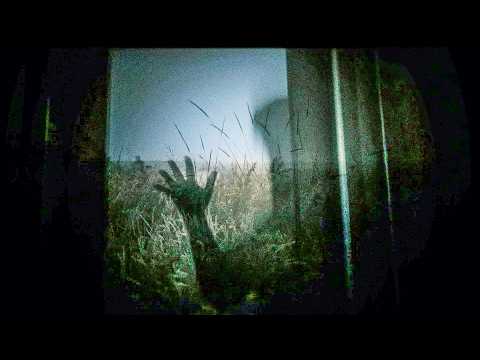
A human skeleton concealed inside a Louisiana bank chimney for 27 years and another discovered in a steel cylinder on the streets of Liverpool create two deeply unsettling mysteries. Both involve individuals whose remains were hidden in confined spaces while ordinary life continued around them, seemingly without anyone realizing what had happened. Scary Interesting explores these disturbing cases through carefully structured storytelling, combining forensic discoveries, historical circumstances, and competing explanations. Rather than relying entirely on supernatural suggestions or elaborate conspiracy theories, the presentation finds much of its horror in the possibility that both men became trapped in places from which escape was impossible.
The first case begins with construction workers renovating an old bank building in Abbeville, Louisiana, in May 2011. When workers dismantle a disused fireplace, they uncover human bones that lead investigators to a nearly complete skeleton lodged inside the chimney. DNA testing eventually identifies the remains as Joseph Schech Snyder, a 22-year-old man who disappeared in 1984. The account becomes particularly affecting through its examination of Joseph's history of leaving home without warning, sometimes for extended periods. Because his family had grown accustomed to these unexplained departures, no missing person report was filed when he vanished for the final time. This personal background transforms an initially gruesome discovery into a tragedy involving decades of uncertainty for his surviving relatives.
The reconstruction of Joseph's possible final moments is among the presentation's most disturbing passages. Investigators determined that he apparently entered the chimney feet first from the roof, descending through a shaft that narrowed dramatically toward the fireplace. The explanation of how he could have become wedged without enough room to descend or climb back out establishes a terrifying physical predicament. Possible suffocation, dehydration, and an inability to summon help are discussed without presenting any single mechanism as definitively established. However, the suggestion that Joseph entered the building to commit a robbery remains considerably less convincing. His pending stolen-vehicle charge and the gloves discovered with his remains provide circumstantial details, but neither demonstrates an intention to rob the bank. The narration appropriately acknowledges weaknesses in that interpretation while considering alternative explanations.
The second case shifts to Liverpool in July 1945, where children playing among bomb-damaged streets encounter a large steel cylinder containing human remains. The circumstances are unusually haunting because the object had reportedly been exposed by wartime clearing operations and subsequently moved around the neighborhood, with children playing on it and adults occasionally using it as a seat. The revelation that a body had remained inside throughout this ordinary activity creates a powerful contrast between public familiarity and concealed death. Details about the cylinder's damaged opening, heavy construction, and uncertain original function establish why investigators struggled to reconstruct its history. The gradual introduction of these physical clues gives the story an effective investigative rhythm.
The Liverpool mystery becomes more interesting when the evidence points toward a death potentially occurring decades before World War II. Victorian clothing, an 1859 hallmark on a gold ring, correspondence dated 1885, and business documents associated with TC Williams and Company lead investigators toward Thomas Creegan Williams, a Liverpool businessman declared bankrupt in 1884. The connection between his financial collapse, subsequent disappearance from available records, and the unidentified remains offers a plausible historical explanation. Yet the account carefully preserves the crucial distinction between a promising identification and a proven one. There is no conclusive evidence establishing that the body belonged to Williams, and the possibility that it belonged to someone associated with his business remains open. This uncertainty gives the second case greater historical complexity than a conventional mystery with a neatly resolved identity.
The storytelling is strongest when physical evidence is used to explain how seemingly impossible situations might have occurred. Joseph's narrowing chimney and the Liverpool man's makeshift sleeping arrangement, complete with sacking and a cloth-wrapped brick serving as a pillow, allow viewers to imagine the circumstances without requiring sensational embellishment. The narration also distinguishes between established discoveries and speculative reconstructions more consistently than many mystery-focused presentations. Nevertheless, certain conclusions lean heavily on possibilities that cannot be verified, particularly the suggestion that the Liverpool victim became trapped after entering the cylinder to sleep. His position supports the idea that he entered voluntarily, but the precise circumstances and cause of death remain unknown. Similarly, the claim that foul play was ruled out in Joseph's case receives less evidentiary explanation than the circumstances of his entrapment.
Structurally, the two stories complement each other despite their different historical settings. The Louisiana case provides a confirmed identity and a relatively persuasive explanation of the fatal predicament while leaving the victim's intentions unresolved. Liverpool reverses that balance, offering intriguing documentary clues but neither a verified identity nor an established cause of death. This contrast prevents the presentation from feeling like two interchangeable accounts of bodies discovered in unusual locations. Some of the extended descriptions of investigative dead ends and possible explanations become repetitive, particularly toward the conclusion of the second story. The closing channel promotions also somewhat dilute the unsettling final impression. Even so, the measured narration, chronological development, and refusal to manufacture definitive solutions make the overall experience absorbing and appropriately disturbing.
Pros
- The discoveries inside a Louisiana bank chimney and an abandoned Liverpool steel cylinder establish two genuinely disturbing mysteries grounded in specific physical circumstances.
- Joseph Schech Snyder's confirmed identification and history of unexplained departures add emotional depth to a case that could otherwise have been treated purely as macabre entertainment.
- Detailed descriptions of the chimney's narrowing dimensions and the cylinder's construction effectively communicate the terrifying possibility of becoming trapped in confined spaces.
- The Liverpool investigation incorporates distinctive historical clues, including Victorian clothing, dated correspondence, business records, and bankruptcy information.
- The contrasting outcomes of the two investigations create variety while highlighting the limitations of forensic evidence and historical documentation.
- The narration generally distinguishes confirmed findings from speculative explanations, particularly regarding the unidentified Liverpool victim and the uncertain circumstances surrounding both deaths.
Cons
- The proposed bank robbery motive relies on limited circumstantial evidence and receives more attention than its supporting facts justify.
- Theories about the Liverpool victim becoming trapped and dying inside the cylinder remain largely speculative, with insufficient evidence to establish the actual sequence of events.
- The assertion that foul play was ruled out in Joseph's death is presented more confidently than the explanation of the available evidence fully supports.
- Repeated emphasis on unresolved questions and possible causes of death occasionally slows the investigative momentum, particularly during the second case.
Scary Interesting delivers two haunting accounts that demonstrate how ordinary structures can conceal extraordinary tragedies for decades. The careful development of forensic and historical clues creates genuine suspense, while the personal circumstances surrounding the victims give the mysteries significance beyond their disturbing discoveries. Although some theories extend beyond the available evidence and portions of the narration become repetitive, the presentation remains an engaging, atmospheric exploration of disappearances whose most unsettling questions may never receive definitive answers.