A 1,100-square-foot abandoned barn becomes an unusually ambitious renovation once the couple begins digging beneath centuries-old dry-stacked walls, cutting new openings through solid stone and adapting a structure built against a mountainside for modern family life. The tour succeeds because nearly every attractive finished feature comes with an explanation of the difficult work behind it. Rather than presenting the property simply as a picturesque Italian retreat, the couple continually connects what viewers see today with four years of excavation, masonry, carpentry and problem-solving.
The kitchen and living room provide some of the clearest examples of that transformation. Opening a roughly 1.5-meter stone arch between spaces required experienced local masons, while lowering the kitchen floor meant removing old stones and spending days breaking through solid rock. The living room brought its own challenges, including hand excavation, underpinning the existing walls and constructing the ventilated crawl space beneath the heated concrete floor. These details give the tour considerably more substance than a conventional room-by-room showcase because the finished surfaces never completely obscure the structural work underneath them.
Moisture management is another particularly useful part of the presentation. Because the north side of the former barn sits directly against the mountain, the owners describe rainwater migrating toward the structure and explain their response: walling off that side, installing internal French drains, creating airflow beneath the floor and using ERV units to manage humidity. Their report that the measures have prevented moisture buildup even during prolonged rain is based on their own experience rather than presented as universal proof, but it effectively illustrates how converting an old agricultural building involves problems far beyond decoration.
Upstairs, the balance between preservation and practicality becomes more visible. Exposed stone is paired with white insulated walls and ceilings, locally sourced chestnut replaces deteriorated lintels, and locally made doors echo the building's older character. The bathroom skylight is a clever response to having the mountain behind the room, although the nonfunctioning bathtub plumbing, temporary door and doubts about the chosen tile make it clear that the renovation remains imperfect. The bedroom feels more complete, particularly through the handmade walnut bed and dresser, while the large glazed doors provide natural light at the cost of requiring effective light blocking during long summer days.
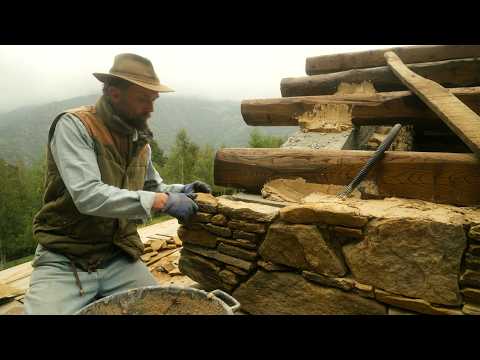
The outdoor work expands the scale of the project considerably. The couple describes excavating into the mountain, constructing a retaining wall from an estimated 100 tons of manually handled stone, adding an oversized fireplace, outdoor kitchen and pergola, and creating a balcony whose concrete had to be mixed and moved without normal truck access. A future fountain, another small stone barn and unfinished retaining work demonstrate how much remains to be done. The strongest element here is the recurring emphasis on skills learned from local craftspeople: masonry, pointing, stone shaping, welding, roofing and other techniques become part of the family's story rather than merely construction trivia.
Not everything benefits equally from the video's generous runtime. Several descriptions repeat how beautiful, special or difficult particular spaces and projects were, and the extended sponsorship arrives just as the balcony section has established one of the tour's strongest emotional moments. The unfinished laundry area, wood-filled guest room and construction-heavy grounds are treated with welcome humor and candor, but the presentation could have been tighter by trimming repeated expressions of admiration and letting the extensive visual and construction evidence speak more often for itself.
The closing shift gives the tour greater significance than a simple renovation milestone. After four years of work, the family says unresolved Italian bureaucracy and their inability to obtain a visa permitting full-time residence have pushed them to seek greater stability elsewhere, with Costa Rica becoming their next chapter. The specific bureaucratic struggle is described from their perspective rather than independently established here, but it creates an effective bittersweet contrast: they have finally made the old barn feel like a family home while simultaneously preparing to spend less time in it.
Pros
- Detailed explanations of excavation, underpinning, drainage, insulation and masonry reveal the difficult structural work behind the attractive finished spaces.
- Unfinished rooms and broken or temporary features provide a refreshingly candid picture of a renovation that remains in progress.
- Local stonework, chestnut elements and handmade walnut furniture give the home a strong sense of craftsmanship and continuity.
- The extensive outdoor projects demonstrate how skills learned during the renovation were gradually applied to increasingly ambitious work.
- The family's impending move gives the four-year retrospective an unexpectedly meaningful emotional conclusion.
Cons
- Repeated descriptions of spaces as beautiful, special or favorite areas occasionally become redundant when the craftsmanship already communicates their appeal.
- The lengthy sponsorship noticeably interrupts the flow at a particularly engaging point in the house tour.
- Some historical ages, construction details and bureaucratic circumstances are presented as estimates or personal accounts rather than firmly established information.
- With substantial landscaping and several interior projects unfinished, the tour cannot yet provide a fully completed before-and-after payoff.
Years of demanding manual work, learned craftsmanship and practical adaptation make this far more engaging than a straightforward showcase of an attractive Italian property. Some repetition and a disruptive sponsorship slow the tour, but its specificity, openness about unfinished problems and bittersweet family context make the renovation feel genuinely lived rather than merely displayed.