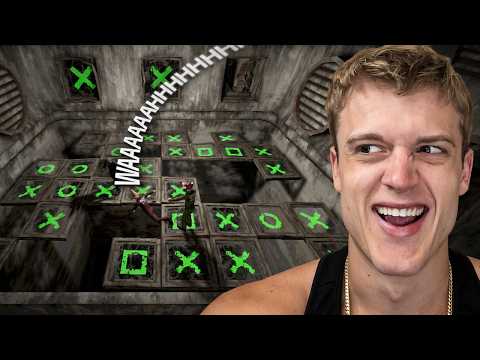
Four contestants shout 151 when asked how many Pokémon were in the original games, and suddenly the hard part is deciding who said it first. That scramble captures the fun and the frustration of putting 20 gamers in a room for elimination trivia. A correct answer advances a player, so the fastest exchanges can be as consequential as the toughest questions.
The quiz has a broad enough definition of gaming knowledge to ask about Nintendo’s playing-card business, the film that gave battle royale its name, and the meaning of terms like RNG and DPS. Character and weapon identification adds a welcome change from dates and acronyms. Competitive shooters still dominate the lineup, with Call of Duty, Valorant, Apex Legends, and Counter-Strike coming up often enough that a contestant’s choice of games can shape their chances.
The players are funniest when they can explain exactly why an answer ought to count. Several rally behind “Boy” when asked for the name of Kratos’ son, building a case out of the way Kratos addresses him. Elsewhere, the distinction between Los Santos and San Andreas turns a flurry of guesses into a quick lesson in GTA geography. Exchanges like these give the group more personality than the stretches where everyone is simply racing to be heard.
The host keeps questions coming quickly, though the open shout-out format makes several rulings hard to follow. Players dispute who answered first, and one complains that a rival merely said the same answer louder. The one-answer rule also loosens when the room stalls. Giving contestants another chance can get a stuck question moving, but the shifting allowances make it harder to know what earns an advance.
Release-year questions are especially prone to stalling. When the group tries to date the first Grand Theft Auto, the guesses pile up and some years come around again. The rapid pace works better when a question produces a flash of recognition, as it does when a contestant immediately supplies the original Modern Warfare 2’s kill requirement for a nuke.
The late rounds create stakes the opening free-for-all sometimes lacks. Requiring two correct answers makes each point easier to place, and the game-point question about an Apex championship gives a miss real weight. The closing run leans heavily on esports and development trivia, which suits the competitive crowd, though its back-and-forth rulings and reactions make the finish less clear than the game-point setup promises.
Pros
- The questions draw on hardware, industry history, and gaming terminology alongside familiar franchises.
- Character and weapon identification gives players a different way to show what they know.
- The argument over whether “Boy” should count is a funny example of the group making its own entertainment.
- Quick answers to specific questions let individual players show their depth of knowledge.
- The two-answer format and explicit game point give the later rounds a clearer sense of progression.
Cons
- The heavy concentration of shooter questions narrows the contest’s appeal as a general gaming quiz.
- Overlapping answers make several decisions about who spoke first difficult to follow.
- The one-answer rule is enforced unevenly when contestants get stuck.
- Release-year questions sometimes turn into long strings of guesses that slow the round.
There’s enough personality in the room to make this a fun quiz to play along with, particularly when a question lands squarely in someone’s specialty. The same free-for-all that gets the best reactions also makes the eliminations harder to trust, leaving the banter as the more reliable draw.