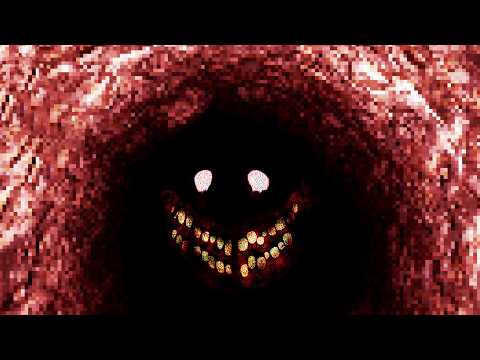
Simon once hid an escape warning for Debbie inside a game. By the time a child is looking for a way out of Giggleland, he’s the one she needs to escape. Game Theory builds its investigation around that reversal, revisiting clues it had previously read as signs that Simon was still resisting Uncle Terry. The result is a satisfying correction to the earlier theory and a more unsettling account of what happened to the family.
The opening recap gives newcomers enough of the alternate reality game to understand what’s at stake. It follows Debbie from her forced name change through her work on Uncle Terry’s children’s show and her eventual escape with Sarah. The chronology is clear, though the concentration of names and backstory delays the amusement park’s arrival. Once the game presents Elliot as a helpful guide and Ella urges the child to take an emergency exit, the conflicting directions give the lore an immediate purpose.
Simon’s diaries give the host the best material to work with. The episode compares the handwritten entries with the shorter versions the game displays, picking out how concern for Debbie and the twins gives way to anger and accusations. Reading those harsher lines as present-day Simon looking back is persuasive because it accounts for a discrepancy viewers can examine themselves. The earlier warning to Debbie still matters under this interpretation. It shows how much Simon changed after the escape he had planned went ahead without him.
The identity theory also benefits from clues that converge. Simon’s claim to be the girl’s father, the park announcer supplying the name Tolly, and Debbie’s diary naming her daughter Sarah fit the commune’s established practice of renaming children. The claim that Simon killed Terry and wears his skin gets a more definitive delivery than the evidence warrants. Terry’s absence and Simon’s mask invite that reading, but the video takes a considerable leap from those details to a specific account of Terry’s death. The extended controller-grip promotion also interrupts the momentum just as the episode starts sorting out what the game reveals.
The William Blake paintings in Terry’s house give the argument about obedience a specific visual anchor. The host connects a shackled figure to a ruler bound by his own laws, a fitting parallel for Terry’s attempt to control Simon through rules and punishment. The discussion of Aztec religion is less careful. The episode draws broad historical conclusions while moving quickly between its account of religious practices and the fictional commune’s use of them. The game’s imagery supports a discussion of the cult’s influences, while the wider claims receive little explanation of their historical scope.
The resurrection theory gives the final encounter its emotional weight. By linking the gravestone, the water ride’s story of separated twin rabbits, and Elliot’s emergence from the fire, the host makes a case that Sarah kills the sibling she never knew. It’s a grim reinterpretation of her escape that gives the earlier clues a reason to matter. The security cameras and returning announcement leave a credible suggestion that the commune’s reach extends beyond the park, though the claim that Terry always knew where Sarah was goes further than that closing scene establishes.
Pros
- The recap makes the earlier clues accessible to viewers arriving with the full game.
- Elliot and Ella’s conflicting directions turn the park walkthrough into a clear test of whom the player can trust.
- The comparison between the handwritten diaries and the game’s displayed text gives viewers concrete evidence of Simon’s changing outlook.
- The renaming theory connects the park announcement to Debbie’s diary and the commune’s treatment of children.
- The William Blake artwork gives the reading of Terry’s authority a specific visual basis.
- The twin imagery gives Sarah’s apparent escape a disturbing second meaning.
Cons
- The controller-grip promotion stalls the analysis shortly after Simon’s reveal.
- The episode treats the claim about Terry’s death and the identity of Simon’s mask with more certainty than the clues support.
- Broad statements about Aztec religion receive too little historical context alongside the fictional cult’s practices.
- The closing camera reveal supports the surveillance theory more directly than the claim that Terry always knew where Sarah was.
The episode earns its return to Giggleland by letting the full game overturn an earlier assumption about Simon. Its close reading makes the family’s ending linger, even when the narration presses ambiguous clues into firmer conclusions than they can carry.