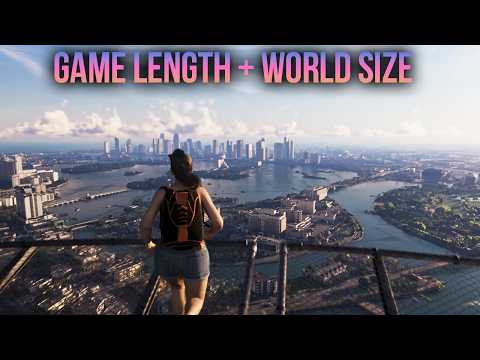
Rockstar's Grand Theft Auto 6 delivers an extraordinary visual experience, but its technical ambitions expose significant differences between Microsoft's Xbox Series X and Series S consoles. Digital Foundry examines how the long-awaited open-world blockbuster performs across both systems, revealing a fascinating contrast between graphical consistency and hardware limitations. While the Series X generally maintains a convincing 30 FPS experience, the less powerful Series S frequently struggles to sustain that target. The analysis provides an unusually detailed look at how Rockstar has preserved its ambitious rendering technology across two very different hardware configurations, while demonstrating why visual fidelity alone cannot determine the quality of a console release.
The game's technical achievements receive considerable attention, particularly its remarkably sophisticated hair simulation, ray-traced global illumination, and extensive reflections. Lucia's hair responds convincingly to movement, wind, and rain, while similarly advanced effects extend to numerous pedestrians rather than remaining exclusive to major characters. The lighting system also impresses through its consistent treatment of interiors, vehicles, and urban environments, creating a world that frequently approaches photorealism. Digital Foundry's enthusiasm is supported by specific technical observations rather than vague declarations about graphical excellence. The discussion of reflective materials, indirect lighting, and environmental detail effectively demonstrates how individual rendering systems contribute to the game's overall presentation. However, comparisons suggesting that Rockstar has surpassed virtually every contemporary open-world game remain subjective assessments rather than conclusions established through systematic comparisons.
The Xbox Series X analysis benefits enormously from the reviewer's approximately 45-hour playthrough, which includes the main story and numerous side activities. This substantial testing period provides a stronger foundation than impressions gathered from isolated benchmark sequences. The game reportedly renders at approximately 1440p internally, maintaining generally convincing image quality despite occasional softness, reflection artifacts, and minor shadow compromises. Environmental pop-in remains relatively unobtrusive during ordinary gameplay, while the extensive cityscape retains impressive detail at considerable distances. The examination also identifies limitations that players might otherwise overlook, including aggressive vignette effects and the inability to adjust certain post-processing settings. These observations help balance the overwhelmingly positive assessment of Rockstar's graphical accomplishments.
Performance testing reveals the consequences of targeting such demanding visual and simulation systems. Series X generally maintains 30 FPS during ordinary traversal, combat, and cutscenes, but crowded intersections, vehicle collisions, and particularly chaotic firefights can push performance into the upper 20s or occasionally around 20 FPS. The reviewer explains that these problems appear associated with demanding simulation workloads, although their precise technical causes are not conclusively established. Additional measurements place input latency at approximately 100 milliseconds on the reviewer's setup, with limited improvement from different display output modes. The comparison with previous Rockstar games provides useful historical context, while the discussion of 120Hz variable refresh rate explains how compatible displays can reduce the perceived disruption of inconsistent frame delivery. Nevertheless, players accustomed to 60 FPS performance modes may find the absence of such an option disappointing.
The Series S comparison delivers the analysis's most revealing findings. Rather than eliminating major rendering features, Rockstar has retained strand-based hair, ray-traced lighting, and ray-traced reflections, albeit with substantial reductions in resolution and precision. Lower-quality shadows, softer textures, simplified water surfaces, reduced volumetric cloud detail, and more noticeable pop-in distinguish the smaller console's presentation. Internal resolution reportedly drops to approximately 720p, although the reconstructed image appears considerably sharper than that figure might suggest. Digital Foundry also discusses unusual image reconstruction artifacts that resemble certain machine-learning-based techniques, while appropriately acknowledging uncertainty about the actual upscaling implementation. This willingness to distinguish direct observations from technical speculation strengthens the credibility of the comparison.
Unfortunately, preserving the game's visual identity appears to have created serious performance compromises on Series S. Ordinary driving and combat frequently fall into the mid-to-upper 20 FPS range, with especially demanding situations approaching 20 FPS. The reviewer suggests that the console's limited memory configuration could contribute to these difficulties, but presents this as a suspicion rather than a verified diagnosis. Even variable refresh rate cannot fully disguise the resulting sluggishness, making Series S considerably harder to recommend than Series X. The conclusion that Rockstar has accomplished impressive visual scaling while failing to deliver consistently satisfactory performance is persuasive because it recognizes both sides of the engineering trade-off. One limitation is the absence of a complete four-console comparison, which prevents viewers from seeing how these Xbox results measure against the PlayStation versions under equivalent conditions.
Beyond the technical examination, the reviewer offers a welcome assessment of the game's broader design. GTA 6 reportedly combines the accessible driving and fast-paced action of GTA 5 with elements of Red Dead Redemption 2's more grounded presentation, without adopting that game's slower emphasis on routine maintenance. Expanded side missions, naturally integrated activities, responsive driving mechanics, and a substantial in-game radio selection contribute to an open world that feels unusually cohesive. These impressions give viewers useful context for understanding why Rockstar's technical priorities matter to the experience itself. The presentation remains engaging through its combination of measurable findings, practical examples, and personal gameplay observations, although the extended Elgato sponsorship delays the main discussion, and the enthusiastic praise occasionally becomes repetitive. The lengthy gameplay commentary also broadens the review beyond its central Xbox performance comparison.
Pros
- The extensive Xbox Series X playthrough provides a substantial foundation for evaluating performance during ordinary gameplay and demanding encounters.
- Detailed explanations of hair simulation, ray-traced lighting, and reflections demonstrate why GTA 6 represents such an impressive graphical achievement.
- The side-by-side examination of Series X and Series S clearly identifies the visual compromises required by Microsoft's less powerful console.
- Specific resolution measurements and frame-rate observations provide concrete evidence for the reviewer's technical conclusions.
- The analysis distinguishes confirmed graphical behavior from speculation about memory limitations and image reconstruction techniques.
- Input latency measurements, motion blur settings, and variable refresh rate testing offer practical information for players concerned about responsiveness.
- The discussion of driving mechanics, expanded side activities, and environmental design connects the technical achievements to the broader gameplay experience.
Cons
- The absence of a complete PlayStation comparison limits the usefulness of the analysis for players deciding between different console platforms.
- The extended Elgato sponsorship interrupts the introduction before the central technical examination begins.
- The reviewer's enthusiasm for the game's graphical achievements occasionally becomes repetitive without introducing substantially new evidence.
- Some explanations concerning CPU limitations, memory bottlenecks, and upscaling technology remain speculative without definitive technical verification.
- The discussion of gameplay features and the in-game soundtrack occasionally draws attention away from the promised Xbox performance comparison.
- The review identifies serious Series S frame-rate problems but provides limited analysis of which graphical reductions might realistically improve performance.
Digital Foundry delivers a comprehensive and technically informative examination of GTA 6's Xbox versions, highlighting both Rockstar's extraordinary visual engineering and the performance compromises required to achieve it. The extensive testing, detailed graphical comparisons, and measured treatment of technical uncertainty make the analysis particularly valuable for Xbox owners, especially those considering the Series S version. Although the missing PlayStation comparisons, occasional repetition, and extended sponsorship weaken its focus, this remains an insightful review that successfully explains why GTA 6 is simultaneously a remarkable graphical achievement and a demanding test of current-generation hardware.