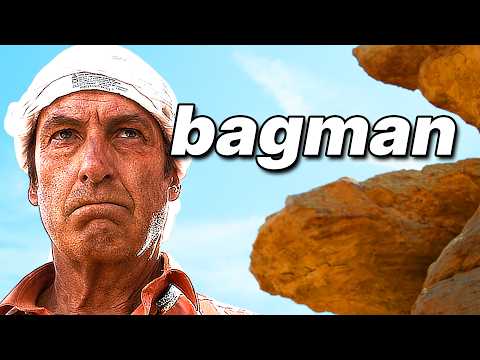
Jimmy McGill impersonating Howard Hamlin, Kim Wexler manipulating Cliff Main, and Gustavo Fring secretly operating a surveillance network provide plenty of material for a detailed examination of Better Call Saul. This breakdown of Season 6's fourth episode explores how these seemingly separate storylines connect through careful visual storytelling, production decisions, and character development. Rather than simply recounting the action, the creator investigates everything from overlooked background details to behind-the-scenes filmmaking choices, revealing how much planning went into an episode that brings several familiar characters closer to their Breaking Bad futures.
One of the breakdown's greatest strengths is its examination of Jimmy and Kim's elaborate scheme against Howard. The creator explains how Jimmy's disguise, Wendy's participation, and Kim's carefully arranged meeting with Cliff work together to manufacture evidence of Howard's supposed drug problem. Small production details make this sequence particularly interesting, including the use of stunt doubles, difficulties with the car's automatically adjusting headrests, and an overhead shot added to extend Jimmy's frantic struggle with a parking sign. The discussion also highlights how the filmmakers repurposed footage captured during camera resets to clarify Howard's movements. These observations demonstrate how editing, performance, and practical problem-solving contribute to a sequence that balances comedy with mounting tension.
The examination becomes more substantial when it turns toward the consequences of Jimmy and Kim's behavior. Jimmy's increasingly hostile reception at the courthouse illustrates how his association with Lalo Salamanca has damaged his professional credibility, even as that same reputation attracts criminal clients. The creator points out the colder color grading, Jimmy's isolated cafeteria-like positioning, and the symbolism of damaged versus pristine ceilings during his conversation with Bill Oakley. These details support an effective discussion of Jimmy's transformation into Saul Goodman. However, the creator occasionally pushes visual interpretations further than the available evidence supports, particularly when suggesting that background objects or architectural contrasts necessarily reflect specific character traits.
Kim's encounter with Mike Ehrmantraut receives appropriately significant attention, especially because it brings together characters whose storylines have largely remained separate. The breakdown explains how the restaurant setting replaced an originally planned bus-stop conversation, creating a more intimate confrontation. References to the film Heat, Mike's description of Kim as being made of sterner stuff, and the decision to keep Lalo's survival secret from Jimmy all contribute to a thoughtful examination of Kim's changing judgment. Particularly effective is the observation that her independence, previously an admirable characteristic, can become a liability when it encourages secrecy. The creator also draws on comments attributed to Rhea Seehorn and Peter Gould to explain why this decision represents an important turning point rather than a minor omission.
Gus Fring's elaborate home-security arrangement provides another fascinating section, combining narrative revelations with technical filmmaking details. The creator explains how the apparently ordinary neighboring couple becomes part of a concealed surveillance operation, complete with a tunnel, a body double, and monitoring equipment. The discussion of a simulated continuous camera movement, a concealed edit between a constructed set and a real house, and digitally inserted monitor images offers valuable insight into the production's visual complexity. Details about the deliberately impersonal bedroom and the sprinkler sounds designed to resemble machine-gun fire further illustrate the atmosphere of paranoia surrounding Gus. These observations are especially rewarding because they connect filmmaking decisions directly to the character's increasingly defensive behavior.
The creator's extensive knowledge of the Better Call Saul and Breaking Bad universe adds another dimension to the analysis. Wendy's return, Spooge's appearance, the emergence of Saul's recognizable office, and references to earlier locations establish the episode's position within the larger story. The attention to continuity is impressive, extending to reused props, phone numbers, recognizable vehicles, and deliberate modifications to real filming locations. The creator also identifies several apparent period inaccuracies, including phones, vehicle colors, and board games that postdate the story's 2004 setting. While these observations demonstrate careful scrutiny, they sometimes receive similar emphasis to more consequential storytelling choices, making the presentation feel like an exhaustive inventory rather than a consistently prioritized analysis. Speculative connections involving colors, numbers, names, and background decorations are generally entertaining but not always convincing.
The presentation remains lively through its mixture of episode clips, production anecdotes, visual comparisons, and playful commentary. Recurring jokes about roses, suspicious vehicles, Kim's ears, and the possibility of an actual hit-and-run give the breakdown a distinctive personality. The creator also makes useful distinctions between confirmed production information and personal theories, particularly when discussing directorial intentions, deleted material, and possible symbolic references. Nevertheless, the rapid movement between serious character analysis, technical trivia, and humorous speculation occasionally weakens the narrative flow. Some references depend on knowledge of earlier installments in the creator's series, while the extended membership acknowledgments near the end interrupt the otherwise focused exploration. Despite these distractions, the breakdown succeeds in making familiar scenes feel newly revealing through its combination of close observation and production context.
Pros
- The chronological examination makes it easy to follow the episode's interconnected storylines while discovering overlooked details.
- The analysis of Jimmy and Kim's scheme effectively connects comedic staging, character motivations, and the growing consequences of their deception.
- Behind-the-scenes explanations of stunt work, camera positioning, editing, and digitally altered shots provide valuable filmmaking insight.
- The discussion of Kim's conversation with Mike gives the breakdown meaningful character analysis beyond simple Easter egg identification.
- The examination of Gus's surveillance operation reveals how production design and camera techniques create tension and reinforce his paranoia.
- Connections to Breaking Bad, earlier Better Call Saul episodes, and returning characters reward viewers familiar with the larger fictional universe.
- The creator's humor, visual comparisons, and references to production commentary make the extensive collection of observations entertaining.
Cons
- The sheer quantity of observations occasionally gives minor background details as much attention as major narrative developments.
- Speculative interpretations involving colors, numbers, props, and visual symbolism sometimes extend beyond what the evidence establishes.
- Frequent jokes and recurring counters occasionally interrupt otherwise thoughtful discussions of character behavior and filmmaking choices.
- References to earlier breakdowns and long-running observations may be confusing for viewers unfamiliar with the creator's previous installments.
- Some continuity errors and production trivia are identified without fully exploring whether they meaningfully affect the viewing experience.
- The lengthy membership acknowledgments disrupt the conclusion and reduce the impact of the episode's final character developments.
An impressively detailed and frequently entertaining examination of Better Call Saul, this breakdown combines production knowledge, visual scrutiny, and thoughtful character interpretation to reveal the craftsmanship behind a pivotal chapter. Its strongest sections demonstrate how seemingly minor choices in performance, editing, and set design reinforce the story's larger themes of deception, paranoia, and moral compromise. Although speculative connections, excessive minutiae, and occasional interruptions prevent every observation from carrying equal weight, the creator delivers a rewarding companion for dedicated fans who want to appreciate the series beyond its surface-level storytelling.