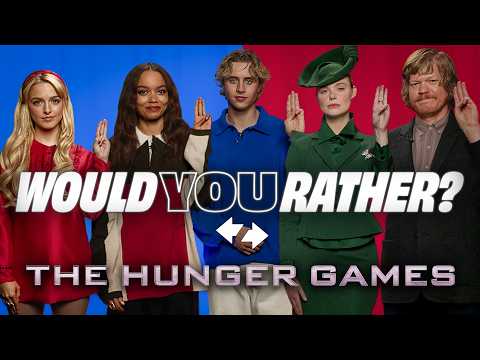
Joseph Zada, Ben Wang, and their fellow The Hunger Games: Sunrise on the Reaping cast members turn a simple game of Truth or Dare into a wonderfully chaotic display of friendship, embarrassment, and spontaneous comedy. What begins with relatively harmless challenges quickly escalates into questionable makeovers, marshmallow-filled mouths, exaggerated impressions, and a surprisingly intense staring contest. Teen Vogue gives the performers plenty of room to entertain themselves, allowing their natural chemistry and playful personalities to become the main attraction.
The opening rounds establish a relaxed atmosphere as the cast attempts charades and debates who would be better suited to hunting or baking in the world of The Hunger Games. The discussion produces amusing disagreements before shifting into unexpected personal revelations. One cast member reveals an impressive enthusiasm for knitting, describing the creation of six scarves in a single week and a handmade Winnie the Pooh bear. These smaller exchanges are especially enjoyable because they reveal genuine interests and friendships rather than relying entirely on manufactured challenges.
The dares become considerably more entertaining when one performer agrees to receive a makeover using whatever beauty products the group can find. What follows is an enthusiastic application of blush, lip gloss, and other cosmetic touches, accompanied by increasingly dramatic compliments and teasing about an upcoming lunch outing. The willingness to participate without taking the situation too seriously gives the sequence its charm. Another challenge involves stuffing marshmallows into a performer's mouth while attempting to deliver dialogue from the film, producing predictable communication difficulties and plenty of laughter. Although the marshmallow segment stretches the joke considerably, the cast's reactions help sustain its entertainment value.
The most successful comedic moments emerge when the performers begin impersonating one another. Ben's exaggerated portrayal of a fellow actor, complete with jokes about extraordinary height, movie enthusiasm, and dramatic behavior, demonstrates how comfortably the group can ridicule each other's habits. A separate challenge involving an impression of Caesar Flickerman introduces a clever connection to the franchise, with the conversation turning toward Joseph's unusually tight arena costume. The resulting exchange is less an organized interview than an affectionate roasting session, but the unpredictable back-and-forth makes it one of the more memorable portions.
Not every question is designed purely for laughs, and the occasional personal revelation adds welcome variety. When asked about an embarrassing experience, one performer recalls an unsuccessful audition involving repeated requests for an unusual physical gesture. Another discussion reveals that Ben was taken to Saddle Ranch for his birthday, where an attempt to ride a mechanical bull apparently resulted in an unfortunate collision involving his face. These anecdotes provide glimpses into the performers' lives outside the production, although the rapid transitions often prevent the conversations from developing beyond their immediate punchlines.
The staring contest provides the clearest example of how the cast can transform a basic challenge into an extended comedic spectacle. What should be a straightforward competition becomes an exercise in exaggerated discomfort, with participants complaining about keeping their eyes open, questioning why they agreed to participate, and joking that the experience has ruined their enthusiasm for future interviews. The increasingly theatrical reactions are funny, particularly when someone appears close to tears. However, the sequence also exposes a limitation of the format, as repeated expressions of discomfort eventually become less amusing than the initial reactions.
Despite the lively atmosphere, the interview offers relatively little substantial information about Sunrise on the Reaping. Questions about difficult scenes and lessons learned during production briefly introduce more meaningful subjects, including the challenge of coordinating a scene in which two characters speak simultaneously and one performer's experience learning the accordion. Unfortunately, these potentially interesting discussions receive minimal follow-up. The cast's obvious familiarity creates an inviting experience for fans, but viewers hoping for behind-the-scenes filmmaking details, character development insights, or a deeper exploration of the upcoming story may find the material disappointingly light.
Teen Vogue ultimately succeeds by keeping the presentation informal and allowing the cast's personalities to drive the entertainment. The mixture of truths, dares, impressions, and personal stories creates enough variety to prevent the experience from becoming entirely repetitive, even when individual challenges occasionally linger too long. The frequent interruptions and overlapping conversations contribute to the spontaneous atmosphere but sometimes make responses difficult to follow. Nevertheless, the performers' willingness to embarrass themselves and their shared sense of humor provide an enjoyable glimpse into the relationships behind a major franchise production.
Pros
- The cast demonstrates excellent natural chemistry through friendly teasing, spontaneous laughter, and playful disagreements.
- Ben Wang's exaggerated impressions and humorous reactions provide several of the interview's most entertaining moments.
- The improvised makeover creates an amusing sequence that showcases the performers' willingness to embrace ridiculous challenges.
- Personal anecdotes about knitting, embarrassing auditions, and a mechanical bull incident reveal entertaining details about the cast's lives.
- The Caesar Flickerman-inspired interview cleverly incorporates a recognizable element of The Hunger Games into the game.
- The mixture of physical dares, personal questions, and impersonations gives the presentation an appealing variety.
- The relaxed atmosphere encourages genuine interactions rather than overly rehearsed promotional responses.
Cons
- The interview devotes relatively little attention to the film's story, characters, or production despite featuring its cast.
- Potentially interesting discussions about challenging scenes and newly acquired skills end before meaningful details can emerge.
- The marshmallow challenge and extended staring contest occasionally stretch simple jokes beyond their strongest moments.
- Overlapping dialogue, interruptions, and rapid exchanges sometimes make individual responses difficult to understand.
- Several dares rely on familiar celebrity interview gimmicks rather than particularly original or inventive challenges.
- The loosely structured presentation occasionally sacrifices conversational clarity for spontaneous humor.
Teen Vogue delivers a lively and frequently hilarious cast interview that thrives on genuine camaraderie, playful embarrassment, and an impressive willingness to participate in absurd challenges. While the familiar format and limited discussion of the actual film prevent it from offering much substantial insight, the performers' infectious personalities make the experience consistently enjoyable. Fans looking for lighthearted entertainment and a closer glimpse at the cast's friendships will find plenty to appreciate.