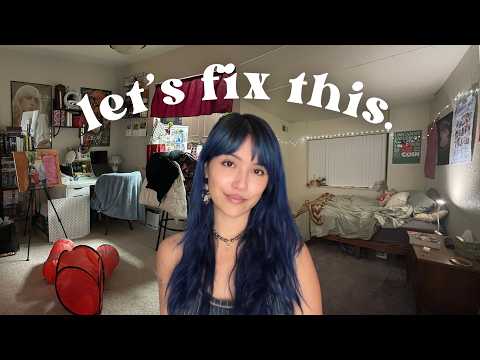
Cinnamon clouds, marshmallow-stuffed mouths, and teenagers suctioning their lips with shot glasses make an effective reminder that online culture was hardly sensible before algorithms and generative technology became the latest sources of generational anxiety. Emily’s funniest observation is that older Gen Z and millennials can complain about younger people melting their brains online while conveniently forgetting an era when going viral sometimes meant voluntarily choking, bruising, or humiliating yourself. That framing gives the ranking more substance than a simple nostalgia exercise, even when the discussion remains deliberately unserious.
The format works largely because the categories are openly arbitrary. “Let’s bring this back promptly” sits alongside “historians can skip this one” and an aggressively negative Tyra Banks quotation, allowing Emily to judge trends according to whatever combination of nostalgia, embarrassment, danger, and personal affection suits the moment. The inconsistency is part of the comedy, but it also becomes a limitation: chubby bunny earns a comeback despite its obvious choking implications, while comparatively harmless trends such as the mannequin challenge are dismissed largely because too many other entries have already received positive rankings.
Her strongest material comes when a trend becomes a starting point for a larger observation. The cinnamon challenge leads into a comparison between current anxieties about Gen Alpha and the reckless online behavior of earlier generations. Tumblr’s implausible “everyone clapped” stories become a discussion of how performative internet fiction has evolved rather than disappeared, while random “potato/Bob” humor is connected to the equally inexplicable memes of the present. The point is less that old internet culture was uniquely embarrassing than that every generation eventually discovers how dated its supposedly hilarious online language can become.
Other sections succeed through vivid personal specificity. Popping the lenses out of 3D glasses to imitate the Tumblr-era black-frame look says more about the “swag” aesthetic than a detached history could, while the affection for duck face, Snapchat filters, and man buns makes those rankings feel genuinely personal rather than calculated around consensus. Pokémon Go and the mannequin challenge also inspire an appealing theme about people gathering in real life around fundamentally silly digital phenomena. The humor is especially effective when Emily treats that silliness as something worth preserving rather than merely mocking.
The discussion is less reliable when it wanders into factual or safety-related territory. Emily appropriately cites medical warnings while condemning the Kylie Jenner lip challenge and acknowledges evidence of lung injury associated with inhaled cinnamon, but she nearly rationalizes chubby bunny as comparatively safe before explicitly admitting she does not know whether that is true. The Ice Bucket Challenge is correctly presented within the discussion as a fundraising phenomenon that generated hundreds of millions of dollars for ALS-related causes, yet most of the segment quickly shifts back toward jokes. Given the otherwise low-stakes subject, these moments do not derail the piece, but stronger separation between comic speculation and safety judgments would help.
At nearly every stop, the comedy relies on extended riffs, invented scenarios, pop-culture references, and sudden tangents. The laboratory rat imagining middle schoolers recreating its cinnamon exposure, the dating prospect unexpectedly being challenged to chubby bunny, and the description of planking as parkour’s sedentary sibling all demonstrate Emily’s ability to stretch a simple premise into something much stranger. That looseness also produces the main pacing problem. Several jokes continue well after the ranking itself is obvious, and the lengthy sponsor segment delays a premise that already needs considerable time to work through its full list.
Ultimately, the ranking matters less than the portrait of internet culture that emerges from it. Dangerous challenges, fake Tumblr encounters, face filters, questionable fashion, optical illusions, mobile games, and mass-participation memes all become evidence of an online era that could be embarrassing and occasionally reckless but also unusually communal. Emily is at her best when she recognizes that today’s internet users are not necessarily more sophisticated than their predecessors—they have simply developed newer ways to be ridiculous together.
Pros
- Connects individual trends to broader observations about generational nostalgia, online embarrassment, and the cyclical nature of internet culture.
- Personal memories give the Tumblr swag era, Snapchat filters, duck face, and other trends a distinctive perspective.
- Extended comic riffs frequently turn very simple nostalgic subjects into memorable material.
- Pokémon Go and the mannequin challenge prompt a thoughtful appreciation of internet trends that encouraged real-world participation.
- Dangerous challenges are generally treated as dangerous rather than romanticized purely because they are nostalgic.
Cons
- The deliberately vague ranking categories lead to inconsistent judgments, particularly around chubby bunny and the mannequin challenge.
- Some extended tangents and repeated jokes slow the progression through an already substantial list.
- The chubby bunny discussion briefly speculates about relative choking risk without establishing that comparison.
- The lengthy sponsorship section significantly postpones the main retrospective.
Nostalgia provides the premise, but the sharper idea is that every internet generation eventually leaves behind behavior its older self will struggle to explain. Emily’s personal stories, absurd analogies, and willingness to embrace past embarrassment make that argument consistently funny, even if tighter pacing and more disciplined safety commentary would strengthen the ranking.