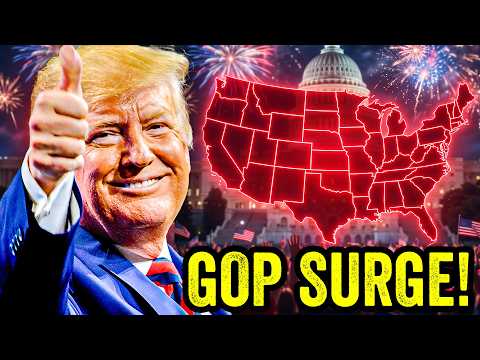
A rumor that Robert Downey Jr. could eventually return as Tony Stark gives the discussion a provocative starting point, but the conversation quickly becomes a broader critique of Marvel's post-Secret Wars direction. The central argument is that the MCU may pursue a "reset" rather than a complete reboot, potentially preserving selected actors and characters while using Secret Wars to rearrange continuity and introducing a newly cast X-Men roster afterward. The panel sees Downey's possible return as emblematic of that strategy: commercially understandable and emotionally familiar, but also evidence that Marvel may be unwilling to make the cleaner break they believe the franchise needs. The problem is that the headline-worthy Iron Man claim remains explicitly a rumor attributed to unnamed sources and other online discussion, so the certainty of the title goes considerably beyond what the speakers actually establish.
The strongest part of the conversation is the debate over what a reset would accomplish compared with a genuine reboot. One speaker argues that Marvel should recast everyone and rebuild around younger actors capable of carrying another decade of films, while the expected alternative is described as retaining some established performers, removing others, combining continuity, and potentially altering characters' memories. That leads naturally into questions about the new X-Men, the future of Steve Rogers, the existing Fantastic Four cast, and how Doctor Doom could continue after Downey's involvement. These are worthwhile franchise-planning questions because they address the long-term consequences of Marvel's casting choices rather than treating a familiar actor's return as automatically exciting. Still, many proposed details about timelines, erased memories, future casting, and character survival are speculation rather than announced plans.
Downey himself becomes the clearest example of the panel's concern about short-term spectacle competing with long-term planning. The hosts repeatedly emphasize their affection for his Iron Man while arguing that bringing him back would be a safe decision rather than necessarily a wise one. They are similarly skeptical of casting him as Doctor Doom, questioning the voice used for the character and arguing that Marvel has effectively tied one of its major villains to the actor most associated with Tony Stark. A brief older clip of Downey performing a voice is used for comparison, but that provides little basis for judging how a finished Doctor Doom performance might ultimately sound, particularly if vocal processing or other production choices change it. The criticism therefore works better as a reaction to the concept than as an evaluation of the completed character.
The conversation becomes less disciplined when it moves from announced projects into claims about Marvel's internal problems. The panel discusses supposed difficulties cutting Avengers: Doomsday to a desired runtime, actor egos influencing the edit, a lengthy script, and broader production complications, but these accounts are largely attributed to what individual speakers say they have heard. The same evidentiary problem is more pronounced in an extended story involving Evangeline Lilly, Michelle Pfeiffer, Peyton Reed, COVID-era production rules, and an alleged physical incident on Ant-Man and the Wasp: Quantumania. The speakers themselves disagree over whether the contact was intentional, and important details are openly uncertain. That uncertainty makes the anecdote unsuitable for confident conclusions about why actors, filmmakers, or franchises subsequently changed direction, yet the conversation sometimes moves from rumor to causal explanation without sufficient separation.
A wider argument about superhero fatigue provides more interesting ground, even if the panel states its conclusions too absolutely. The speakers contend that interconnected superhero universes have largely exhausted their appeal outside durable properties such as Batman and Spider-Man, pointing to troubled franchises, long gaps between installments, Marvel's difficulties with Blade, and the absence of more varied comic adaptations. They argue that Marvel would have been better served after Endgame by allowing the old saga to rest and building new X-Men, Fantastic Four, or unrelated stories without requiring everything to continue through the same continuity. That is a coherent creative preference and fits their broader reboot argument, but declaring the superhero movie effectively "done" is presented as opinion rather than demonstrated through box-office trends, audience data, or a systematic examination of recent successes and failures.
The episode is most entertaining when the panel challenges one another and follows the implications of a franchise that has retained many of the same stars for years. A detour into Star Trek becomes an analogy for how actors can accumulate creative leverage within long-running properties, eventually leading to the argument that established talent and competing priorities can make franchise management more difficult. The conversational format allows quick jokes, disagreements, casting alternatives, and spontaneous connections between Marvel, DC, Star Trek, Hellboy, Spawn, Batman, and Spider-Man. It also produces substantial drift. Comments about actors' appearances, sexuality, online behavior, and unrelated films add little to the central question, while profanity and dismissive characterizations sometimes substitute for explaining why particular creative decisions supposedly failed.
Ultimately, the video offers a forceful interpretation of Marvel's predicament rather than reliable confirmation of its future. Its most persuasive idea is that Secret Wars creates an opportunity to decide how much continuity Marvel should carry forward, and that preserving recognizable stars could undermine the advantages of starting a new era with the X-Men. The rumored Tony Stark return is a useful lens for that debate precisely because Downey represents both the MCU's greatest established asset and the difficulty of moving beyond its original success. The episode would be substantially stronger if it maintained consistent distinctions among public information, sourced-but-unverified claims, secondhand internet rumors, and the panel's own predictions instead of allowing those categories to blur together.
Pros
- The distinction between resetting continuity and fully rebooting the MCU creates a substantive framework for discussing Marvel's post-Secret Wars future.
- Robert Downey Jr.'s possible return is examined as a long-term franchise decision rather than treated purely as nostalgic fan service.
- Questions about actor ages, X-Men casting, Doctor Doom, continuity, and decade-long franchise planning broaden the discussion beyond a single rumored appearance.
- The panel openly acknowledges in several places when information comes from rumors, unnamed sources, other online discussion, or personal speculation.
- The argument that Marvel could use new franchises to establish a cleaner era offers a clear alternative to retaining large portions of existing continuity.
- Energetic disagreement and comparisons with other long-running franchises keep an extended industry discussion lively.
Cons
- The Iron Man return is presented with far greater certainty in the video's premise than the explicitly unverified sourcing supports.
- Rumors about Doomsday, post-Secret Wars continuity, actor involvement, production problems, and Marvel's internal decisions frequently blur with predictions and asserted conclusions.
- The extended Quantumania anecdote contains uncertain and disputed details yet is used to support broader claims about personnel and franchise outcomes.
- Sweeping declarations that superhero movies or cinematic universes are effectively finished are not supported with systematic audience or financial evidence.
- Personal remarks about actors' age, appearance, sexuality, and online behavior frequently distract from the stronger creative and franchise-management arguments.
- Numerous tangents into other films and franchises make the discussion less focused and leave some potentially interesting Marvel questions underdeveloped.
Using Downey's rumored Tony Stark return as evidence of Marvel's reluctance to make a clean break produces a worthwhile debate about continuity, casting, aging franchises, and what should follow Secret Wars, but the episode repeatedly weakens its strongest analysis by mixing speculation, anonymous sourcing, disputed anecdotes, and emphatic opinion. The panel's skepticism toward nostalgia-driven franchise management is often compelling; the claimed certainty surrounding Marvel's actual plans is much less so.