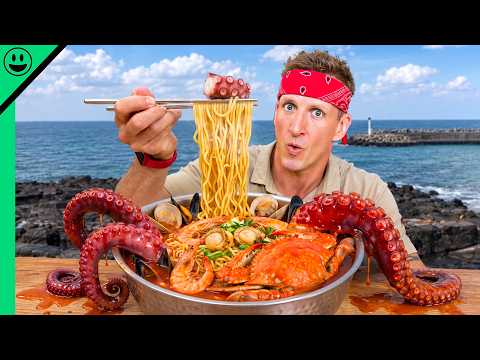
The most effective quality of this Jeju food tour is that strangeness is usually allowed to give way to actual culinary observation. Gooseneck barnacles initially become “turtle hands” and visual material for worm jokes, but the preparation receives considerably more attention than the shock framing might suggest. The video shows the barnacles being boiled, chilled, individually extracted and incorporated into a pancake before comparing their raw, steamed and cooked textures. That progression makes the opening more than an exercise in reacting to unfamiliar ingredients, even if the repeated emphasis on how disturbing they look sometimes works against the stated goal of exploring local food culture.
The barnacle pancake also establishes one of the episode’s better recurring ideas: unusual food often makes more sense once its sourcing and preparation are visible. The claimed $163 price is contextualized by the labor involved in hand-picking the barnacles and removing their meat individually, although neither the price nor the broader claim that this is Korea’s most expensive pancake is independently substantiated within the video. Similarly, statements about the barnacles’ biological classification and rarity are presented confidently but without supporting sources. The tasting itself is refreshingly less exaggerated, with the presenter describing the meat as firm, mildly sweet and notably chewy rather than pretending its unusual appearance automatically produces an extraordinary flavor.
Horse provides the most extensive cultural section and the strongest food tasting. Raw sashimi, tartare, a cold salad and briefly seared cuts allow the presenter to compare preparation methods rather than treating horse as a one-bite novelty. He is particularly good at explaining how sesame oil, pear, wasabi, rice, perilla and added horse fat alter relatively lean meat, while his preference for the simple horse-and-rice combination gives the segment a clear conclusion. The discussion also distinguishes horses raised for food from riding or companion animals in Korea, but broader claims about Jeju’s relationship with horse consumption and the difficulty of finding horse meat on the mainland are conveyed largely through conversation rather than documented evidence. The brief explanation of American horse-slaughter restrictions is similarly asserted rather than sourced.
Black goat is where the episode most clearly recognizes that cultural curiosity should not become automatic endorsement. A restaurant display attributes an extremely broad range of health benefits to black goat products, including claims involving pregnancy, immunity, anemia, anti-aging, childhood growth and eyesight. Crucially, the presenter later states that many such medicinal claims are unproven and says South Korean regulators have cracked down on businesses advertising black goat products as preventing or curing diseases. That distinction between traditional or commercial claims and established evidence is important. The joking declaration of feeling “vitality” after drinking the extract is clearly part of the performance rather than evidence that the product works, although identifying the specific regulatory basis for the discussion would have strengthened this section considerably.
The black-goat meal itself is broad enough to prevent the medicinal controversy from consuming the culinary subject. Skin salad, tartare, ribs and the dark herbal extract demonstrate several very different uses of the animal, and the descriptions remain unusually attentive to texture: chewy skin, creamy raw egg yolk, sweet pear, tender rib meat and sticky fat all receive distinct reactions. At the same time, the episode’s constant pursuit of escalation occasionally becomes tiring. Sexual jokes during the horse section, repeated “weird” imagery and exaggerated reactions can be funny, but they also risk reducing foods presented as locally meaningful traditions to props in a succession of increasingly outrageous challenges.
The final black-pork sequence is therefore a welcome shift because the cooking technique becomes the spectacle. The initial straw fire chars the exterior before thick pieces of pork belly and neck are finished at the table, giving the viewer a clear look at the two-stage process. The presenter proposes that the intense straw flame and smoke contribute grassy, sweet and earthy aromas, then reports a pronounced smoky quality when tasting the finished meat. His tasting can support the conclusion that he perceives a difference, but it cannot establish how much of that flavor objectively comes from the straw rather than the overall cooking process. Still, pairing the pork with fermented anchovy and hairtail sauces produces one of the episode’s most coherent explanations of how smoke, fat, salt and pungent fermented flavors interact.
Across four locations, the video succeeds because its enthusiasm is backed by enough preparation detail to make the foods intelligible rather than merely sensational. The progression from barnacles to horse, goat and straw-fired pork provides variety in ingredients and cooking methods, while the concluding choices of the barnacle pancake as the strangest dish and horse with rice as the favorite give the journey a satisfying endpoint. The conspicuous Testerup sponsorship interrupts the first segment at an awkward moment, and some superlatives and cultural generalizations would benefit from firmer support. Even so, the combination of kitchen access, direct tasting, local assistance and occasional skepticism toward unsupported claims makes this a substantially more informative exploration than its deliberately provocative framing initially suggests.
Pros
- Kitchen access shows how the barnacle pancake, horse dishes, black goat and straw-fired pork are actually prepared rather than relying solely on reactions at the table.
- Tasting descriptions frequently distinguish texture, seasoning, fat, smoke and accompanying ingredients, providing useful culinary detail.
- The horse section compares several preparations of the same meat, making it especially effective at showing how technique and seasoning change the experience.
- The discussion of black goat appropriately separates expansive medicinal claims from what the presenter describes as unproven benefits and regulatory concerns.
- The straw-fired pork sequence gives the cooking method enough attention to make the final location interesting without depending on the animal itself being unusual.
- The presenter’s energetic humor and willingness to try unfamiliar foods keep a lengthy multi-location tour consistently lively.
Cons
- Repeated descriptions of unfamiliar foods as worms, parasites, bizarre or disturbing sometimes turn cultural exploration into unnecessary spectacle.
- Several strong claims about rarity, pricing, regional food traditions and horse consumption are presented without enough supporting evidence to establish them confidently.
- The Testerup sponsorship creates a lengthy interruption immediately after the first dish has been prepared.
- Sexual jokes and exaggerated reactions occasionally overwhelm otherwise thoughtful observations about Jeju’s food culture.
- The black-goat regulatory discussion is responsible in principle but would be stronger with specific sourcing for the claimed enforcement actions and health-related context.
This is an entertaining and frequently informative tour that works best when unusual ingredients become an entry point into preparation, flavor and local eating practices rather than simply material for shock humor. Strong kitchen access and detailed tasting compensate for some sensational framing and unsupported superlatives, while the cautious treatment of black goat’s medicinal claims demonstrates welcome skepticism. A little more evidentiary discipline and less insistence on making unfamiliar food seem outrageous would have made the cultural exploration stronger.