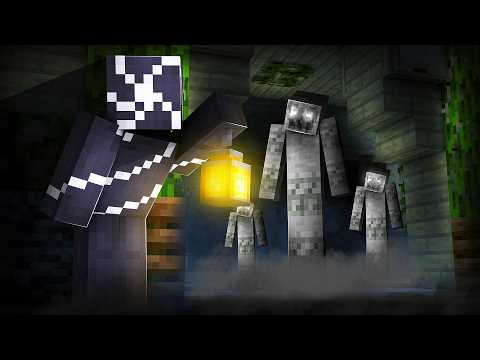
The most effective idea here is treating kit fusion as something to evaluate rather than merely an excuse to showcase overpowered combinations. Three viewer-requested pairings are taken into matches and judged across movement, damage, synergy, fun, reliability and skill ceiling. That framework gives the escalating gameplay some useful structure, while the chosen combinations are different enough to demonstrate three recognizable approaches: Ari with Barbarian for aggressive fighting, Archer with Vanessa for ranged pressure, and Yuzi with Yamini for mobility.
Ari and Barbarian provide the most spectacular demonstration. Repeated kills build toward the Rageblade, after which opponents are dispatched so quickly that much of the match becomes an exercise in seeing how far the advantage can be pushed. There is some experimentation within that dominance, including allowing an Elder Tree player to grow larger before testing damage against him. The resulting 10/10 assessments for damage and synergy are consistent with what is shown, although this is still one successful match rather than enough evidence to establish how reliably the fusion performs across different opponents and circumstances.
The Archer-Vanessa pairing changes the pace effectively by shifting the emphasis to ranged attacks. Triple headshots, bridge knock-offs and the progression through stronger bows make the combination visually easy to understand, and the creator identifies a genuine limitation in Vanessa's charge time when assigning reliability. This section is less one-sided than the first while still demonstrating why the kits complement each other. The repeated excitement over headshots does become somewhat repetitive, but the mechanical premise remains clear throughout.
Yuzi and Yamini are the smartest inclusion because they prevent the leaderboard from becoming purely a damage contest. Using vertical positioning, dashes and incoming hits to travel around the map produces a markedly different match, with opponents becoming distracted while teammates are theoretically free to gather resources. The creator also notices an important shared vulnerability: glue can disable both abilities. That weakness gives the reliability score a concrete gameplay basis and illustrates why strong synergy does not automatically make a fusion dependable.
The rating system is useful but not entirely convincing mathematically or conceptually. Categories such as fun are explicitly personal preference, while reliability judgments are extrapolated from a very small sample of gameplay. More importantly, the announced overall figures are not clearly derived from the six individual ratings: Ari-Barbarian's displayed category scores average 7.5, which plausibly corresponds to 75, and Yuzi-Yamini's average is 6.5, corresponding to 65, but the Archer-Vanessa overall result is not actually stated clearly. A visible scoring formula and persistent leaderboard would have made the comparison much easier to audit as it developed.
There is also an unresolved tension in the skill-ceiling category. Ari-Barbarian receives 10/10 because a mechanically gifted player supposedly should have little trouble with it, while Yuzi-Yamini receives 4/10 partly because it is considered easy. Those explanations seem closer to rating ease of use than skill ceiling, which normally concerns how much additional performance mastery can unlock. The creator is more persuasive when judging observable characteristics such as movement and damage than when assigning abstract competitive ratings.
As entertainment, however, the video maintains strong momentum. The commentary is energetic, the matches generate frequent payoffs, and each fusion has an immediately recognizable identity rather than feeling like a minor variation on the previous one. Spawn killing and prolonged domination reduce the competitive tension in the Ari-Barbarian section, something the creator himself acknowledges when lowering its fun score, but the broader format has enough variety to remain engaging. The result is a lively first pass at comparing kit fusions that would become substantially stronger with more rigorous testing and clearer scoring.
Pros
- Three substantially different fusions demonstrate fighting, ranged and movement-focused playstyles.
- Real-match demonstrations make the strengths and weaknesses of each pairing easy to understand.
- The creator identifies specific limitations, including Vanessa's vulnerable charge time and glue disabling Yuzi-Yamini's abilities.
- Six rating categories provide a consistent framework for comparing otherwise very different combinations.
- Energetic commentary and frequent gameplay payoffs keep the testing brisk and entertaining.
Cons
- One match per fusion provides limited evidence for broad reliability judgments.
- The meaning of the skill-ceiling category is inconsistently applied.
- The Archer-Vanessa final overall score is not clearly communicated.
- Heavy domination and spawn killing reduce competitive tension during the Ari-Barbarian test.
- The scoring system would benefit from a clearer formula and more visible leaderboard presentation.
The fusion concept works because each pairing changes how the match is played rather than merely producing bigger numbers. Strong demonstrations and lively pacing make the comparisons entertaining, but the leaderboard is less rigorous than its six-category structure initially suggests. With clearer scoring and repeated tests under different conditions, this could become a particularly effective format for evaluating BedWars kit combinations.