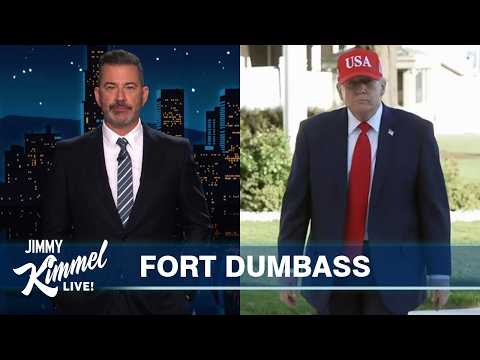
Donald Trump appearing to doze during public events gives Jimmy Kimmel an obvious comic reversal after years of Trump using “Sleepy Joe” against Joe Biden. Kimmel turns that reversal into an extended montage-style list of occasions when he says Trump fell asleep, beginning with the 9/11 commemoration and expanding to ceremonies, meetings, sporting events and other appearances. The repetition works as a comedy device, although the segment presents the long list largely as established fact without independently demonstrating the circumstances of each clip, while the White House explanation that Trump was “solemnly listening” is mentioned primarily as another setup for a joke.
Mitch McConnell’s return after a three-month absence produces a shorter and considerably harsher stretch of age-related humor. Kimmel uses footage of the senator and jokes about whether he is alive, his age and his apparent condition rather than offering substantive discussion of his return. That material maintains the monologue’s rapid pace, but it is among the least developed portions because the comedy depends heavily on interpreting a public figure’s appearance.
The artificial-intelligence section has a more substantial idea underneath the punchlines. Kimmel says leaders of three major AI companies have called for government guardrails and cites an Anthropic researcher as assigning more than a 10% chance to AI causing human extinction within a decade. Those are presented claims rather than conclusions established within the segment, and the discussion quickly shifts toward mocking Trump’s confidence that robots will not take over. Trump’s references to his MIT professor uncle and his own “genetic strength” provide unusually effective comic material, but Kimmel spends far more time ridiculing Trump’s technological understanding than examining the competing arguments about AI risk or regulation.
A lengthy section concerning Don Jr.’s wedding celebrations raises more consequential questions about foreign connections and gifts. Kimmel identifies Umar Kremlev as a Russian oligarch with ties to Vladimir Putin and says Kremlev funded an after-party for Don Jr. and Bettina Anderson, while also recounting denials and distancing statements attributed to Donald Trump, Melania Trump’s team and Eric Trump’s representatives. The distinction between the wedding itself and a separate after-party is useful, but Kimmel ultimately states allegations about the funding arrangements and efforts to conceal payments with considerable certainty without showing the underlying sourcing in the segment.
The Hunter Biden comparison gives that story its clearest political point: Kimmel contrasts Republican scrutiny of foreign influence involving the Biden family with the questions he believes should be asked about Don Jr.’s relationship with Kremlev. It is an effective way to explain why the story interests him, but it remains openly partisan comedy rather than a balanced investigation. Insults involving Trump’s family, appearance and intelligence frequently take precedence over evidence, which will satisfy viewers looking for an aggressive monologue but limits the segment’s usefulness for anyone trying to evaluate the underlying allegations independently.
Guillermo’s Dancing with the Stars appearance provides an unexpectedly warm finish after the political material. His 10-out-of-30 score, jokes about Whitney Carson needing to “dance better,” admission that he had questioned agreeing to the competition, and determination to return with a higher score create a simple underdog story. Kimmel’s enthusiasm feels genuine while still leaving room for jokes about Guillermo’s dancing, and the live exchange with Carson gives the closing minutes a relaxed chemistry that contrasts nicely with the sharper opening monologue.
Pros
- The Trump sleeping material builds a clear comic reversal around his previous attacks on Biden.
- Trump’s comments about AI and his MIT professor uncle provide specific material for jokes rather than leaving the segment dependent entirely on generic political insults.
- The Don Jr. section includes the family’s reported explanations and denials rather than omitting them completely.
- Guillermo and Whitney Carson bring an energetic, good-natured change of tone to the final portion.
Cons
- The extensive list of occasions when Trump supposedly fell asleep is delivered with little examination of what individual clips actually show.
- The McConnell jokes rely heavily on age and interpretations of his physical appearance rather than substantive material.
- Serious AI-risk claims are introduced but barely examined before the discussion becomes another vehicle for Trump jokes.
- Allegations surrounding Kremlev and the wedding after-party are stated confidently without presenting the underlying evidence or sourcing within the segment.
- Frequent personal insults sometimes replace sharper analysis of potentially significant political and ethical questions.
The monologue is strongest when specific remarks, contradictions and awkward situations supply the comedy, and Guillermo’s ballroom debut gives the show an especially likable closing stretch. Its political sections are energetic but frequently sacrifice evidentiary depth for rapid-fire ridicule, particularly when dealing with sleeping footage, AI risks and foreign-influence allegations.