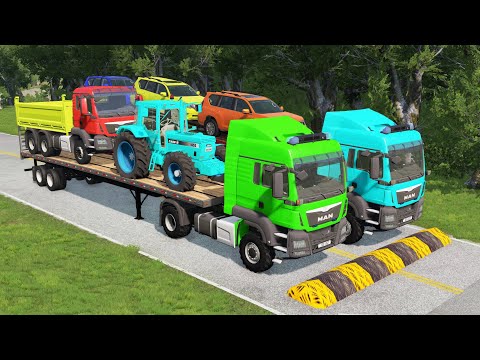
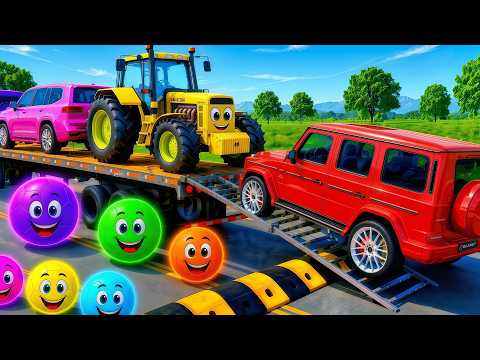
Lightning McQueen-inspired vehicles, flatbed trucks, and hazardous road conditions provide the foundation for another chaotic driving scenario in BeamNG Drive. The installment combines vehicle transportation with apparent rescue situations and repeated moments of distress, creating an experience centered on automotive mishaps rather than conventional racing. Its familiar character inspiration and exaggerated reactions suggest a playful approach to vehicle simulation, although the limited dialogue makes the specific challenges difficult to follow.
The transportation premise offers opportunities for entertaining vehicle interactions, particularly when moving cars onto trucks or navigating potentially damaging road obstacles. BeamNG Drive is well suited to scenarios involving vehicle movement, collisions, and unexpected mechanical consequences. However, the spoken exchanges provide little indication of how these possibilities are developed, leaving the transportation challenges and pothole encounters largely dependent on the gameplay visuals.
Much of the presentation revolves around short, urgent exchanges involving requests for assistance and commands to move forward. Repeated cries of "Please help me" establish a recurring rescue theme, while responses such as "Okay, let's go" and "Good job" suggest that characters are attempting to overcome obstacles together. These interactions give the action a basic sense of cooperation, but they rarely explain what has gone wrong or how a particular problem is resolved.
The frequent use of alarmed reactions introduces an exaggerated comedic element. Sudden exclamations, expressions of frustration, and repeated commands to keep moving create a frantic atmosphere appropriate for an unconventional driving challenge. Nevertheless, the humor relies heavily on recycled phrases rather than distinctive situations or developed exchanges. As the same reactions return throughout the installment, their entertainment value diminishes.
A more substantial weakness is the lack of clear progression in the spoken presentation. Characters repeatedly request help, receive brief encouragement, and appear to resume their activities without establishing meaningful differences between encounters. Statements such as "Let's get back" hint at changing objectives, but there is insufficient explanation of the destination, the transportation process, or the consequences of the apparent setbacks. The result is a loose collection of reactions rather than a clearly structured sequence of escalating challenges.
The vehicle-focused concept also receives little descriptive attention. Despite the emphasis on flatbed transportation and pothole hazards, the dialogue offers almost no information about driving techniques, vehicle handling, damage, or the practical difficulties of loading and transporting cars. This is not necessarily a problem for gameplay intended primarily as visual entertainment, but it limits the installment's value for viewers interested in the simulation itself. The presentation functions more as a series of animated reactions than an informative demonstration of BeamNG Drive's capabilities.
Ultimately, the installment's effectiveness depends considerably on its accompanying driving footage. The recognizable McQueen inspiration, rescue-oriented exchanges, and potential for unpredictable vehicle accidents provide a workable foundation for casual entertainment. However, the repetitive dialogue, minimal context, and limited narrative development make it difficult to identify memorable achievements or meaningful progression. Greater variety in character responses and clearer connections between individual challenges would help transform the chaotic premise into a more satisfying viewing experience.
Pros
- The Lightning McQueen-inspired vehicle concept provides a recognizable foundation for playful driving entertainment.
- The combination of flatbed transportation and pothole challenges creates opportunities for unusual vehicle interactions.
- Repeated requests for assistance establish a simple rescue-oriented theme.
- Urgent commands and exaggerated reactions contribute to the chaotic atmosphere.
- Brief expressions of encouragement introduce a cooperative element to the character interactions.
Cons
- The dialogue relies excessively on repeated phrases that quickly become predictable.
- The transportation challenges receive little explanation, making individual objectives difficult to distinguish.
- The spoken exchanges provide insufficient context for understanding the apparent accidents and rescue situations.
- The presentation lacks a clearly established progression between problems and their resolutions.
- The humor depends heavily on repetitive exclamations rather than varied character interactions.
- The driving mechanics, vehicle damage, and pothole effects receive almost no descriptive attention.
The chaotic combination of recognizable vehicle inspiration, transportation challenges, and exaggerated reactions offers a straightforward premise for casual BeamNG Drive entertainment. However, repetitive dialogue and limited narrative structure prevent the installment from establishing much personality or substance beyond its apparent driving mishaps. Viewers seeking simple visual chaos may find some enjoyment, but those expecting inventive scenarios, clear progression, or meaningful simulation commentary will likely find the experience underdeveloped.