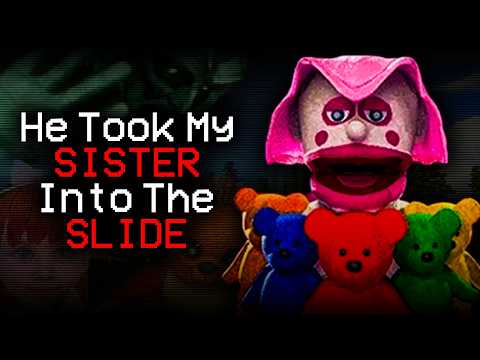
Mr. Puzzles is searching for a new purpose when an extraordinary opportunity arrives: a competition to determine the next great villain. Organized by the mysterious Big Bad, the contest brings together 300 aspiring evildoers, divided into groups of six, with only one eventual successor earning the ultimate title. For a character desperate to rebuild his reputation and achieve something meaningful, the invitation promises both redemption and recognition. The animated pilot establishes an entertaining premise built around villainous ambition, competitive personalities, and the uncomfortable realization that even the most dedicated troublemakers might need to cooperate.
The opening embraces theatrical villainy through musical performances, exaggerated declarations, and a deliberately ridiculous introduction to the competition. Mr. Puzzles' desire for greatness provides an emotional foundation beneath the comedy, while the Big Bad's grandiose presentation establishes an antagonist whose behavior is as unpredictable as his authority. His combination of sinister threats, casual hospitality, promotional musical interruptions, and absurd enthusiasm creates an amusing contradiction between the reputation of ultimate evil and the personality actually occupying the throne. The humor is frequently energetic, although the rapid transitions between songs, introductions, and jokes occasionally make the opening difficult to follow.
The competing villains quickly establish themselves as a dysfunctional collection of ambitious personalities. Their interactions feature exaggerated threats, competing leadership claims, personal insults, and arguments about what constitutes proper villainous behavior. Mr. Puzzles finds himself among characters who are equally determined to stand out, resulting in a group that seems more interested in asserting dominance than completing assignments. Particularly entertaining is the contrast between those who favor careful planning and others who believe intimidation and instinct should guide every decision. These disagreements give the ensemble immediate personality while introducing the central challenge of succeeding as a team without sacrificing individual ambitions.
Their first assignment sends them to a paper-themed planet to steal the Sacred Scribbler, a powerful pencil capable of controlling its inhabitants. The object belongs to the planet's king, making the mission an opportunity to demonstrate deception, intimidation, and strategic thinking. Unfortunately, the villains' inability to agree on leadership quickly undermines their approach. Competing declarations, theatrical introductions, and poorly coordinated distractions turn what should be a calculated operation into a disorganized spectacle. The absurdity of powerful villains struggling over a pencil is part of the joke, and the scenario effectively showcases their incompetence without eliminating the possibility that they might eventually become dangerous.
Unexpectedly, the paper kingdom introduces one of the pilot's more thoughtful developments. Its ruler struggles with the pressure of living up to his predecessor, admitting that he feels inadequate and uncertain about his responsibilities. A conversation about failure, displacement, and the possibility of starting over briefly shifts the story away from exaggerated villainy toward a more emotionally vulnerable perspective. This sequence adds welcome depth to an otherwise frantic adventure, suggesting that personal insecurity and the desire for belonging may influence characters on both sides of the conflict. However, the movement from sincere encouragement to the mission's darker consequences is abrupt, leaving the emotional material with less room to develop than it deserves.
The aftermath delivers another entertaining reversal when the Big Bad evaluates the group's performance. Despite the mission's disturbing outcome, the contestants receive disappointing marks for their lack of intimidation, coordination, and other supposedly essential villainous qualities. Their placement in Batch C reinforces the comedy of a competition where traditional success means little without satisfying an eccentric judge's expectations. More importantly, the result establishes a longer-term objective for the ensemble. Their shared frustration creates an uneasy sense of solidarity, even as everyone understands that only one contestant can ultimately win. The closing exchanges between Mr. Puzzles and his companions introduce questions of trust, loyalty, and rivalry that provide a promising foundation for future installments.
As a pilot, the production's greatest strength is its willingness to mix musical comedy, exaggerated personalities, absurd world-building, and occasional emotional sincerity. The dialogue maintains a lively pace, and the premise offers considerable room for increasingly inventive challenges. Nevertheless, the sheer number of characters, rapid-fire jokes, musical interruptions, and shifting conversational exchanges sometimes overwhelm the storytelling. Several personalities are introduced primarily through brief comedic interactions rather than meaningful development, making the ensemble difficult to distinguish immediately. The central mission also concludes rather quickly once its emotional conflict emerges. Even with these shortcomings, the pilot successfully establishes a distinctive identity and enough unresolved character dynamics to make the competition worth following.
Pros
- Introduces an imaginative villain competition featuring 300 contestants, eccentric judging standards, and a clear long-term objective.
- Gives Mr. Puzzles a compelling motivation through his search for purpose, recognition, and a renewed villainous legacy.
- Delivers energetic comedy through exaggerated rivalries, conflicting leadership styles, theatrical declarations, and the Big Bad's unpredictable personality.
- Uses the Sacred Scribbler mission to explore the contestants' poor teamwork and competing approaches to villainy.
- Incorporates unexpected emotional depth through the paper king's insecurities and the theme of starting over after repeated failures.
- Establishes promising future conflicts involving loyalty, ambition, betrayal, and the necessity of cooperation between villains.
Cons
- Rapid dialogue exchanges, frequent interruptions, and musical segments occasionally disrupt narrative clarity.
- The large ensemble receives uneven characterization, leaving some contestants defined more by individual jokes than developed personalities.
- Abrupt transitions between absurd comedy, emotional vulnerability, and violent consequences weaken the impact of certain scenes.
- The first mission's resolution feels rushed compared with the substantial buildup surrounding the competition and its contestants.
This energetic animated pilot transforms a competition between aspiring villains into an entertaining mixture of chaotic humor, theatrical ambition, and unexpected emotional conflict. Although its crowded cast and relentless pacing occasionally undermine the storytelling, the inventive premise, amusing character dynamics, and hints of deeper relationships establish considerable potential. Mr. Puzzles and his unlikely companions have an entertaining road ahead, particularly if future installments give their individual personalities and rivalries more room to develop.