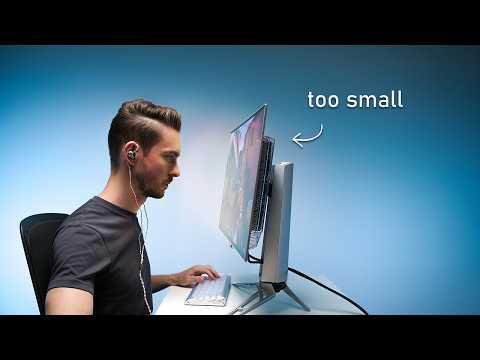
Nvidia's RTX Spark combines up to 20 CPU cores, powerful integrated graphics, and as much as 128GB of memory in a platform designed to bring gaming, content creation, and local AI workloads into thin Windows laptops. The ambitious hardware promises are impressive, but the real question is whether Nvidia can deliver the software compatibility, practical performance, and ease of use necessary to challenge established laptop platforms. This enthusiastic first look explores those possibilities through hands-on experimentation, demonstrations, and an appropriately cautious examination of what remains unproven.
The hardware discussion establishes an appealing foundation, particularly with the MSI laptops featuring OLED displays, USB4 connectivity, Wi-Fi 7, and large batteries. However, the distinction between RTX Spark configurations introduces an important limitation. The entry-level model's 32GB memory ceiling appears sufficient for conventional gaming and moderate creative workloads but potentially restrictive for the demanding local AI applications Nvidia emphasizes. The presenter also questions the premium configuration's price while acknowledging Nvidia's argument that avoiding recurring cloud computing costs could eventually justify the investment. That financial proposition is intriguing, although the presentation offers no detailed calculations demonstrating how quickly such savings might materialize.
The most convincing practical demonstration involves configuring a local AI agent to create a custom system-monitoring dashboard. Using a natural-language request, the presenter asks for widgets displaying processor utilization, temperatures, token throughput, tool activity, and memory consumption. The completed dashboard demonstrates an impressive degree of automation without manual coding, but the process takes approximately 76 minutes. That considerable execution time provides useful perspective on the difference between technically accomplishing a complex task and making it genuinely convenient. The discussion of Microsoft's agent sandboxing, permission management, and resource monitoring adds necessary substance by addressing the security risks associated with giving autonomous software access to personal systems.
Gaming receives a similarly promising but qualified assessment. NBA 2K27 running at 1440p provides an opportunity to discuss DLSS 5 improvements, while a native ARM version of Marvel Rivals demonstrates progress toward resolving anti-cheat compatibility barriers. The presenter wisely avoids treating these examples as proof of universal game support, particularly when Nvidia's broader compatibility claims remain difficult to evaluate. Minecraft's ray-traced lighting provides another visually impressive showcase, although noticeable fan noise complicates the promise of exceptional efficiency. More importantly, the absence of independent performance comparisons prevents meaningful conclusions about RTX Spark's competitiveness against AMD, Apple, or conventional discrete-GPU laptops.
The software demonstrations broaden the appeal beyond gaming. Blender's accelerated viewport rendering, Photoshop's local-model integration, and Nvidia's network-based AI resource sharing suggest practical advantages for creative professionals and households with multiple capable computers. Improvements to Nvidia Broadcast, including webcam enhancement and audio processing for prerecorded material, offer more immediately understandable benefits. The presenter also acknowledges that Nvidia is not introducing high-memory integrated computing into an empty market, citing AMD's existing alternatives. This context helps distinguish genuinely interesting software integration from features that are neither entirely new nor exclusive to Nvidia.
The home automation demonstration offers perhaps the clearest illustration of the platform's long-term ambitions. An agent capable of interpreting household conditions, adjusting connected devices, monitoring water usage, identifying possible sprinkler problems, and preparing maintenance correspondence presents an ambitious vision of intelligent domestic assistance. Yet the presenter recognizes the extensive configuration required, including providing manuals, property information, camera access, and communication capabilities. The presentation is engaging and accessible, with enthusiastic reactions balanced by occasional skepticism and humor. Nevertheless, the failed initial event setup, subsequent recorded testing, reliance on prepared demonstrations, and repeated sponsor interruptions prevent this from functioning as a rigorous independent evaluation.
Pros
- The examination of RTX Spark's CPU, GPU, memory configurations, and premium laptop designs clearly establishes the platform's capabilities and potential limitations.
- The independently completed local AI dashboard provides a concrete example of agent-based automation, including a useful disclosure of its substantial execution time.
- Discussion of sandboxing, access permissions, and resource monitoring addresses important security concerns surrounding autonomous software.
- Gaming demonstrations highlight meaningful progress in Windows on ARM compatibility without claiming that longstanding problems have been completely resolved.
- Coverage of Blender, Photoshop, Nvidia Broadcast, and distributed AI processing demonstrates practical applications beyond the platform's gaming ambitions.
- The presenter maintains an engaging, enthusiastic delivery while acknowledging competing hardware, uncertain performance claims, and significant setup requirements.
Cons
- Independent benchmarks, battery endurance measurements, thermal analysis, and direct comparisons with competing systems are absent.
- Claims about cloud computing savings and the economic justification for expensive configurations lack detailed supporting calculations.
- Several important capabilities are illustrated through controlled demonstrations or previously recorded footage rather than extensive unsupervised testing.
- The lengthy dashboard creation process raises questions about everyday productivity that receive limited further examination.
- Repeated sponsorship segments interrupt the technical discussion, while the broad selection of demonstrations occasionally sacrifices analytical depth.
This energetic introduction presents RTX Spark as a potentially significant development for Windows on ARM, particularly through its combination of powerful hardware, local AI processing, and increasingly integrated software tools. Its strongest moments demonstrate tangible capabilities while recognizing the compatibility, security, and usability challenges that still need to be addressed. Although the absence of independent benchmarks and extended testing limits its value as a purchasing guide, the presentation succeeds as an informative and entertaining preview of a promising computing platform.