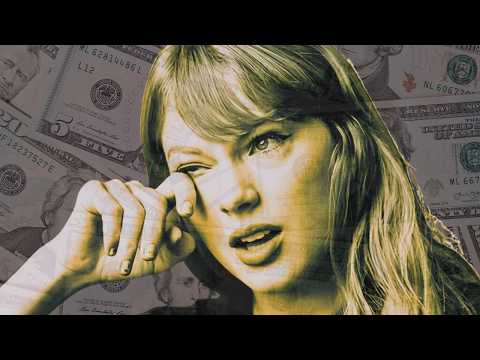
Four additional Taylor Swift songs give Anthony Fantano another chance to assess the Life of a Showgirl era, and his reaction quickly becomes a track-by-track argument that the material ranges from pleasantly forgettable to genuinely excellent. He enters with an openly negative view of the original album, so there is little pretense of approaching the encore neutrally. Still, he spends enough time discussing specific production choices, melodies, vocal performances and lyrics to make the criticism more substantial than a simple continuation of his earlier disappointment.
“Patient Zero” receives a relatively measured assessment. Fantano likes its gentle drum loop, dreamy synth textures, breathy vocal layering, strings and what he hears as a possible Celtic influence, but finds the songwriting less distinctive. His comparison between its love-as-illness concept and recent Olivia Rodrigo material is explicitly a judgment about resemblance within the current pop landscape rather than an accusation of copying, and he acknowledges that neither artist invented the metaphor. The more pointed criticism arrives with the bridge, where he interprets Swift’s description of an ex as unintentionally self-important.
“Cleveland” produces the harshest reaction, despite some initial appreciation for its sound. Fantano hears a slight new-wave quality in the energetic synths and driving beat, while also noticing a looser, more organic vocal performance that leans heavily into narration and talk-singing. His objection is primarily lyrical: he finds another engagement with online criticism tiresome and considers the near-swear wordplay especially corny. The exaggerated physical metaphors he uses to describe his frustration are funny in the context of his established presentation style, although the theatrical disgust occasionally overwhelms the musical analysis.
The tone reverses dramatically with “Pink Clouding,” which he treats as the clearest demonstration of what Swift’s reunion with Max Martin and Shellback could deliver. He hears a strong callback to the bright, polished pop associated with 1989, praising the chorus, lush synthetic production, vocal melody and increasingly dramatic arrangement. More importantly, he responds to the writing as comparatively introspective: rather than depicting a romantic conflict entirely through another person’s failings, he sees Swift examining her own decisions, lingering regret and desire to apologize. That contrast gives his enthusiasm a clear critical foundation beyond simply liking the production.
“Babylon” lands somewhere in the middle. Fantano finds its lyrics compelling and considers it stronger than “Patient Zero” and “Cleveland,” but argues that the melody and structure remain too static to become memorable. His description of the arrangement progressing without really feeling as though it progresses is one of the sharper musical observations in the piece, identifying how gentle incremental changes can technically move a song forward without creating much momentum. It also demonstrates that his judgments are not simply divided between songs he likes and songs he dislikes; he can separate interesting writing from an underwhelming composition.
Taken together, the four reactions support his broader conclusion that the encore is inconsistent but occasionally reveals possibilities he believes the main album failed to exploit. The analysis works best when Fantano identifies concrete elements—the drum patterns, synth textures, vocal delivery, chorus construction, structural movement and lyrical perspective—that explain why his response changes so dramatically between songs. It is weaker when frustration turns into ridicule or when comparisons to other artists and eras are asserted more impressionistically, since listeners who do not share those associations receive less explanation for them.
Pros
- Gives each of the four songs an individual assessment rather than reducing the encore to a single verdict.
- Identifies specific production, vocal, melodic and structural details behind both positive and negative reactions.
- Offers especially clear reasoning for the strong response to “Pink Clouding,” connecting its production and songwriting to the qualities he wanted from the larger project.
- Distinguishes between lyrical strength and musical weakness when discussing “Babylon.”
- Keeps the commentary energetic and personal without disguising subjective taste as an objective measurement of the songs.
Cons
- Begins from such a strongly negative opinion of the existing album that the encore is repeatedly framed through earlier disappointment.
- The reaction to “Cleveland” becomes so exaggerated that mockery sometimes displaces more detailed musical criticism.
- Comparisons with Olivia Rodrigo and earlier Swift material are useful reference points but remain largely interpretive rather than being explored in depth.
- The closing jokes about the original album reduce some of the nuance established during the more careful track-by-track discussion.
Fantano delivers a lively and specific assessment of an encore he considers uneven, with “Pink Clouding” providing the clearest evidence for why he believes this collaboration still has considerable pop potential. The strongest sections translate immediate reactions into concrete observations about songwriting and production, while the weaker moments let exasperation and ridicule crowd out that analytical precision.