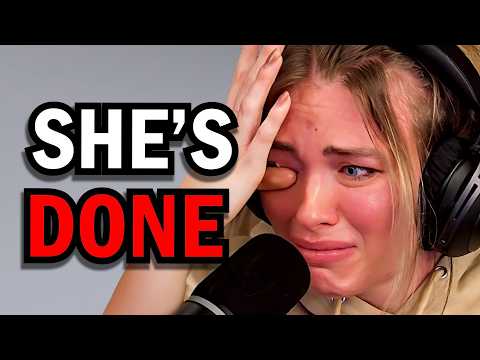
Hasan Piker’s increasingly hostile public controversies provide the central thread, with the presentation focusing on condemnations from Democratic politicians, his continued mockery involving Charlie Kirk, criticism from Asmongold and Destiny, and pressure directed toward Twitch. The strongest material comes when contrasting Piker’s own comments with the backlash they generated. Clips showing politicians characterizing remarks about American Jews as dangerous or antisemitic, followed by Piker dismissing the broader reaction as manufactured outrage, establish a genuine conflict worth examining rather than merely asserting that one exists.
That potentially substantive story is repeatedly overwhelmed by the host’s contempt for Piker. Serious accusations—including antisemitism, support for terrorism, threatening behavior, animal mistreatment and deliberate dishonesty—are frequently presented as settled conclusions instead of claims requiring different levels of evidence. Some criticism is tied directly to clips, particularly Piker’s remarks about American Jews and his provocative Charlie Kirk routine, but other allegations are invoked through shorthand, jokes and references to earlier controversies that receive little supporting context here. The result is persuasive commentary for viewers who already share the host’s assessment, but a less reliable examination for anyone trying to determine precisely what happened and what can actually be established.
Piker’s Charlie Kirk routine is nevertheless one of the clearer examples of why the backlash has intensified. The footage depicts him repeatedly performing and praising a memorial-style song while insisting that he will continue “carrying the flame,” even after viewers characterize the behavior as disrespectful. The host reasonably identifies the contradiction between deliberately provocative performances and subsequent complaints about hostile media coverage. At the same time, declaring Piker motivated by lingering resentment over a debate or presenting his inner motives as obvious pushes the commentary beyond what the shown material can demonstrate.
The Asmongold and Destiny section adds a useful change of perspective because both criticize Piker from different positions, particularly regarding his preoccupation with image and Israel. Asmongold’s argument about Piker carefully cultivating a public persona is supported with recognizable examples from the discussion, while Destiny raises a more substantive political point: highly provocative positions surrounding militant groups may alienate ordinary Democratic voters regardless of broader criticism of Israel. Yet the host packages even these moments as another victory lap, repeatedly describing an almost universal anti-Piker consensus without establishing anything close to that scale. Humor about Twitch CEO Dan Clancy and repeated sexual jokes further dilute what could have been a focused discussion of whether Twitch applies its standards consistently.
The abrupt move into the Lindsay Clancy case exposes the presentation’s broader weakness with emotionally charged subjects. A television argument over empathy, responsibility and alleged mental-health circumstances is reduced to the claim that “millions of women” are defending a child murderer, but no evidence is supplied for that numerical or demographic characterization. The commentary also treats disagreement over culpability and compassion as effectively interchangeable with endorsement of murder. Because criminal responsibility and psychiatric impairment are inherently complex questions, the absence of careful distinctions makes this segment significantly less credible than its confidence suggests.
The relationship TikTok clips produce a more grounded observation about privacy and conflict. Secretly recording a partner during an argument and publishing an edited version for strangers to judge can indeed create serious trust problems, and the host sensibly notes that ordinary relationship disagreements are different from turning those disputes into public content. Even here, however, individual viral examples are quickly generalized into claims about women, TikTok culture and relationships without enough evidence to establish how widespread the behavior actually is.
A final street-interview clip about prison abolition illustrates the same tendency toward maximal conclusions. The woman explicitly expresses support for eliminating prisons and says incarceration may not address whatever causes sexual violence, even when confronted with her own experience of assault. That is certainly provocative material and invites difficult questions about incapacitation, rehabilitation and public safety. But the host leaps from one person’s comments to portraying them as representative of Piker’s audience and the broader political left, while offering no evidence connecting her to Piker or establishing that her views are typical. By the end, legitimate criticism has become inseparable from sweeping ideological caricature.
Pros
- Direct clips of Piker’s remarks and Charlie Kirk routine give viewers concrete material to evaluate rather than relying entirely on secondhand characterization.
- The contrast between deliberately provocative conduct and complaints about subsequent backlash raises a legitimate question about accountability.
- Asmongold and Destiny provide additional perspectives that broaden the Piker discussion beyond the host’s commentary alone.
- The relationship-recording segment makes a reasonable point about privacy, trust and the distortions created by selectively posting personal arguments online.
Cons
- Numerous serious accusations are treated as established facts without enough supporting evidence or contextual explanation.
- Claims about broad groups—Democrats, women, progressives, Piker supporters and ordinary voters—regularly exceed what the selected clips can demonstrate.
- The Lindsay Clancy discussion collapses questions of psychiatric condition, empathy and criminal responsibility into an overly simplistic culture-war frame.
- One prison-abolition interview is used to characterize an entire political constituency without establishing that the speaker is representative or connected to Piker.
- Constant insults, sexual jokes and declarations that opponents are stupid, evil or insane repeatedly crowd out potentially substantive analysis.
- The compilation jumps between unrelated controversies so rapidly that the latter sections feel more like an outrage roundup than a coherent examination of the opening story.
There is a meaningful story here about provocative political rhetoric, reputational consequences and the limits of online platform tolerance, and the strongest clips provide legitimate material for scrutiny. Unfortunately, relentless hostility and unsupported generalizations repeatedly weaken that case, turning potentially sharp criticism into a broader culture-war performance. The result is energetic and occasionally perceptive, but substantially less convincing whenever assertion replaces evidence.