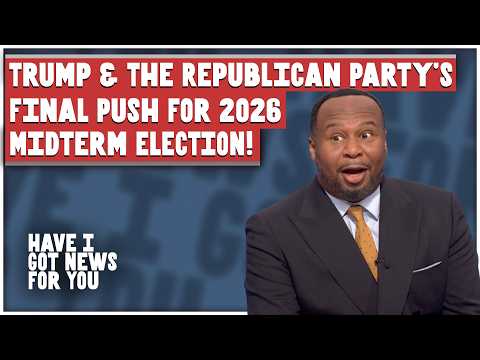
Republican Representative Thomas Massie’s decision to introduce articles of impeachment against Defense Secretary Pete Hegseth creates an unusual political confrontation, particularly with Republicans still controlling both chambers of Congress. Rather than treating impeachment as an inevitable consequence of the allegations against Hegseth, the presentation examines the political calculations that could determine whether he survives. The central argument is that Hegseth faces a more serious challenge than conventional partisan assumptions might suggest, although removing him would not necessarily produce meaningful changes in American military policy. It is an engaging premise that connects an immediate congressional dispute to larger questions about presidential authority, military leadership, and the direction of American foreign policy.
The opening explanation of impeachment provides a useful foundation for viewers unfamiliar with the constitutional process. The distinction between a simple House majority needed for impeachment and the two-thirds Senate majority required for conviction is clearly established, with historical references to Donald Trump and Bill Clinton illustrating why impeachment does not automatically mean removal. The discussion then summarizes eight allegations against Hegseth, including unauthorized military operations, civilian casualty protections, extrajudicial killings, and the treatment of Senator Mark Kelly. These accusations are presented as the basis of the proposed impeachment rather than established legal findings. However, the narrator’s insistence that impeachment is fundamentally political sometimes goes too far, minimizing the constitutional standards and legal considerations that remain relevant even when partisan calculations dominate the outcome.
The political analysis becomes more interesting when the discussion moves beyond the familiar assumption that Republican control guarantees Hegseth’s survival. Narrow congressional majorities, potential absences among departing lawmakers, and dissatisfaction within Hegseth’s own party provide a plausible explanation for why impeachment might attract bipartisan support. The narrator also distinguishes between the relative ease of obtaining a House majority and the considerably higher barrier to conviction in the Senate. Prediction market probabilities of approximately 80% for near-term impeachment and 40% for Hegseth leaving office during the year add a measurable dimension to the discussion. Nevertheless, these figures are snapshots of market expectations rather than reliable forecasts, and the limited examination of their underlying assumptions makes the numerical confidence less persuasive than the broader political reasoning.
An unexpected detour into Tennessee politics introduces another possible outcome for Hegseth. Following Marsha Blackburn’s reported gubernatorial victory, the narrator considers speculation that Hegseth could receive an appointment to her Senate seat, although the scenario is assigned only an 8% probability. The discussion then turns into an extended wrestling-related joke about Glenn Jacobs, using elements of a fictional character’s biography before revealing the absurdity of the description. The sequence demonstrates the creator’s playful delivery and willingness to interrupt serious analysis with humor. However, it also distracts from the impeachment discussion, particularly because viewers unfamiliar with professional wrestling may struggle to recognize the joke or distinguish the fictional references from actual biographical information.
The examination of the incoming congressional term gives the discussion greater strategic significance. The narrator argues that anticipated Democratic gains will make another House impeachment effort considerably easier and reduce the number of Republican senators needed for conviction. More importantly, the current effort is framed as an early test of whether congressional Republicans will continue defending Trump administration officials or begin distancing themselves from an increasingly vulnerable president. This interpretation connects Hegseth’s immediate predicament to future debates over military aid to Ukraine and European defense planning. It is a thoughtful extension of the argument, although the projected behavior of Republican lawmakers remains speculative, and the presentation gives relatively little consideration to alternative political incentives that might preserve party unity.
The strongest foreign policy analysis arrives when the narrator separates Hegseth’s personal influence from the broader continuity of presidential military policy. Since Trump would select any replacement, removing Hegseth would not automatically end the Iran conflict, transform the administration’s interpretation of war powers, or establish a fundamentally different Pentagon strategy. At the same time, the discussion recognizes that defense secretaries possess meaningful discretion over personnel, institutional priorities, and operational decisions. References to military leadership dismissals, tensions involving former Army Secretary Dan Driscoll, and the withholding of assistance to Ukraine illustrate why replacing an individual official could still have consequences. The distinction between institutional continuity and personal decision-making is persuasive, even if predictions about a successor’s conduct remain uncertain.
The presentation benefits from a conversational style that makes complicated congressional procedures and strategic relationships accessible without abandoning substantive analysis. Historical comparisons, political probabilities, and recurring humor prevent the material from becoming excessively technical, while the progression from impeachment mechanics to geopolitical consequences gives the discussion a clear overall direction. Its principal weakness is an occasionally dismissive tone that treats contested legal interpretations and speculative political outcomes with more certainty than the evidence presented can justify. The description of impeachment as almost entirely a matter of personal popularity is particularly reductive, while the discussion of presidential war powers would benefit from acknowledging more explicitly that constitutional interpretations remain disputed. Despite these limitations, the creator succeeds in explaining why the political struggle surrounding one defense secretary could reveal more about congressional priorities than about any immediate transformation of American warfare.
Pros
- The explanation of House impeachment procedures and Senate conviction requirements provides an accessible foundation for understanding the political dispute.
- The summary of eight impeachment allegations gives viewers a clear overview of the accusations motivating the congressional effort.
- The examination of narrow Republican majorities and internal party dissatisfaction challenges simplistic assumptions about partisan loyalty.
- Prediction market figures help distinguish the likelihood of impeachment from the considerably more difficult prospect of removal from office.
- The discussion of the incoming Congress effectively connects Hegseth’s situation to broader questions about Republican independence and future legislative negotiations.
- The analysis thoughtfully distinguishes presidential control over military policy from the practical influence exercised by individual defense secretaries.
- Historical references, conversational explanations, and occasional humor make a complicated political and military subject engaging.
Cons
- The repeated characterization of impeachment as essentially a political popularity contest oversimplifies its constitutional and legal dimensions.
- Prediction market probabilities receive insufficient scrutiny despite their prominent role in assessing Hegseth’s immediate prospects.
- Forecasts about Republican defections and the incoming Congress sometimes convey more confidence than the presented evidence supports.
- The extended Glenn Jacobs wrestling joke interrupts the political analysis and may confuse viewers unfamiliar with the references.
- Contested interpretations of presidential war powers and the legality of military operations receive limited consideration of alternative arguments.
- The discussion gives relatively little attention to how specific policy changes might affect ongoing conflicts beyond the general expectation of institutional continuity.
This is an informative and frequently engaging examination of how an impeachment effort against Pete Hegseth could expose divisions within Congress without fundamentally changing American military policy. Its greatest contribution is the distinction between the political consequences of removing a controversial official and the institutional realities that would constrain any successor. Although some legal arguments are oversimplified and several political forecasts deserve greater caution, the combination of procedural clarity, strategic reasoning, and accessible commentary makes the discussion worthwhile for viewers interested in American politics and international security.