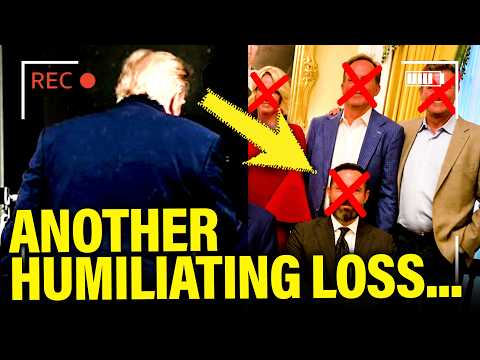
Republican Congressman Thomas Massie's renewed push to impeach Defense Secretary Pete Hegseth provides an explosive opening for this installment of Have I Got News for You US. With Republicans facing political consequences following the midterm elections and the ongoing war with Iran, the panel examines whether loyalty to President Donald Trump is beginning to weaken within his own party. The discussion blends political developments with aggressive comedy, using the potential impeachment fight and Vice President JD Vance's criticism of the war to explore a Republican Party confronting its electoral setbacks. The result is an energetic, frequently funny political discussion that occasionally sacrifices nuance for the next punchline.
The opening segment effectively establishes the impeachment controversy by explaining that Massie had already attempted to force a vote against Hegseth in September, only for the House to adjourn before the matter could advance. The show contrasts that earlier effort with Massie's renewed determination following the election, suggesting that shifting political circumstances could make Republican lawmakers more willing to distance themselves from the administration. Democratic Congressman Jason Crow's criticism of Hegseth and Republican Congressman James Comer's concerns about the administration's Iran strategy add substance to the discussion. However, the panel's suggestion that vulnerable Republicans are preparing to abandon Hegseth remains a political interpretation rather than a demonstrated outcome.
Hegseth's response provides some of the segment's most entertaining material. His dismissal of the impeachment effort as political persecution, combined with his insistence that similar tactics failed against Trump, gives the comedians an opportunity to ridicule both his defensive posture and his presentation. The jokes about his appearance and his use of "yours truly" generate laughs, but the more interesting material concerns Trump's apparently qualified support. By juxtaposing Trump's stated confidence in Hegseth with his acknowledgment that replacing a defense secretary would become more difficult after a change in Senate control, the show identifies a potentially meaningful contradiction. Still, the suggestion that Hegseth's departure is imminent is presented primarily through comedic speculation rather than concrete evidence of an administration decision.
The second major segment shifts attention to JD Vance and his public assessment of the Republican midterm losses. Vance's argument that the war with Iran contributed to the party's defeat becomes the foundation for a discussion about political ambition, loyalty, and the possibility of distancing himself from Trump ahead of 2028. The program strengthens this section by incorporating Trump's relatively accepting response to Vance's remarks and Donald Trump Jr.'s endorsement of the vice president's assessment. These details complicate the initial suggestion of a straightforward confrontation between Vance and Trump, although the panel remains focused on interpreting Vance's comments as an attempt to protect his political future.
The comedians are particularly effective when examining the contradictions surrounding Vance's position. Their criticism centers on the idea that he supported the administration's policies while simultaneously preparing to separate himself from their political consequences. Comparisons to political opportunism, exaggerated descriptions of his personality, and speculation about his presidential ambitions give the conversation an unmistakably confrontational edge. The panel's chemistry helps sustain the momentum, with quick reactions and improvised remarks frequently building on one another. Nevertheless, the repeated personal insults sometimes overshadow the more substantial question of whether Vance's criticism represents an actual policy disagreement or simply a calculation about future elections.
The discussion broadens to include conservative commentators responding to the Republican losses, including arguments that the party must learn to compete without Trump as its central figure. The contrasting reactions offer an interesting glimpse into potential disagreements on the political right, while the panel's mockery of these commentators produces some memorable exchanges. However, the program provides limited examination of alternative explanations for the election results beyond the war and broader dissatisfaction with the administration. It also treats Vance's potential 2028 difficulties with considerable certainty despite the inherently unpredictable nature of future presidential contests. The political arguments would carry more weight with clearer distinctions between reported developments, individual opinions, and speculative predictions.
As a comedy format, the recurring offender game gives the material a recognizable structure and keeps the discussion moving between personalities and controversies. The combination of news clips, political quotations, panel reactions, and irreverent one-liners makes complicated political relationships relatively easy to follow. The performers demonstrate strong comic timing, particularly when responding spontaneously to the increasingly uncomfortable positions of Republican officials. However, the humor is overwhelmingly hostile toward its subjects, with profanity, sexual references, and personal ridicule occasionally becoming substitutes for sharper political observations. The closing promotional appeal is brief, but it does interrupt the momentum established by the discussion's final jokes.
Pros
- The impeachment discussion provides useful context by connecting Thomas Massie's earlier attempt to force a vote with his renewed efforts following the midterm elections.
- Political statements from Hegseth, Trump, James Comer, and other officials give the comedy a foundation in specific public remarks.
- The contrast between Trump's declared support for Hegseth and his comments about the difficulty of confirming a replacement creates an effective opportunity for political satire.
- The JD Vance segment raises interesting questions about Republican divisions, responsibility for electoral losses, and political positioning ahead of 2028.
- Quick exchanges, spontaneous reactions, and strong panel chemistry maintain an entertaining pace throughout both major discussions.
- The recurring offender format provides a clear structure while allowing the performers considerable freedom to improvise.
Cons
- Speculation about Hegseth's political survival and Vance's presidential prospects sometimes receives more attention than the evidence supporting those predictions.
- The discussion of Republican election losses gives limited consideration to competing explanations beyond the Iran war and dissatisfaction with Trump.
- Repeated personal insults, sexual jokes, and profanity occasionally weaken otherwise effective political commentary.
- The panel's predominantly critical perspective leaves little room for serious examination of opposing political arguments or the administration's stated reasoning.
- Several potentially substantive issues, particularly the impeachment allegations and the administration's military strategy, receive relatively little detailed analysis.
Sharp exchanges, energetic performances, and well-chosen political statements make this an entertaining examination of Republican tensions following the midterm elections. The impeachment controversy and Vance's criticism of the Iran war offer substantial material, although speculative conclusions and relentless personal ridicule sometimes diminish the analytical value. As political comedy, the program delivers frequent laughs and a clear perspective, but viewers looking for balanced reporting or a detailed examination of the underlying controversies will find its approach less satisfying.